
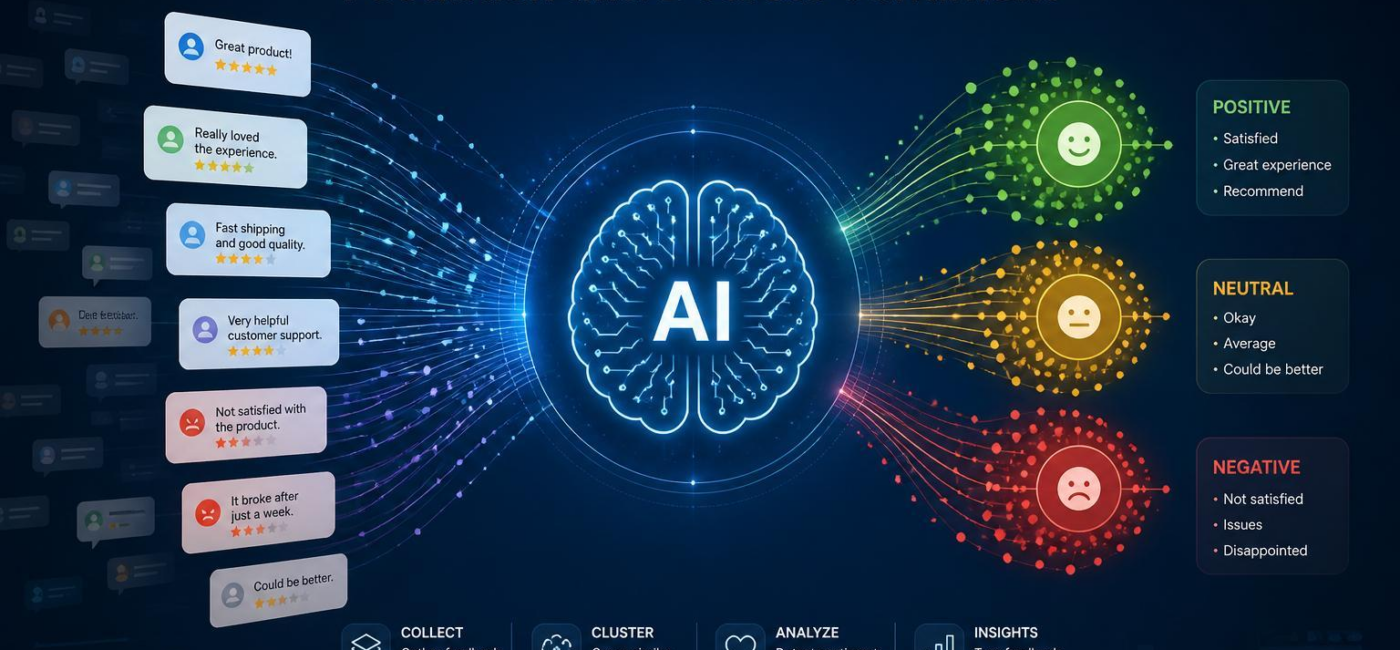
Can AI analyze customer feedback? Yes. It can sort large volumes of survey responses, reviews, support ticketsand social comments into recurring themes, detect sentiment, and bring persistent complaints or requests into view. That dose not replace customer research or human judgment, but it gives teams a much faster way to see patterns that would otherwise be buried in thousands of individual comments.
How AI groups feedback into useful themes
Customers rarely describe the same problem in the same words. One person may say checkout is confusing, another may complain about too many payment steps, and someone else may ask for fewer form fields. AI can recognize that these comments are related and group them under a broader theme such as checkout friction.
That matters because raw feedback is often scattered and repetitive. Grouping similar comments helps teams move beyond individual wording and focus on the experience customers are describing. The themes can then be viewed alongside sentiment and other context, such as customer type, product line, channelor stage of the journey.
For example, delivery updates may emerge as a recurring theme. If the sentiment is mostly negative when tracking facts is late or unclear, the next step may be to review notification timing and the language on the tracking page.the point is not simply to count mentions. It is to understand what is happening and where an enhancement may help.
How sentiment shows what drives satisfaction
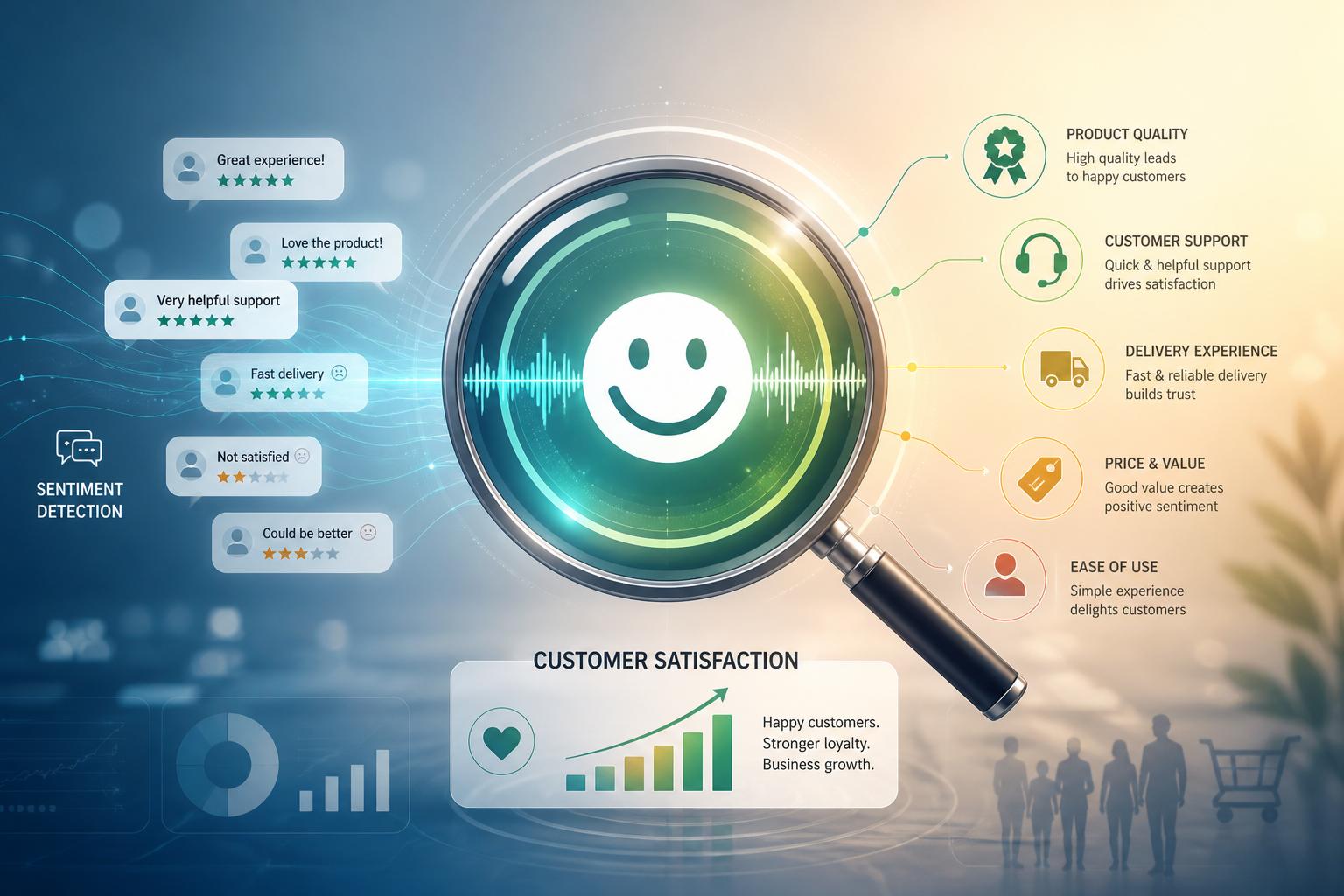
Sentiment analysis is more useful when it is tied to a specific topic. A customer might praise a helpful support agent while also criticizing a delayed delivery. Treating the whole review as “mixed” loses the detail that matters. AI can separate those points, linking positive sentiment to support and negative sentiment to delivery.
Over time, this makes it easier to spot the parts of the customer experience that shape satisfaction. Clear interaction, easy setup, responsive serviceand product reliability may show up repeatedly in positive comments. Confusing instructions, slow replies, billing problemsand unmet expectations may appear in negative ones.
Mixed feedback can be especially valuable. It frequently enough means customers like the product or service but are running into one frustrating obstacle. That is usually a more useful starting point than a broad score alone, because it points toward a specific moment in the journey that can be improved.
check the findings against real business context
AI-generated themes and sentiment labels should be treated as a starting point, not a final verdict. A cluster labeled “checkout frustration” could include payment failures, unexpected shipping costs, account-access issuesor confusion caused by a recent design change. Before acting, read a sample of the original comments-especially from high-volume or sharply negative clusters.
Then compare the feedback with what was happening in the business at the time. Look for links to product releases, policy changes, marketing campaigns, service incidents, stock issues, or changes in delivery performance. It is indeed also worth checking whether the same concern appears across channels, regionsand customer segments.
If delivery sentiment drops, for instance, the cause may not be the logistics team alone. Carrier performance, warehouse delays, inventory availability, promised delivery datesand unclear tracking messages can all affect what customers say. Keeping theme names descriptive rather than overly certain helps prevent teams from reacting to a label instead of investigating the underlying issue.
Turn themes into practical improvements
Once the feedback is grouped, the question becomes: what should the team do next? Frequency matters, but it is indeed not the only factor. A common complaint about confusing setup does not automatically mean the product needs a full redesign.The timing and context of the feedback may point to a simpler fix,such as clearer onboarding guidance,fewer required fields,better labels,or more helpful in-product explanations.
Each meaningful cluster can become a working product hypothesis: what is causing the friction, who is affectedand what small change could reduce it? Giving that question an owner and a measurable next step makes feedback more likely to lead to action.
- Repeated confusion may call for clearer labels, instructions, or navigation.
- Reliability complaints should prompt a review of failures, delaysand error messages before new features are added.
- Feature requests may reveal an underlying need that is worth testing through prototypes or customer conversations.
- Consistent praise is worth protecting-and may offer ideas for improving other parts of the experience.
Use AI to find the signal, then apply judgment
AI can make customer feedback far easier to work with by clustering related comments, detecting sentimentand surfacing recurring requests or complaints.Its real value comes from helping people ask better questions: What are customers struggling with? Who is affected? Has something changed? What evidence supports the pattern?
when teams combine AI-generated feedback analysis with direct review and operational context, they are in a stronger position to make improvements that address the customer experience rather than just the wording of a comment.
AI tools built by Emerald Force
Built and supported by Emerald Force.
You might also like
- How AI Clusters Customer Feedback and Detects Sentiment
- AI Center of Excellence: Standards and Adoption
- Where AI Coding Excels: Tests, Refactors, Scaffolds
- AI Can Fake Documents-Why Verification Is Essential
- Can AI Identify You From a Photo? Key Risks
AI Models Explained: From Inputs to Outputs
- Synthetic Data: Purpose, Uses, and Limitations
- Preparing Students for Success in AI-Driven Work
- How AI Improves Test Prep With Plans and Practice
- Content Provenance: How Media Origins Are Verified