
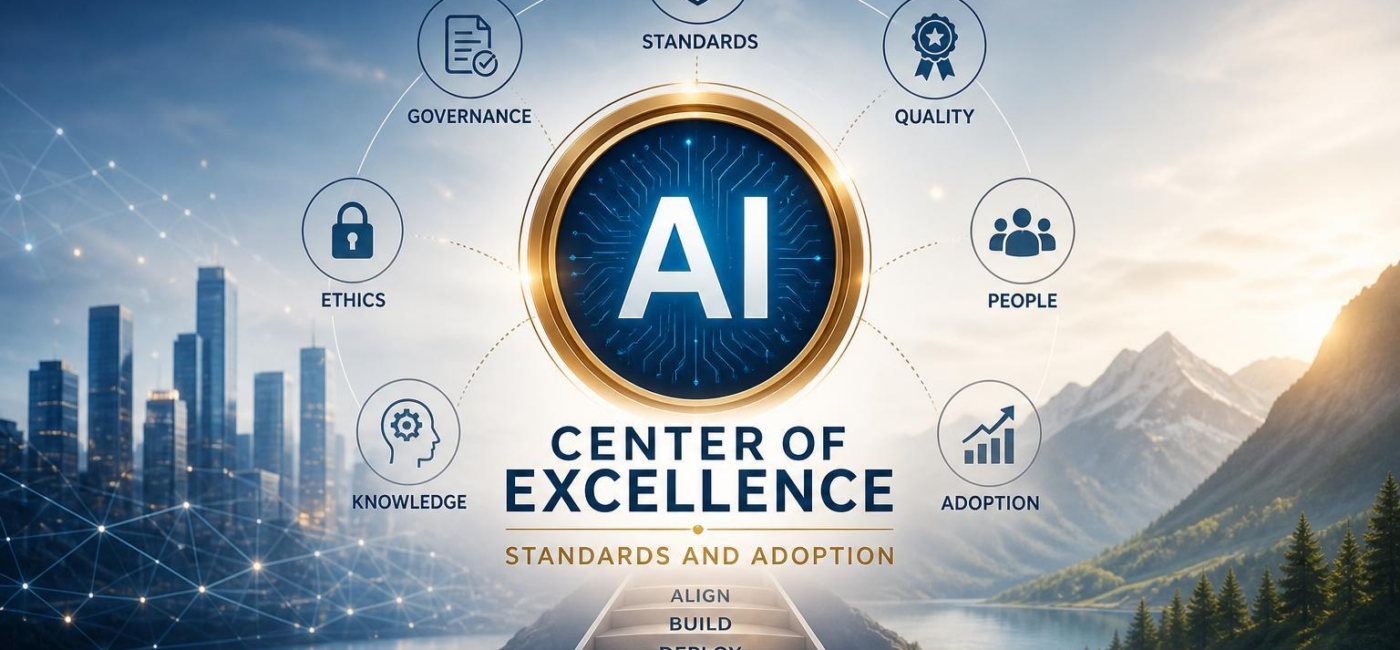
What is an AI center of excellence? It is a cross-functional team that sets standards, shares expertiseand supports adoption across the company.Its job is to help people use AI in ways that are useful, responsibleand consistent with the institution’s goals.
That does not mean the team needs to approve every experiment or turn every project into a compliance exercise. A good Center of Excellence gives business teams practical guidance, clear boundariesand a reliable way to move promising ideas into everyday use.
Set Clear Rules Before Scaling
Before expanding pilots or introducing new tools, the AI Center of Excellence should establish clear decision rights. Teams need to know who approves a use case, who may access sensitive data, who evaluates model behavior, and who is accountable when an automated suggestion affects a customer, employeeor business decision.
The goal is not to build a slow approval process. it is to make sound decisions easier to repeat. A shared intake process, a documented risk reviewand a named business owner can give teams a sensible path from an early idea to production without treating every project as a special case.
these standards should show up in the work itself, not just in a policy document. For each AI system,teams should record its purpose,intended users,data sources,known limitations,human review points,and the situations in which it should be paused or withdrawn.That record becomes especially important after launch, when data, user behavioror business conditions may change.
The Center of Excellence can provide common templates and review criteria while applying more detailed scrutiny to higher-impact uses. At a minimum, every use case should have a business owner and a technical owner, clear data-handling rules, a way for users to question an outcomeand an ongoing process for monitoring performance and incidents.
Make Adoption Easier Than Improvisation
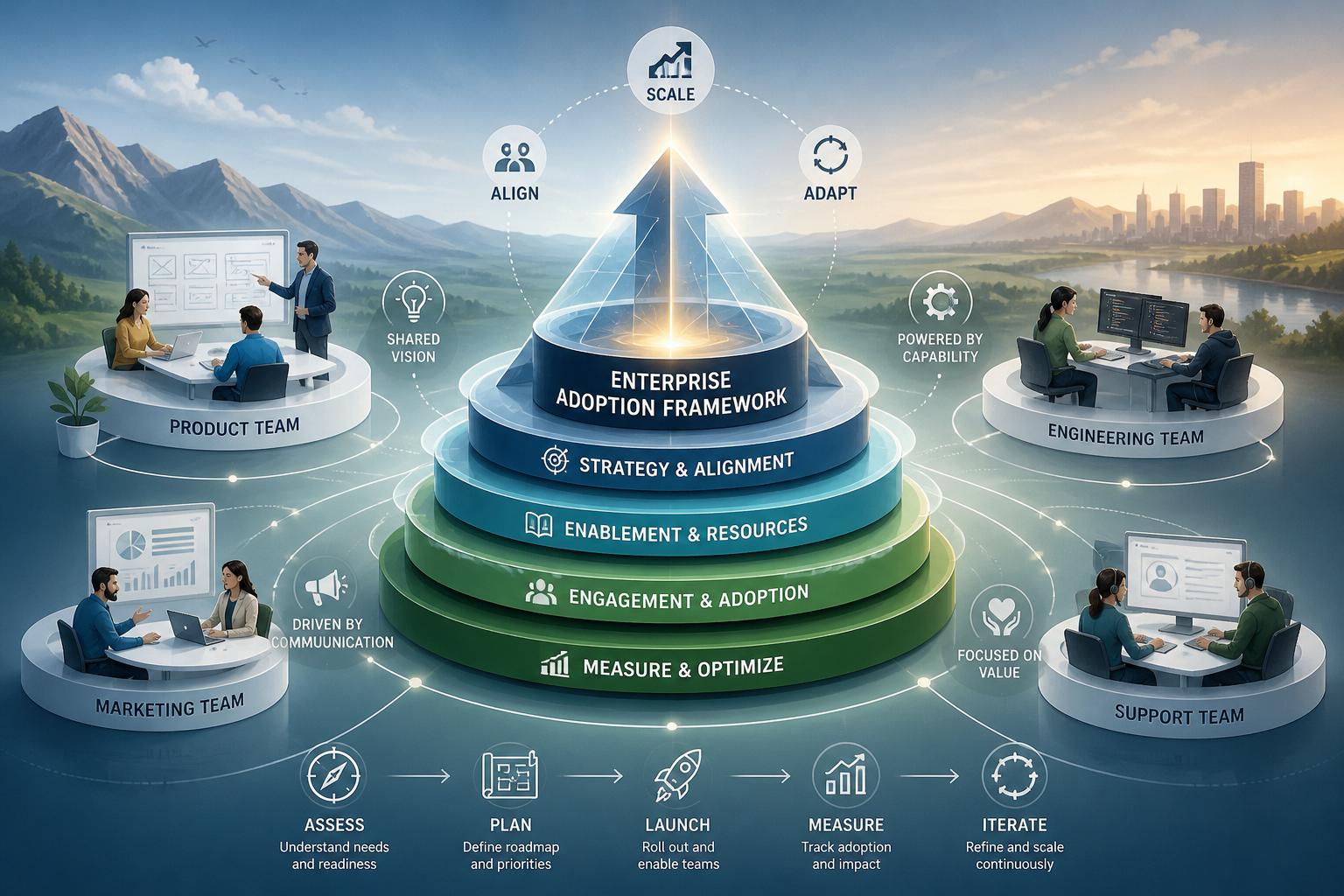
People are more likely to follow responsible AI practices when the approved path is simple and useful. That starts with a common operating model: which use cases need review, who owns the business decision, what data can be usedand how teams should document results.
The Center of Excellence should give teams reusable materials they can apply without starting from scratch. That might include approved tools, prompt guidance, evaluation templates, risk checksand clear escalation routes. Departments will still need to adapt those resources to their own workflows, but the underlying controls and accountability should remain consistent.
Policies alone rarely change how people work. Teams need a practical route from idea to deployment, with lighter checkpoints for low-risk work and closer review for systems involving customers, employees, financial decisionsor regulated data. Local champions can play an critically important role here. They can answer everyday questions, help colleagues apply the standards, and bring recurring issues back to the Center of Excellence.
it also helps to look beyond simple usage numbers. Adoption is stronger when teams use approved methods, complete the right evaluations, report incidentsand share approaches that can be repeated safely elsewhere in the organization.
Measure Value Alongside Risk
An AI initiative should not be judged solely by how impressive it looks in a presentation. Before deployment, teams should agree on what success means for the business process involved and how they will measure it over time.
For a customer-support assistant, such as, useful measures may include answer quality, appropriate escalation, resolution outcomesand the time employees spend correcting responses. Comparing those results with the pre-AI process helps separate real improvements from novelty or work that has simply shifted elsewhere.
Risk belongs in the same conversation. Teams should watch for harmful errors, privacy incidents, unsupported claims, signs of bias, policy exceptionsand patterns in user complaints. If a tool speeds up a process but creates more correction work or increases sensitive-data exposure, it has not created lasting value.
A shared scorecard can keep those trade-offs visible. The Center of Excellence can define acceptable thresholds, assign responsibility for fixing problemsand require evidence before an AI tool is expanded into decisions with greater impact.
Help People Use AI Well
Training should help employees apply AI standards in real situations, not simply confirm that they read a policy. The AI Center of Excellence can create learning paths for different roles, covering approved tools, data-handling expectations, review requirements, and the limits of automated output.
Hands-on practise matters moast. Employees should have opportunities to test prompts, spot an unsupported answer, recognize when a use case needs escalationand document how AI influenced a decision. Executives need to understand accountability and business priorities; managers need to guide workflow changes and oversee their teams; practitioners need clear habits for validation, documentationand incident reporting.
Change management turns that training into day-to-day practice. Business leaders and the Center of Excellence should identify affected workflows, recruit credible local championsand make it easy for employees to ask questions or raise concerns. People are more likely to adopt new ways of working when they understand what is changing, why the standards matterand where to turn when an AI result is uncertain.
Build a Shared Practice, Not a One-Time Program
An AI Center of Excellence works best when it becomes a trusted source of practical help rather than a distant gatekeeper. Clear standards, useful resources, meaningful measurementand ongoing training give teams the confidence to use AI responsibly while keeping the organization aligned.
As tools and business needs evolve, the Center of Excellence should keep learning from real deployments. Updating guidance, sharing lessonsand responding to new risks will help responsible AI become part of how the company works-not a separate initiative that fades after the first round of pilots.
AI tools built by Emerald Force
Built and supported by Emerald Force.
You might also like
- How AI Clusters Customer Feedback and Detects Sentiment
- AI Center of Excellence: Standards and Adoption
- Where AI Coding Excels: Tests, Refactors, Scaffolds
- AI Can Fake Documents-Why Verification Is Essential
- Can AI Identify You From a Photo? Key Risks
AI Models Explained: From Inputs to Outputs
- Synthetic Data: Purpose, Uses, and Limitations
- Preparing Students for Success in AI-Driven Work
- How AI Improves Test Prep With Plans and Practice
- Content Provenance: How Media Origins Are Verified