
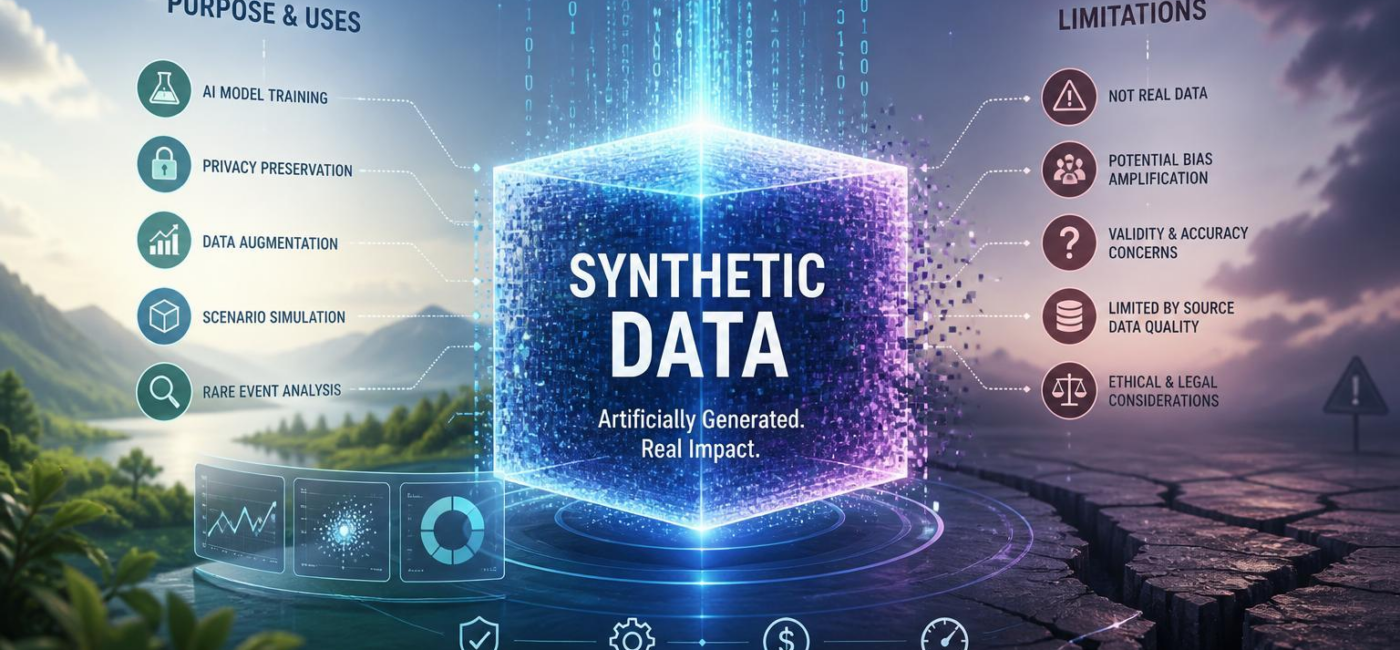
synthetic data is artificially generated data used to support training, testing, analysis, adn privacy-sensitive work. Rather than sharing original records, teams create data that reflects selected patterns from the real world without reproducing the underlying individuals, accounts, or events. It can be helpful when production data is restricted, incomplete, expensive to collect, or simply not suitable for broad internal use.
That does not make synthetic data a substitute for real data in every situation. Its value depends on how well it captures the details that matter for a particular task-and how carefully it has been reviewed for privacy, bias, and accuracy.
Why Teams Use synthetic Data
Most organizations turn to synthetic data because real-world data comes with limits. Customer records, medical files, financial transactionsand operational logs may contain personal or confidential details. Even when access is permitted, sharing those records across development, analyticsand partner teams can create unneeded risk.
A well-designed synthetic dataset gives people a safer way to work. Developers can test new features,analysts can explore data structures,and machine-learning teams can begin experiments without circulating raw production records. It can also fill in gaps where real examples are rare or unevenly represented, such as unusual equipment failures, fraud patternsor application errors.
The key word is “designed.” Synthetic data should be created for a defined purpose, not treated as a generic copy of reality. A dataset that works well for testing a database may not be reliable enough for a forecasting model or a high-stakes decision system.
Where It Is Used
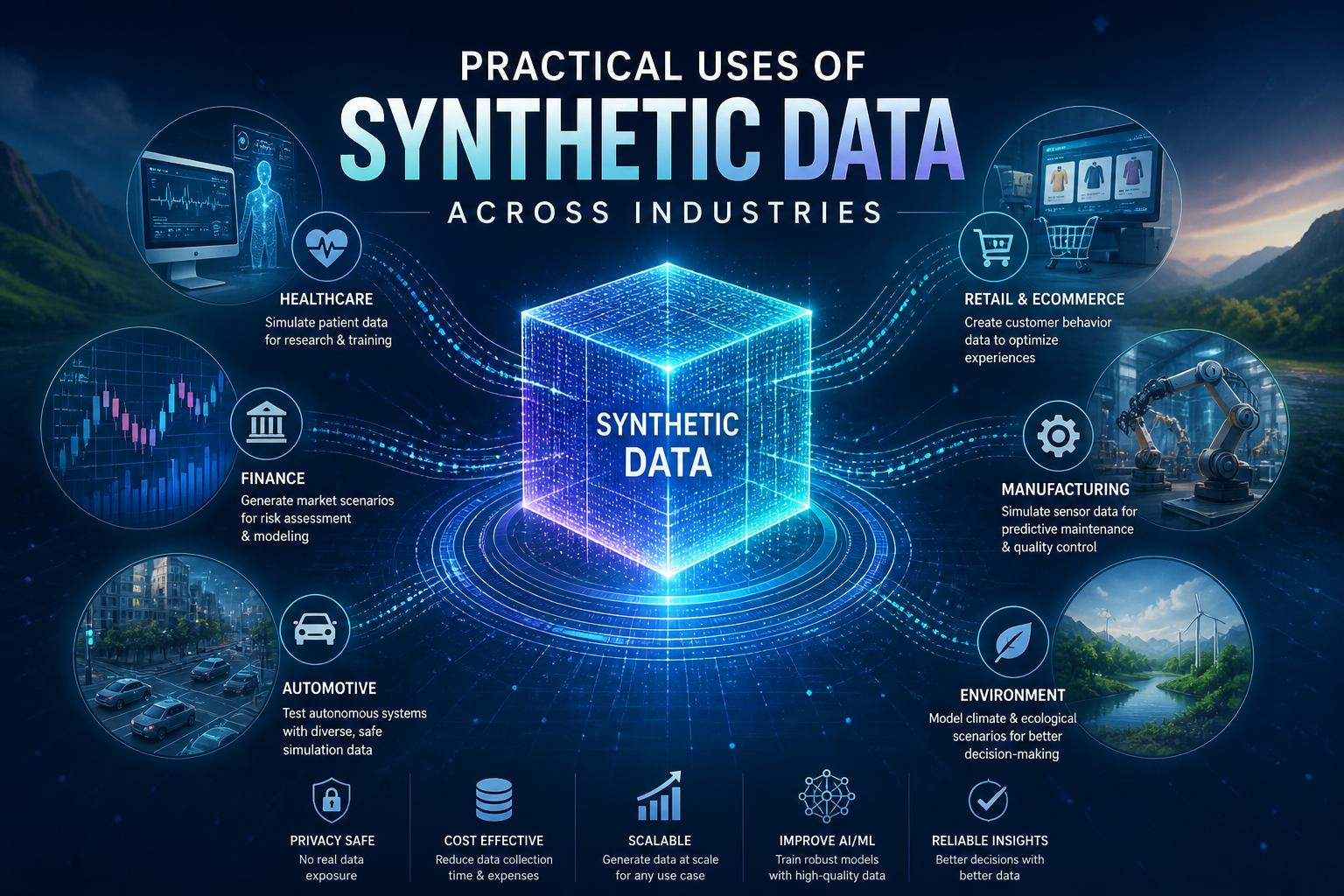
in healthcare, synthetic records can help teams test data pipelines, develop software, and rehearse analytics workflows without widely distributing identifiable patient information. Financial institutions may use generated transaction data to test fraud-monitoring tools or evaluate how systems handle suspicious activity. Insurers can model uncommon claim scenarios that may not appear frequently enough enough in ancient records to support thorough testing.
Manufacturers can use simulated sensor readings while building quality-control or predictive-maintenance tools, especially before enough equipment history has been collected. Retailers may use synthetic data to test inventory systems, proposal featuresor demand-planning processes. In mobility and logistics, generated traffic, routeor fleet scenarios can help teams examine how systems behave under changing conditions.
Software and cybersecurity teams also rely on synthetic examples to test edge cases safely. They can create malformed inputs, suspicious eventsor unusual user behavior without exposing real customers or creating risk from live data. In each case, the goal is the same: give people useful material to work with while reducing unnecessary exposure to sensitive information.
Still,realism can be deceptive. Data may look convincing on the surface yet miss the relationships that actually drive outcomes. A fraud model, such as, needs more than transactions that resemble real ones; it needs the right connections among timing, behavior, amounts, and account activity. If those relationships are not preserved, the test may offer false confidence.
What Synthetic Data Cannot Solve
Synthetic data can lower privacy risk, but it is indeed not automatically anonymous or safe to share without review. if the source data includes rare combinations or highly distinctive patterns, some information may still be exposed indirectly-particularly when someone can compare it with outside data. The generation process, the source dataand the intended use all affect the level of risk.
Quality is another concern. Synthetic records inherit many of the strengths and weaknesses of the data used to create them. If the source data is incomplete, biased, outdatedor incorrectly labeled, those problems can carry into the generated version. Because synthetic data often looks polished and plausible, those flaws may be easy to overlook.
It is indeed also risky to train or evaluate a model only on generated data. A system may perform well in that controlled setting and struggle when it encounters genuine customer behavior, changing conditions, or messy real-world inputs. Synthetic data is best treated as a supplement, not proof that a system will work in production.
using It responsibly
Start with a specific use case. decide whether the dataset is meant for software testing, early model development, analytics, trainingor another purpose. Then identify which characteristics need to be retained. For some work,matching broad distributions might potentially be enough. For others, preserving relationships between variables, time sequencesor rare events may be essential.
The original data should remain protected, with access limited to people who need it.Before synthetic data is shared, teams should assess privacy risks, including whether generated records could be linked back to real people. They should also compare the synthetic data with protected source data to see whether vital patterns have been retained and to identify known gaps.
- Document the source data, generation method, intended useand known limitations.
- Test for privacy leakage and review the data for inherited bias.
- Label the dataset clearly so users understand that it is synthetic.
Governance should not end when the dataset is created. If the data will be shared outside the institution or used in decisions that affect people, it deserves additional review. Keeping clear records of validation results and reuse restrictions helps prevent later teams from assuming that synthetic data is a complete or risk-free version of reality.
A Useful Tool, With Boundaries
Synthetic data can make testing, experimentation, and collaboration easier when real data is sensitive or hard to access. It can expand coverage, support safer developmentand help teams work with scenarios that are rare in historical records.
its limits matter just as much as its benefits. The data must be checked for privacy, bias, and task-specific accuracy, then tested against carefully governed real-world information where appropriate. Used with those safeguards in place, synthetic data can be a practical part of a responsible data strategy-not a replacement for sound judgment or real evidence.
AI tools built by Emerald Force
Built and supported by Emerald Force.
You might also like
- Can AI Identify You From a Photo? Key Risks
AI Models Explained: From Inputs to Outputs
- Synthetic Data: Purpose, Uses, and Limitations
- Preparing Students for Success in AI-Driven Work
- How AI Improves Test Prep With Plans and Practice
- Content Provenance: How Media Origins Are Verified
- AI Chatbots Explained: How They Answer and Act
- U.S. AI Governance: No Single Federal AI Law
- When to Ask for JSON for Structured Output
- Fine-Tuning vs. Retrieval: Model Change or Context