

AI Models Explained: From Inputs to Outputs
What is an AI model? Put simply,an AI model is a trained mathematical system that turns inputs-such as text,images,audio,or sensor data-into predictions or generated outputs. You give it information, it looks for patterns based on what it learned during trainingand it returns a result.
That result can take many forms.A text model might suggest the next word in a sentence or draft a response to a question. an image model might identify an object in a photo. A forecasting model might estimate future demand from past sales data. In each case, the model is making a calculated prediction, not pulling a ready-made answer from a database.
From input to output
Every AI model starts with input. That could be the words in a prompt, the pixels in an image, audio samples from a recording, purchase historyor rows in a spreadsheet. The model converts that information into numbers it can work with, then applies the relationships it learned during training to produce an output.
The basic idea is straightforward: input goes in, the model processes itand a result comes out. The result might be a label,a score,a proposal,a written response,or newly generated content. What changes from one model to another is the kind of information it receives and the task it has been trained to perform.
Context matters a great deal.A small change in wording, missing detailor an unusual example can affect the result. That is especially true when a prompt is vague. The clearer and more relevant the input, the better chance the model has of producing something useful.
How models learn
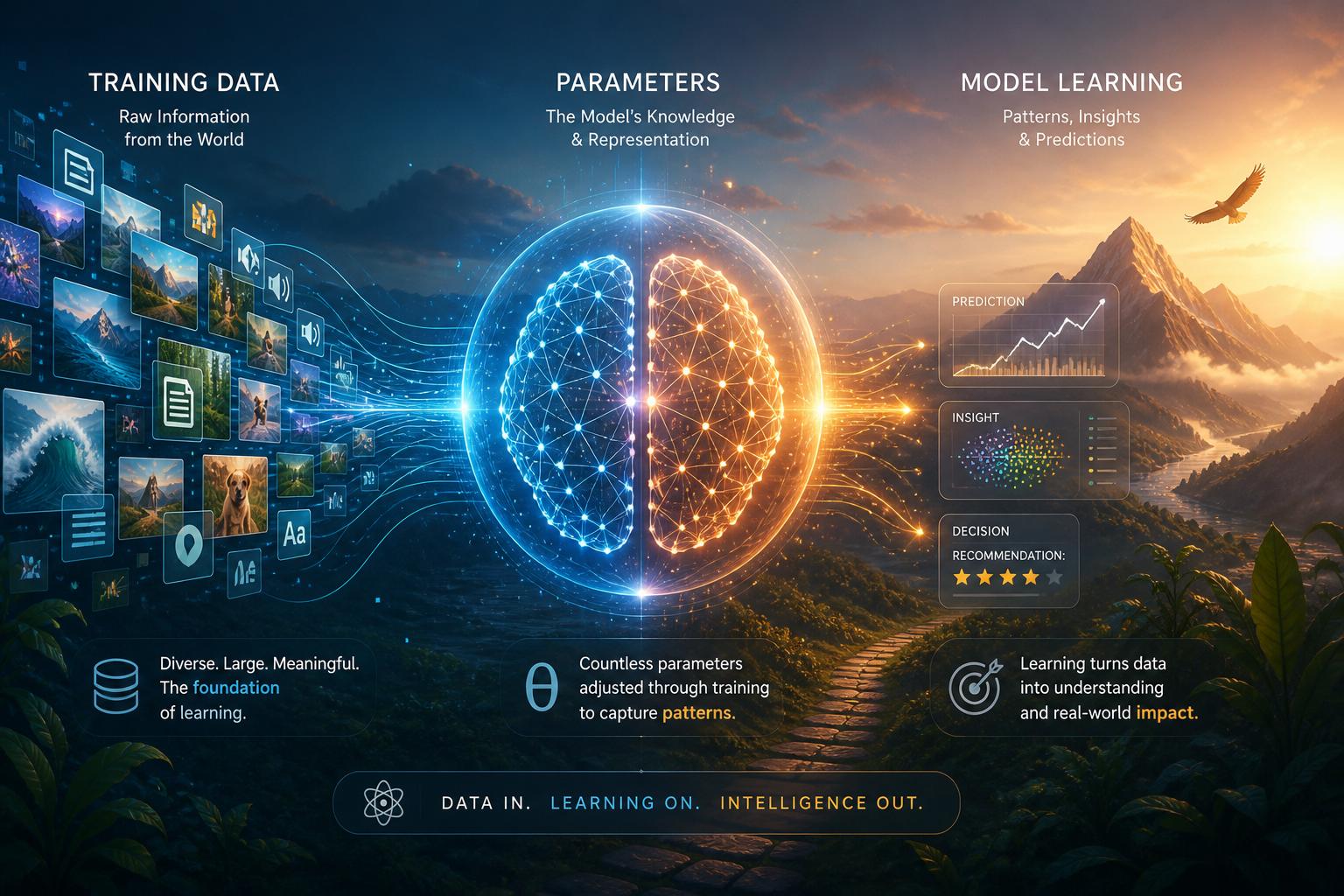
Before an AI model can respond to new inputs, it needs training data. Depending on its purpose, that data may include text, images, audio, codeor other examples. A model trained on language, for example, is exposed to patterns in how words and phrases tend to appear together. A vision model learns from examples of how objects, shapesand scenes appear in images.
AI models do not understand information in the same way people do. Rather, they learn statistical relationships. During training, the model makes predictions, compares them with the expected resultand adjusts its internal numerical settings to reduce errors over time. Those settings are called parameters.
Parameters influence how a trained model responds, but having more of them does not automatically make a model better.The quality and range of the training data, the way the model was trainedand how well it fits the intended task all matter. A model can still make mistakes when it encounters incomplete information,unfamiliar situations,or patterns that were poorly represented in its training data.
Checking the results
An AI response shoudl be judged by more than how polished it sounds. The first question is weather it is accurate. Facts, calculations, datesand citations should be checked against reliable sources or the original material. A confident answer can still be wrong.
Reliability is also crucial. If a prompt is reworded slightly, does the model still provide a sensible answer? Does it recognize when it lacks enough informationor does it fill gaps with guesses? These questions matter because AI systems can produce plausible wording even when the underlying answer is incomplete or incorrect.
Bias deserves the same level of attention.Training data can reflect imbalances in published information, cultural assumptionsor past decisions. Consequently, an output may give too much weight to one viewpoint while overlooking another. Testing a model with varied names, regions, situationsand viewpoints can help reveal uneven results.
For decisions with real consequences, people should remain involved. In hiring, finance, healthcare, legal workand similar settings, AI output should be reviewed alongside autonomous evidence and professional judgment.
Choosing a model for the job
Start with the task rather than the model’s name or size. A customer-support tool needs to handle written questions clearly and consistently. A document-processing system may need to read scanned forms. A forecasting tool needs reliable historical data. The right model depends on the input available, the output required, and the consequences of getting it wrong.
Text-generation models are useful for drafting,summarizing,and conversation. Vision models can work with images, documentsand visual inspection tasks.Predictive models are often used to assign categories, calculate scoresor estimate future outcomes.In many cases,a smaller and more focused model is a better choice than a broad general-purpose one,particularly when speed,cost,privacy,or predictable behavior matter.
before using a model in day-to-day work, test it with real examples rather than idealized ones. Include incomplete forms, awkward phrasing, low-quality imagesand other edge cases people actually encounter. Then assess whether the output is accurate, usefuland practical for someone to review.
Conclusion
AI models can seem mysterious,but their role is easier to understand once you follow the path from input to output. They learn patterns from training data, apply those patterns to new informationand generate a prediction or response. their usefulness depends on the quality of the data, the fit between the model and the taskand the care taken to check the results. Used thoughtfully, they can support human work-but they should not replace judgment were accuracy and fairness matter most.
AI tools built by Emerald Force
Built and supported by Emerald Force.



You might also like
- Can AI Identify You From a Photo? Key Risks
AI Models Explained: From Inputs to Outputs
- Synthetic Data: Purpose, Uses, and Limitations
- Preparing Students for Success in AI-Driven Work
- How AI Improves Test Prep With Plans and Practice
- Content Provenance: How Media Origins Are Verified
- AI Chatbots Explained: How They Answer and Act
- U.S. AI Governance: No Single Federal AI Law
- When to Ask for JSON for Structured Output
- Fine-Tuning vs. Retrieval: Model Change or Context