

Can AI help with test prep? Yes-when used well, it can help create study plans, generate mock questions, and explain tough topics in a way that makes sense to the student. The value is not that it replaces studying.It is that it can make study time more focused,especially when you are unsure what to review next or why you keep missing the same type of question.
Study Plans Built Around Your Gaps
A useful study plan should reflect what you actually need to work on, not just follow a generic calendar. AI can help sort through practice results and identify whether a missed question came from not knowing the material, rushing through the wording, making a calculation error, or misunderstanding the format.
Two students can miss the same algebra question for wholly different reasons. One may need to revisit linear equations, while the other understands the math but gets stuck translating word problems into equations.Their next study session should not look the same. A thoughtful plan can direct each person toward the right kind of practice instead of sending both back through the same chapter.
As you complete quizzes,timed sets,and full-length practice tests,that plan can change. Topics that are improving may only need occasional review, while recurring mistakes deserve more attention. if your exam is close, it also helps to focus on the areas most likely to make a difference rather than trying to relearn everything at once. Each study session should have a reason behind it.
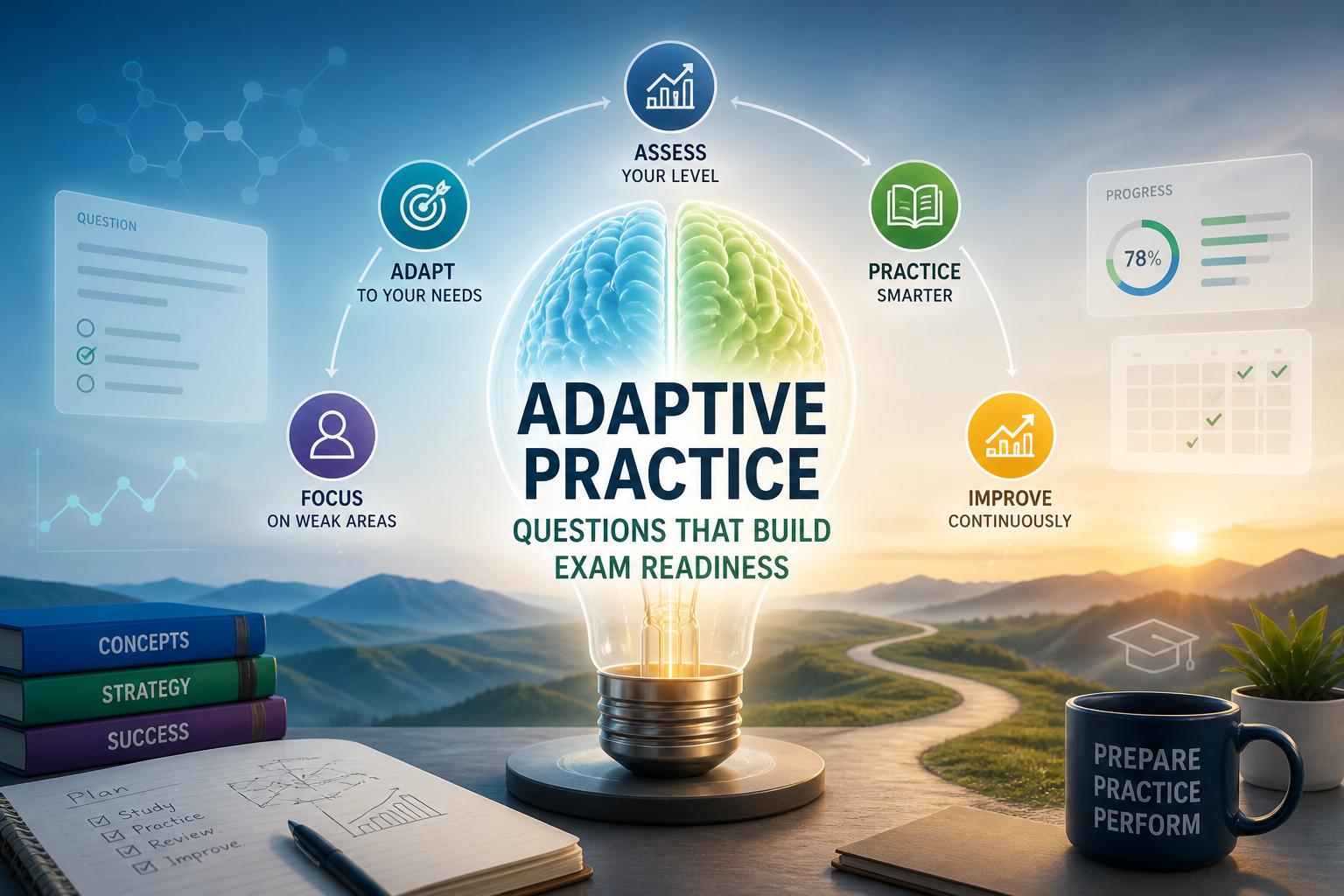
Practice That Adjusts as You Improve
Static worksheets have their place, but they do not always tell you what to do after you get a question right or wrong. Adaptive practice can make that next step more useful. If you are consistently answering a topic correctly, it may be time for harder versions of the same question. If you keep missing it, the better move may be to step back and review a related skill first.
This kind of practice is especially helpful because exams rarely test a concept in exactly one way. Questions may use different wording, include tempting wrong answers, or combine several skills at once. Working through varied versions can help you recognize what the question is really asking instead of relying on a memorized pattern.
It also supports long-term recall. Earlier topics can reappear in mixed practice, giving you a chance to revisit material before it fades. The goal is not simply to get through more questions. It is to build enough flexibility that you can handle an unfamiliar version of a familiar problem on test day.
Make Mistakes Useful
A practice score is only the starting point. What matters more is understanding why an answer was wrong. AI-assisted review can help organize missed questions into clearer categories: a content gap,a misread prompt,poor pacing,a careless calculation,or uncertainty between two close choices.
That distinction matters.Someone who misses reading-comprehension inference questions may need to practice finding evidence in the passage. Someone who knows the material but runs out of time needs a different approach: pacing targets, timed drills, and a better sense of when to move on.
After a practice session,use those patterns to decide what comes next. Review the underlying concept if knowledge is the issue. If the problem is process, look at how you approached the question and where the reasoning went off track. If timing is the issue, practice under realistic limits. It can also be useful to revisit questions you answered correctly but guessed on.A lucky answer is not the same as a secure skill.
Use AI Without Letting It Do the Work
AI is most helpful as a study coach, not a replacement for your own thinking. it can definitely help break a large subject into manageable topics,explain a concept in another way,or create extra practice after you have studied the basics. But eventually,you need to put the help aside and see what you can recall on your own.
A good routine is simple: try the problem first, ask for a hint if you are stuckand then explain the solution in your own words.If you ask for the full answer immediately, you may feel like you understand it without having practiced the reasoning that the exam will require.
- Before studying: use AI to organize topics and set realistic priorities.
- While practicing: ask for hints, alternate examplesor feedback on your reasoning.
- Afterward: complete a short set without help to check what you truly know.
Keep an error log, even if it is indeed only a few notes after each session. Write down what you missed, why you missed itand what you will do differently next time. Compare AI explanations with your notes, textbookand official course materials-especially for subjects where precise wording matters.
Used with some discipline, AI can make test prep feel less scattered. It can point you toward the right topics, give you more ways to practiceand help turn mistakes into a practical next step. The learning, tho, still happens when you work through the problem yourself.
AI tools built by Emerald Force
Built and supported by Emerald Force.
You might also like
- How AI Improves Test Prep With Plans and Practice
- Content Provenance: How Media Origins Are Verified
- AI Chatbots Explained: How They Answer and Act
- U.S. AI Governance: No Single Federal AI Law
- When to Ask for JSON for Structured Output
- Fine-Tuning vs. Retrieval: Model Change or Context
- Seeing Isn’t Believing: Verify Video Evidence First
- How AI Can Build Your Case for a Better Raise
- System Prompts: Rules That Govern AI Behavior
- AI Can Draft Books, but Humans Still Make Them Great