

When Pretrained Models Are Enough
Do you need labeled data to use AI? Not always. Many useful AI tasks can start with a pretrained model, clear instructionsand access to the right reference material.You may not need to build a custom dataset just to summarize meeting notes, sort common support requests, extract standard details from documentsor draft routine content.
The deciding factor is how closely your task matches what the model already understands. General-purpose language and vision models have learned broad patterns in text,images,and everyday concepts.When the work is familiar, the desired result is easy to explainand mistakes are easy to spot, prompting may be all you need.
Labels matter when the task depends on knowledge the model cannot reasonably guess.A model might understand the words “priority customer,” for example, but it will not know your company’s definition unless you provide it. The same applies to internal policies, specialized terminology, unusual categoriesand decisions where a small mistake could have serious consequences. Use pretrained models for general patterns; use labeled examples when your own rules define what “correct” means.
Start With the task, Not the Technology
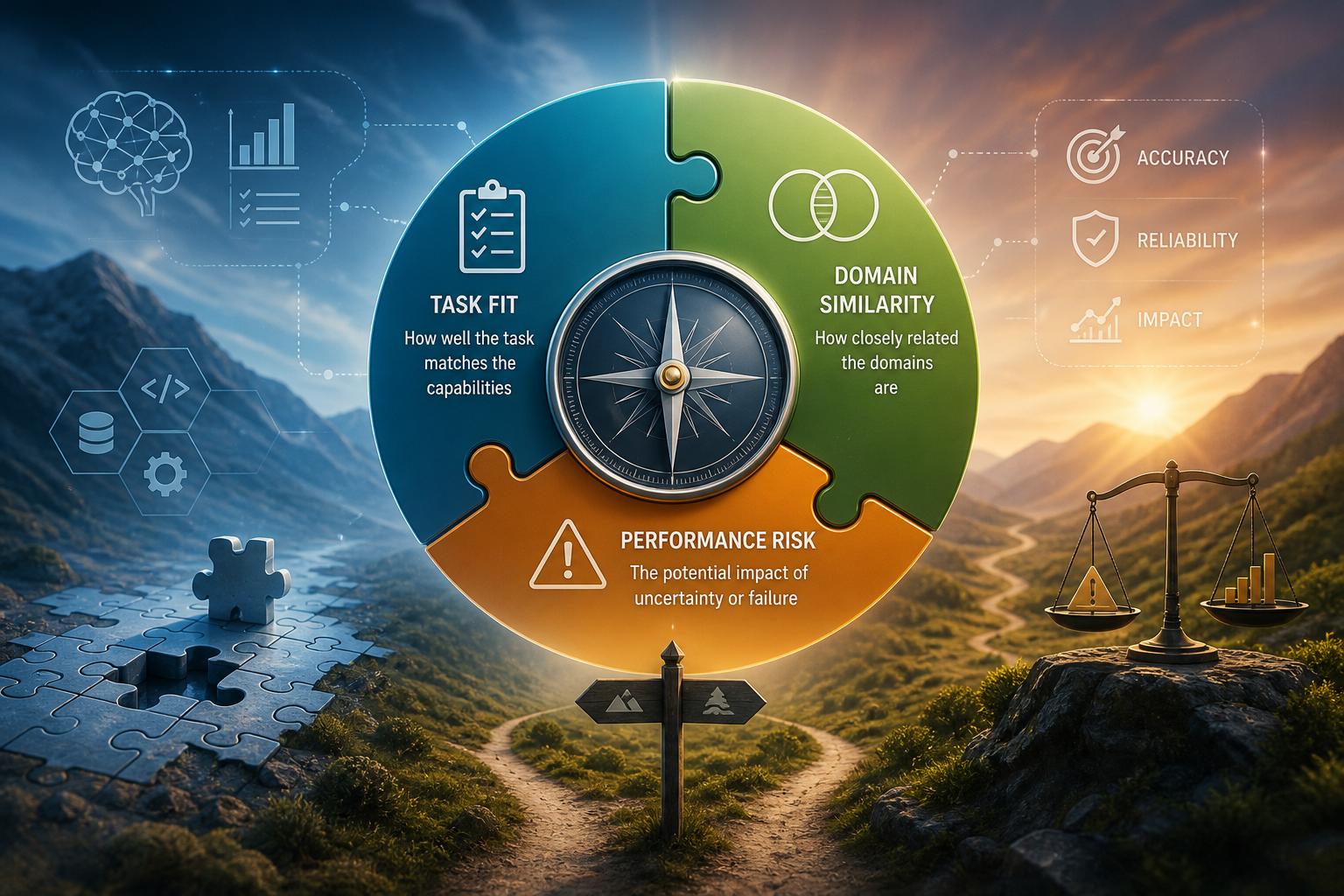
A model can look impressive in a fast demo and still be a poor fit for day-to-day work. Before collecting labels or fine-tuning anything, look closely at the task itself. Is the input written in familiar language? Can you describe the desired output in a few clear sentences? Can someone review the result without much effort? If so, a pretrained model may be a sensible starting point.
Routine tasks are frequently enough good candidates: summarizing standard buisness text, grouping feedback by theme, extracting names and dates from consistent documentsor routing straightforward requests. The risks change when the work involves unusual edge cases, vague internal languageor high-stakes decisions in areas such as healthcare, law, financeor safety.
Domain similarity matters just as much.A general model may recognize the vocabulary in an insurance claim, lab reportor engineering ticket while still missing the conventions that make an answer useful. Test it on real examples, including messy inputs and exceptions-not just the clean cases that make a system look good. If errors are obvious and inexpensive to correct, prompting and retrieval may be enough. If the mistakes are subtle, repeatedor costly, you will likely need labeled examples and more focused evaluation.
use Prompts and examples Carefully
Zero-shot prompting means asking a pretrained model to perform a task using instructions alone. It can work well for tasks such as identifying a request type, summarizing comments, extracting themesor sending incoming messages to the right team. The trick is to make the instruction specific. Define the input, describe the allowed outputs, explain how to handle uncertaintyand request a consistent format.
For example, a support-routing prompt should not simply say, “Categorize this message.” It should name the available queues, explain the difference between themand give the model a safe fallback such as “needs review.” That fallback is often more valuable than forcing a confident but wrong answer.
Few-shot prompting adds a small number of examples to show the model how your organization handles tricky cases. the best examples are rarely the obvious ones. use examples that clarify boundaries: two similar requests that belong in different queues, short messages with missing detailsor phrases that could reasonably be interpreted more than one way.
Keep those examples currentand test changes against inputs the model has not already seen.Reviewer corrections can frequently enough improve the prompt, the examplesor the supporting material without turning the project into a full training effort. In practice, prompts act like operating instructions, while examples act like precedent. Both need an owner and occasional review.
Validate Before You Trust It
Skipping a labeled training set does not mean skipping evaluation. Even if you never fine-tune the model, you still need evidence that it performs well enough for the job. Start with a small set of real examples that includes ordinary work, difficult cases, ambiguous requestsand situations where an error would matter.
Judge results against clear acceptance criteria. A response that sounds polished is not necessarily correct, completeor safe to act on. Look for recurring mistakes,unsupported claims,missed exceptions,and cases where the model should have asked for help rather of guessing.
Human review should be part of the workflow from the beginning, especially when the model handles sensitive or high-impact work. Route uncertain cases to a person, keep a record of correctionsand use those patterns to improve the prompt, adjust the review thresholdor update the reference material available to the model.
That feedback loop is what makes a label-free approach practical. You are not trying to prove that the model is perfect. You are trying to understand where it is indeed dependable, where it needs a person in the loop, and where it should not be used.
Start Simple, Then Add Labels If the Work Demands Them
Labeled data is valuable, but it is not the entry ticket for using AI. For many common tasks,pretrained models and retrieval can get you to a useful first version faster than a custom training project. Start with a narrow use case, provide clear instructions and relevant source materialand test the results on real work.
If performance holds up, you may not need labels at all. If the model repeatedly misses your organization’s rules, struggles with edge casesor makes errors that are hard to catch, those failures will show you exactly what kind of labeled data would be worth collecting.
AI tools built by Emerald Force
Built and supported by Emerald Force.
You might also like
- Can AI Identify You From a Photo? Key Risks
AI Models Explained: From Inputs to Outputs
- Synthetic Data: Purpose, Uses, and Limitations
- Preparing Students for Success in AI-Driven Work
- How AI Improves Test Prep With Plans and Practice
- Content Provenance: How Media Origins Are Verified
- AI Chatbots Explained: How They Answer and Act
- U.S. AI Governance: No Single Federal AI Law
- When to Ask for JSON for Structured Output
- Fine-Tuning vs. Retrieval: Model Change or Context