

An AI chatbot is a conversational interface that uses language models and related tools to answer questions or perform tasks. You interact with it in everyday language, much as you would with a colleague or customer-service representative. Ask it to explain a topic, draft an email, summarize a documentor help organize ideasand it generates a response based on your request and the details available to it.
That can make chatbots useful, but they are not people and they do not “know” things in the same way people do. Understanding how they work-and where they fall short-makes it easier to use them well.
How chatbots interpret a question
when you send a message, the chatbot looks at the words you used, their relationship to one anotherand the context of the conversation. If you ask, “Can you explain that more simply?”, it has to rely on what came before. A detailed prompt gives it more to work with and usually leads to a more useful answer.
The chatbot does not read with human awareness, experienceor intuition. It identifies patterns in language and generates a response that appears likely to fit the request. It builds that response piece by piece, taking into account both your prompt and the text it has already produced.
That is why specificity matters. “Write about solar panels” leaves many decisions open: who is the audience, what should the article coverand how long should it be? “Explain how solar panels work for first-time homeowners in three short paragraphs” gives the chatbot a clearer job.Include the goal, intended reader, formatand any limits that matter. Better context usually produces a better result.
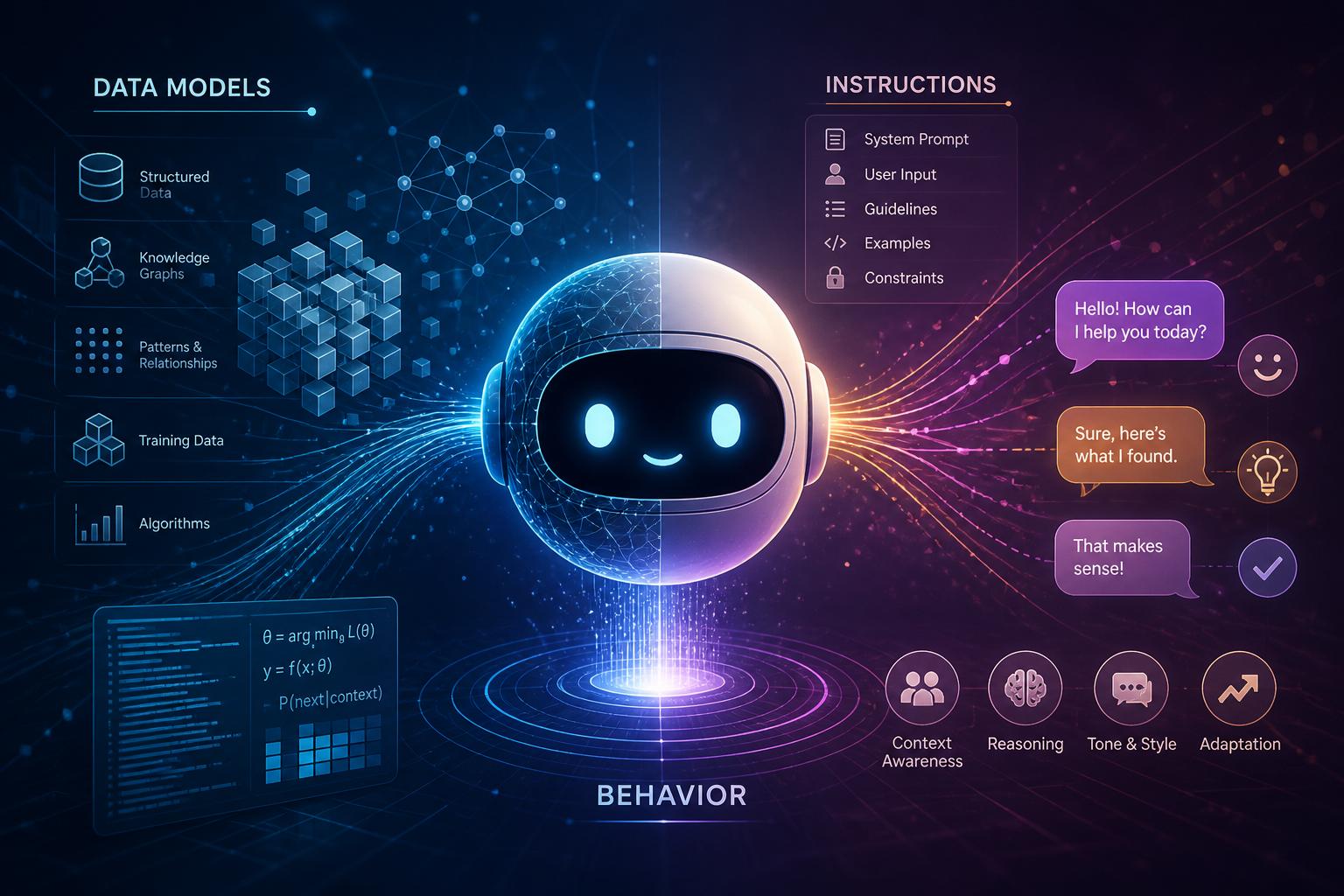
What shapes a chatbot’s answers
A chatbot is built on a language model trained to recognize patterns across large amounts of text. It is indeed not simply searching a stored library for an exact sentence to repeat. Instead, it uses what it learned about words, conceptsand common ways ideas are expressed to create a new answer for the conversation at hand.
Instructions also shape the result. The system may be told to write clearly, follow a particular format, avoid unsafe guidance, protect private informationor stay within a defined role.Your own instructions matter, to.A request for a concise answer in a kind tone will generally produce something quite different from a request for a formal report with headings and citations.
The conversation itself is another important layer. Earlier messages can help the chatbot follow the thread of a discussion,remember the audience you described,or revise a draft without starting from scratch. Still, context can be incomplete or misunderstood, so it is worth correcting the chatbot when it makes a wrong assumption.
Where chatbots can get things wrong
AI chatbots can sound confident when the information behind an answer is incomplete, outdated, ambiguousor wrong. Fluent writing is not the same as verified information. This is especially important when a question involves health, legal matters, money, safety, technical decisionsor current events.
They are often helpful for summarizing text you provide, outlining a project, drafting routine content, explaining familiar ideasor generating alternatives. They are less reliable as a final source for factual claims, citations, calculationsor advice that could affect someone’s health, finances, rights, or safety. In those situations, verify important details with reliable sources and qualified professionals where appropriate.
Chatbots also have limited autonomy. Some can work with connected tools to prepare a message, update a file, retrieve informationor carry out steps you approve. Even then, they do not have personal judgment or responsibility for the outcome. They may miss context, misunderstand a priorityor fail to recognize when a task has consequences beyond the immediate request. A person should remain responsible for approval and final decisions.
How to use an AI chatbot responsibly
Start with a clear brief.Explain what you need, who it is for, what format you wantand anything the chatbot should avoid. if the subject is important or uncertain, ask it to identify assumptions and point out where information may need to be checked.
Be thoughtful about what you share. Do not paste passwords,financial account details,private customer records,sensitive personal information,unpublished business plans,or other confidential material into a public or unapproved tool. If you are using AI at work,follow your institution’s rules for data handling and approved software.
review the output before acting on it. Check facts, confirm calculations, inspect sourcesand read carefully before sending an email, publishing content, changing a fileor making a purchase. An AI chatbot can save time and help you think through a task, but it effectively works best as an assistant-not as the final authority.
Used with clear prompts and sensible oversight, chatbots can be practical tools for writing, research support, and everyday problem-solving. The key is simple: let the chatbot handle the first pass,and keep human judgment in charge.
AI tools built by Emerald Force
Built and supported by Emerald Force.
You might also like
- How AI Improves Test Prep With Plans and Practice
- Content Provenance: How Media Origins Are Verified
- AI Chatbots Explained: How They Answer and Act
- U.S. AI Governance: No Single Federal AI Law
- When to Ask for JSON for Structured Output
- Fine-Tuning vs. Retrieval: Model Change or Context
- Seeing Isn’t Believing: Verify Video Evidence First
- How AI Can Build Your Case for a Better Raise
- System Prompts: Rules That Govern AI Behavior
- AI Can Draft Books, but Humans Still Make Them Great