

Does the united States have one AI law? No. The country does not have a single, comprehensive federal statute governing artificial intelligence. Instead, AI is regulated thru existing consumer-protection, civil-rights, privacyand industry-specific laws, along with agency enforcement, voluntary standards, and a growing number of state rules.
That can feel messy, especially for organizations trying to build or use AI responsibly. But the basic principle is straightforward: calling a product “AI” does not place it outside the law. If the system misleads consumers, discriminates in hiring, mishandles sensitive data, or creates risks in a regulated field, existing legal duties may already apply.
Federal Agencies Already have a Role
Federal AI governance is shaped largely by the authority agencies already have. The Federal Trade Commission, for example, can examine deceptive claims about AI products, unfair business practices, privacy problems, and competition concerns. The Equal Employment Opportunity Commission may become involved when automated hiring, screeningor workplace tools create discrimination or interfere with accommodation obligations.
Other regulators may also apply the rules they enforce to AI-driven decisions in areas such as financial services, health care, transportation, communications, and consumer protection. The question is usually not whether a system uses artificial intelligence. The real question is whether the way it is designed, marketedor used violates an existing legal obligation.
NIST plays a different role. It does not generally enforce AI rules, but its AI Risk Management Framework gives organizations a practical structure for identifying risks, testing systems, documenting decisions, assigning obligation, and monitoring results over time. For businesses, the lack of one federal AI law does not mean there is no federal oversight. It means they need to look carefully at the laws and agencies that apply to their particular use case.
States Are Building Their Own Rules
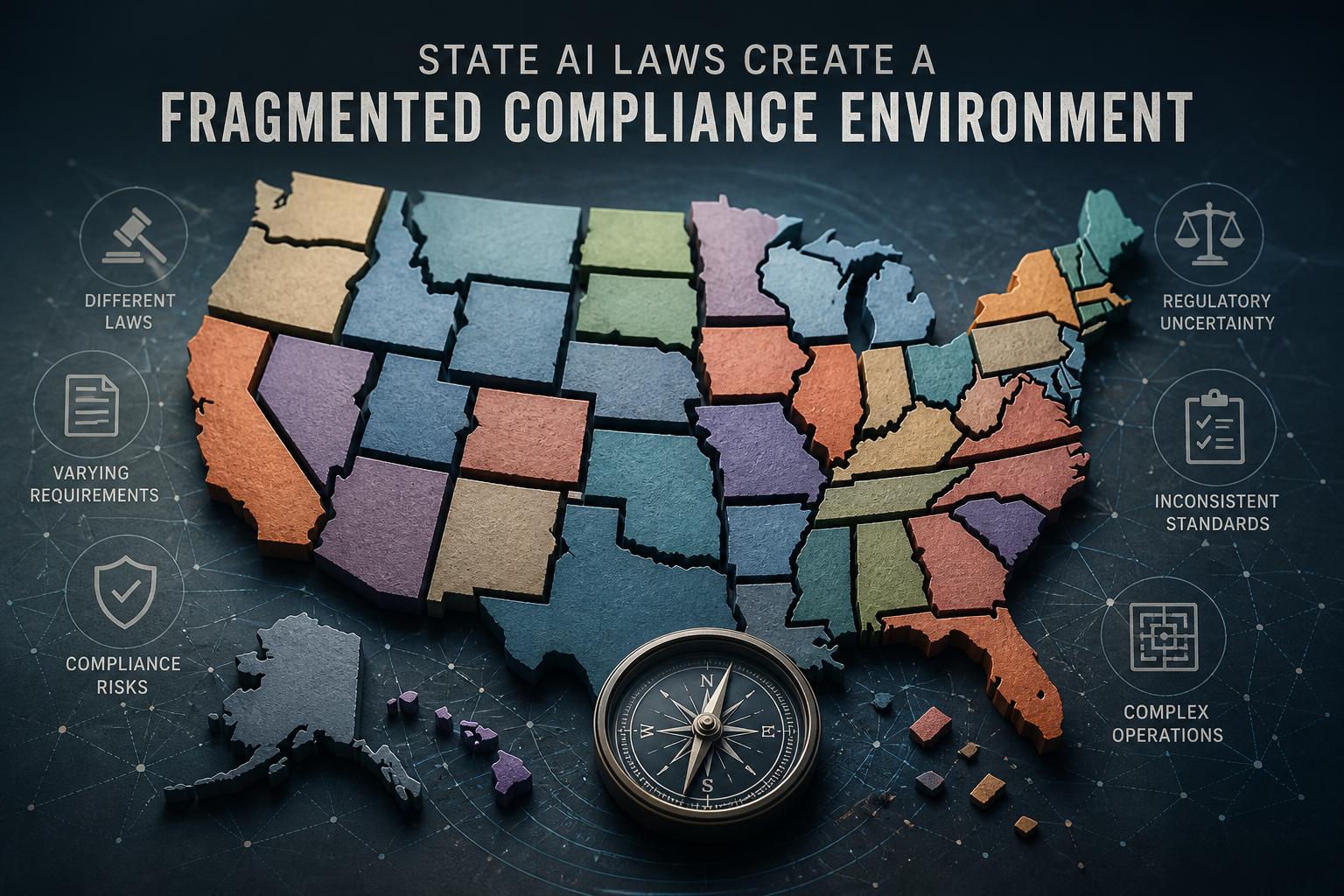
While Congress has not created one national AI rulebook, states are developing their own requirements. These laws and proposals often address automated decision-making, consumer disclosures, privacy, discriminationand systems used in high-impact settings.
The result is a patchwork. A tool may face different expectations depending on where a company operates, where the people affected by the tool liveand what decisions the system helps make. One state may focus on notice or consent,while another may place more emphasis on risk assessments,documentation,or oversight of automated decisions.
This is especially relevant for AI used in employment, housing, insurance, creditand other areas where an automated decision can have serious consequences for an individual. companies operating across state lines may find that a policy built around the least demanding requirement leaves important gaps elsewhere.
A sensible response is to establish a common internal baseline: document the intended use, evaluate possible harms, test the system where appropriate, provide meaningful human oversightand keep records of key decisions. Those controls can than be adjusted as state-specific rules develop.
Standards Help Turn Principles Into Practise
When the law does not provide one clear, worldwide answer, recognized standards can help organizations make sound decisions.Risk-management frameworks give teams a way to translate broad concerns-such as fairness, privacy, security, accuracyand accountability-into everyday processes.
The NIST AI Risk Management Framework is widely used because it encourages organizations to consider the purpose of a system, the people it may affectand the harms that could arise from errors or misuse. It also recognizes that not every AI tool presents the same level of risk. A system used for internal scheduling should not necessarily be governed the same way as a system used to screen job applicants or make decisions about access to services.
Standards are not a substitute for legal compliance. still, they can help show that an organization took foreseeable risks seriously. In practice, that may mean keeping clear records of a system’s limitations, testing results, important changes, data sources, and approval decisions. It may also mean setting escalation procedures for tools that affect people in significant ways.
Build Governance That Can Change
Because U.S. AI rules are still evolving, governance cannot be a one-time policy exercise. Organizations need a process that can adapt as agency guidance, enforcement actions, court decisionsand state requirements change.
Start by knowing where AI is being used. Maintain an inventory of systems, identify their purpose and data sourcesand consider who may be affected if the tool produces a poor result. uses involving employment,housing,credit,insurance,education,or essential services generally deserve closer review than lower-risk internal tools.
AI oversight should not sit with one department alone.Legal,privacy,security,compliance,technical,and business teams all have a role in deciding how a system may be used and what safeguards it needs. Just as important, organizations should document those decisions. If a regulator,customer,employee,or court later asks how a system was evaluated,a clear record can matter.
There is no single federal AI law in the United States, but there is also no legal blank slate. The moast effective approach is to treat AI governance as an ongoing discipline: understand the applicable rules, set reasonable boundaries, monitor performance, and adjust when the technology, the factsor the law changes.
AI tools built by Emerald Force
Built and supported by Emerald Force.

You might also like
- U.S. AI Governance: No Single Federal AI Law
- When to Ask for JSON for Structured Output
- Fine-Tuning vs. Retrieval: Model Change or Context
- Seeing Isn’t Believing: Verify Video Evidence First
- How AI Can Build Your Case for a Better Raise
- System Prompts: Rules That Govern AI Behavior
- AI Can Draft Books, but Humans Still Make Them Great
- How AI Reviews Code: Bugs, Tests, Style, and Security
- How AI Is Regulated: From Privacy to AI-Specific Laws
- AI Agent Memory: Goals, Preferences, and Past Steps