

What an AI Explanation Can-and Can’t-Tell You
Can AI explain how it got an answer? In many cases, it can provide a useful rationale: a plain-language account of the evidence, assumptions, or rules that appear to support its response. That can definitely help a person review an answer, challenge it, or decide what to check next.
But that explanation is not necessarily a faithful readout of the model’s exact internal process. AI systems do not reason in the same tidy, step-by-step way people usually describe their own thinking. Their outputs may reflect many learned patterns and internal calculations that cannot be cleanly translated into a short paragraph. A rationale is for the reader, not a transcript of the model’s mind.
That distinction is easy to miss as a well-written explanation feels reassuring.If it names relevant facts and reaches a sensible conclusion, it may sound like proof.It is not. A useful explanation and a trustworthy result are related,but they are not the same thing.
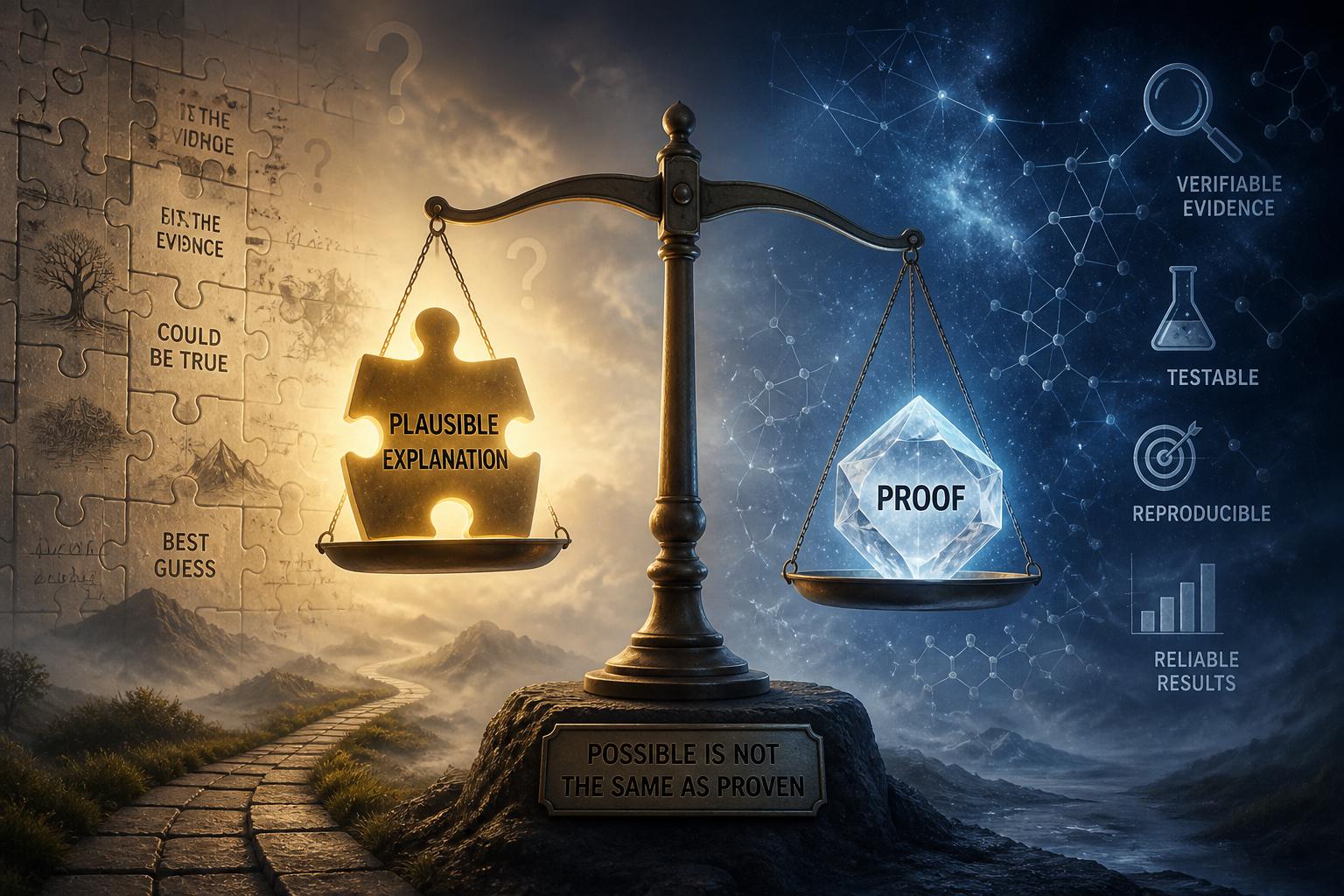
Why a Plausible Rationale Isn’t Proof
AI is good at producing language that resembles a reasonable explanation. It can identify details that seem relevant, connect them to a conclusionand present the result with confidence. Yet a convincing explanation may have been generated after the answer was formed. In othre words, the system may be offering a coherent justification rather than revealing every factor that influenced the output.
That does not make rationales worthless. It simply means they need to be evaluated on their own merits. Are the stated facts actually in the source material? Do they support the conclusion? has the explanation ignored an crucial exception, uncertaintyor competing interpretation?
This matters especially when the stakes are high. A rationale attached to a lending suggestion, a health-related alertor a hiring screen should be the beginning of a review, not the end of one. A polished explanation cannot by itself show that a decision was accurate, fairor consistently applied. Those questions require evidence, testingand human judgment.
How to Review an AI Rationale
the most useful mindset is to treat an AI-generated explanation as a claim you can inspect. Read it closely, then compare it with the underlying material. If the answer cites a fact, confirm that the fact is present. If it makes an assumption, ask whether a different assumption would change the result. If it sounds certain,look for the uncertainty it may have left unsaid.
A few checks go a long way:
- Make sure the stated reasons are grounded in the available evidence.
- Check whether the conclusion still holds when relevant details change.
- Look for missing constraints, choice explanationsand unanswered questions.
- Verify calculations,sources,and critically important factual claims independently.
You can also ask the system what details would change its answer. That will not expose its complete internal reasoning, but it can reveal the conditions it considers important. If the explanation falls apart when you check the sources or test the assumptions, it may still be useful as a draft for human review-but it should not be treated as an audit trail.
Build the Workflow Around Verification
Responsible use does not require pretending that AI rationales are useless. It means putting them in the right place. Let the system offer an answer and explain the factors it appears to have considered. Then give a person the information and authority needed to verify those factors, correct mistakesand make the final call.
For work that affects people in meaningful ways, keep a record of the prompt, the AI output, the evidence reviewedand any human corrections or overrides. That record is more valuable than a polished rationale alone as it shows what was actually checked before a decision was made.
Teams should also make room for disagreement. If an AI explanation conflicts with policy,reliable records,expert judgment,or the circumstances of the person affected,that conflict deserves investigation. The goal is not to make AI sound more certain than it is. It is to make decisions easier to examine, challenge, and improve.
AI can provide a rationale, and a good one can be helpful. Just do not confuse a clear explanation with a complete account of how the system arrived at its answer. The explanation is one piece of evidence-not the final proof.
AI tools built by Emerald Force
Built and supported by Emerald Force.
You might also like
- Few-Shot Prompting: Learning from a Few Examples
- Inference Cost: The Compute Behind Model Outputs
- How to Benchmark Tools Before Buying: A Practical Guide
- Can AI Remove Backgrounds? A Proven Vision Use Case
- How AI Clusters Customer Feedback and Detects Sentiment
- AI Center of Excellence: Standards and Adoption
- Where AI Coding Excels: Tests, Refactors, Scaffolds
- AI Can Fake Documents-Why Verification Is Essential
- Can AI Identify You From a Photo? Key Risks
AI Models Explained: From Inputs to Outputs