
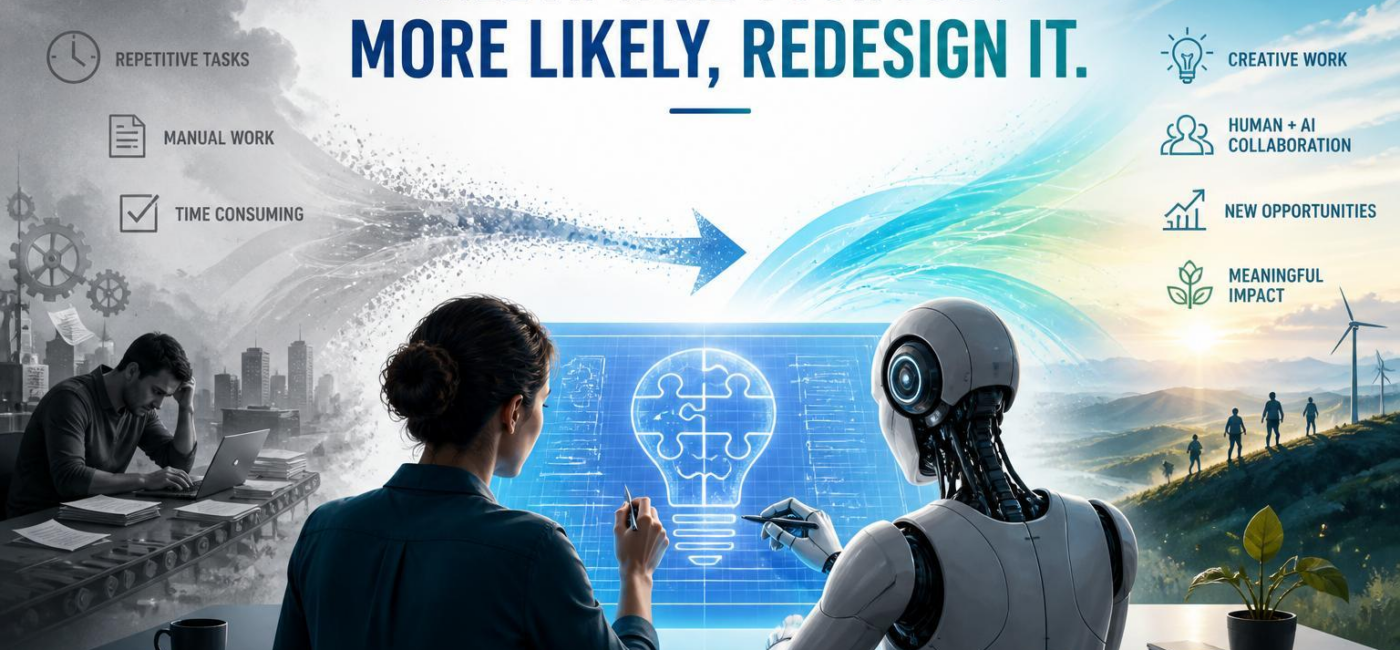
People often ask, “Will AI take my job?” in most cases, teh more useful question is: which parts of my job will change? AI may automate parts of many jobs, but complete replacement is usually less common than a shift in tasks, responsibilitiesand expectations.The work does not simply disappear; it gets reorganized.
AI Changes Tasks Before It Changes Jobs
Most jobs are made up of many different tasks. Some are routine and predictable. Others require judgment, context, empathyor accountability. AI tends to enter the first category first: drafting an email, sorting notes, summarizing a meeting, finding missing dataor creating an initial version of routine copy.
That still leaves plenty for people to do. Someone has to decide whether the output is useful, accurate, appropriate, and complete.Someone has to handle the unusual case, understand the customer’s real concern, or make the call when there is no obvious answer. The shift is often from completing every step by hand to guiding the process, reviewing the resultsand improving the final outcome.
A customer-support representative,such as,may spend less time hunting for standard answers and more time helping people with intricate or sensitive problems. A marketer may produce early ideas more quickly, then spend more time deciding what fits the audience and the brand. A finance analyst may spend less time preparing a report and more time challenging the assumptions behind it. In each case, the role becomes less about repetition and more about judgment.
Where the Pressure is highly likely to Be
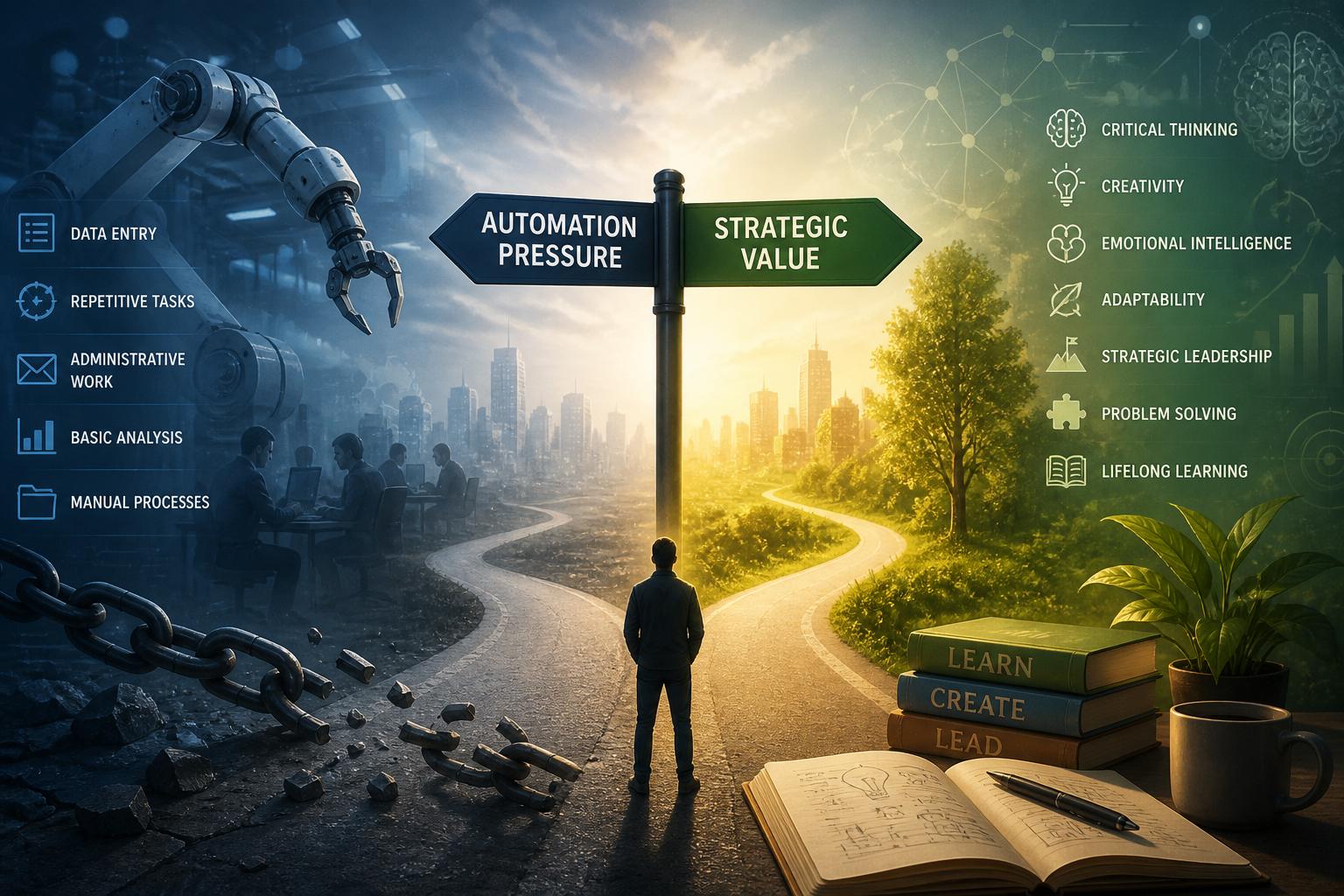
Automation is most likely to affect work that follows clear rules, relies on standardized informationand produces predictable results. Data entry, routine bookkeeping, basic scheduling, first-line customer questions, document sortingand template-based reporting may all change as AI handles more of the initial work.
That does not mean every role in those areas disappears.It means the value of the role may move. Rather than spending all day completing a familiar task, workers might potentially be expected to spot exceptions, resolve ambiguity, check accuracyand take obligation when an outcome affects a customer, contract, or business decision. Roles built almost entirely around repetition face the greatest pressure; roles that combine knowledge with accountability are generally harder to reduce to a tool.
The skills that matter most are not mysterious. They include sound judgment, subject-matter knowledge, interaction, relationship building, negotiation, and ethical decision-making. People who can recognize a weak AI-generated answer, explain trade-offs, ask better questionsand turn messy information into a practical recommendation will remain valuable. Technical comfort helps, but it is indeed most useful when paired with real knowledge of a field and an understanding of the people affected by the work.
How to Stay Useful as Work Changes
Career resilience does not require becoming a machine-learning engineer.It starts with practical AI fluency: knowing what a tool can definitely help with, where it needs human reviewand how to use it without creating new problems. pay attention to the tools already showing up in your work, whether they help with drafting, research, data cleanup, meeting notes, coding, customer-service planningor design ideas.
Try using an approved tool on one small,low-risk task and compare the result with your usual approach. Check it against source material. notice where it saves time and where it makes mistakes. Just as significant, understand your institution’s rules around confidential information and sensitive data. A rapid result is not useful if it exposes information that should never have been entered into a system in the first place.
It also helps to keep track of the value you add. If a tool frees up time, show what you did with it: improved a process, clarified a decision, caught an error, or gave more attention to a challenging customer issue. Being known as the person who can use new tools thoughtfully is more durable than being known only as the person who completes the old workflow fastest.
If you want a simple place to focus, build these habits:
- Use approved AI tools to test small work tasks and review the output carefully.
- Develop deeper knowledge of your field, customersand business priorities.
- Strengthen the human parts of the job: communication, trust, judgment, and problem-solving.
Career mobility also improves when you get involved early. Volunteer for process redesign, contribute to team guidelines for responsible AI useand ask your manager which parts of the role may look different over the next year.Those conversations can help you move into adjacent responsibilities before change is forced on you.
What Leaders Need to Get Right
Leaders should not treat automation as a substitute for judgment. Before changing job titles, workloads, or headcount, they need to understand which tasks AI can assist with, which decisions still need a clearly accountable personand where the risks may fall on employees, customersand the public.
That work should include the people who do the job every day.They know where the exceptions are, where quality breaks downand what looks simple on a process map but is difficult in practice. Bringing them into the conversation makes redesign more realistic and more credible. It also gives people time to learn new expectations rather than discovering them after a tool has already been rolled out.
Training matters, but so do reasonable expectations. If AI saves time on a routine task, that should not automatically become a reason to raise every quota. Leaders should look at quality, workload, fairness, employee well-being, privacyand error rates alongside output. Human review points are especially critically important when decisions affect money, access, safety, employmentor a person’s rights.
Responsible use also means treating governance as part of ordinary management. Teams need clear answers about data handling, privacy, bias, errorsand who is responsible when somthing goes wrong. They should regularly ask whether redesigned roles are becoming more meaningful or simply more monitored.
AI will change work, but it does not make people irrelevant. The organizations and workers in the strongest position will be the ones that use it to remove unnecessary drudgery while preserving the human work that matters most: context, trust, creativity, care, and responsibility.
AI tools built by Emerald Force
Built and supported by Emerald Force.
You might also like
- AI Can Build Websites: From HTML to Backend Scaffolds
- AI Voice Scams Are Rising: Why Verification Matters
- Letting AI Run Terminal Commands: Essential Safeguards
- AI Lowers Routine Costs, but Expertise Still Decides
- AI Agents Today: Useful but Still Need Oversight
- How AI Enables Robots to Perceive, Plan, and Interact
- Retrieval-Augmented Generation: A Clear Guide
- Why Smaller Tuned Models Win Focused AI Tasks
- Protect Family From AI Scams: Verify Before Paying
- Will AI Become Conscious? No Evidence So Far