
How Retrieval-Augmented Generation Works
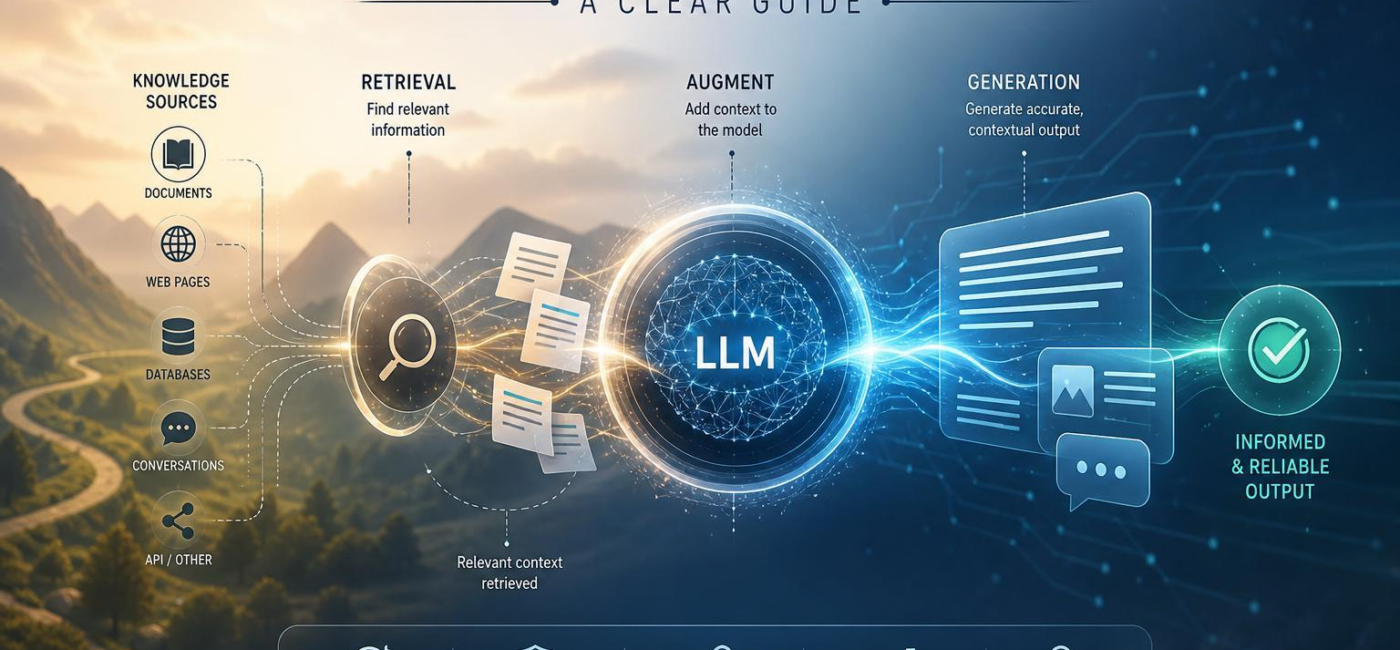
What is retrieval-augmented generation? Put simply,it is a way of giving a language model relevant information at the moment it answers a question. Rather than relying only on what the model absorbed during training, a RAG system searches a chosen set of sources-such as product documentation, policy files, help-center articlesor internal databases-and adds useful excerpts to the prompt.
That changes the model’s job. Search is responsible for finding the evidence; the model is responsible for turning that evidence into a clear response. When it effectively works well, retrieval augmented generation adds relevant external documents to the prompt so the model can answer with fresher, grounded information.
The process is straightforward: a user asks a question, the system looks for related materialand the best matches are supplied with the question before the model writes its answer. This can make responses more specific and easier to trace back to a source. It does not make the system automatically correct, though. If the search step misses an meaningful document or retrieves the wrong one, the answer can still be incomplete or misleading.
Build Retrieval Around Good Evidence
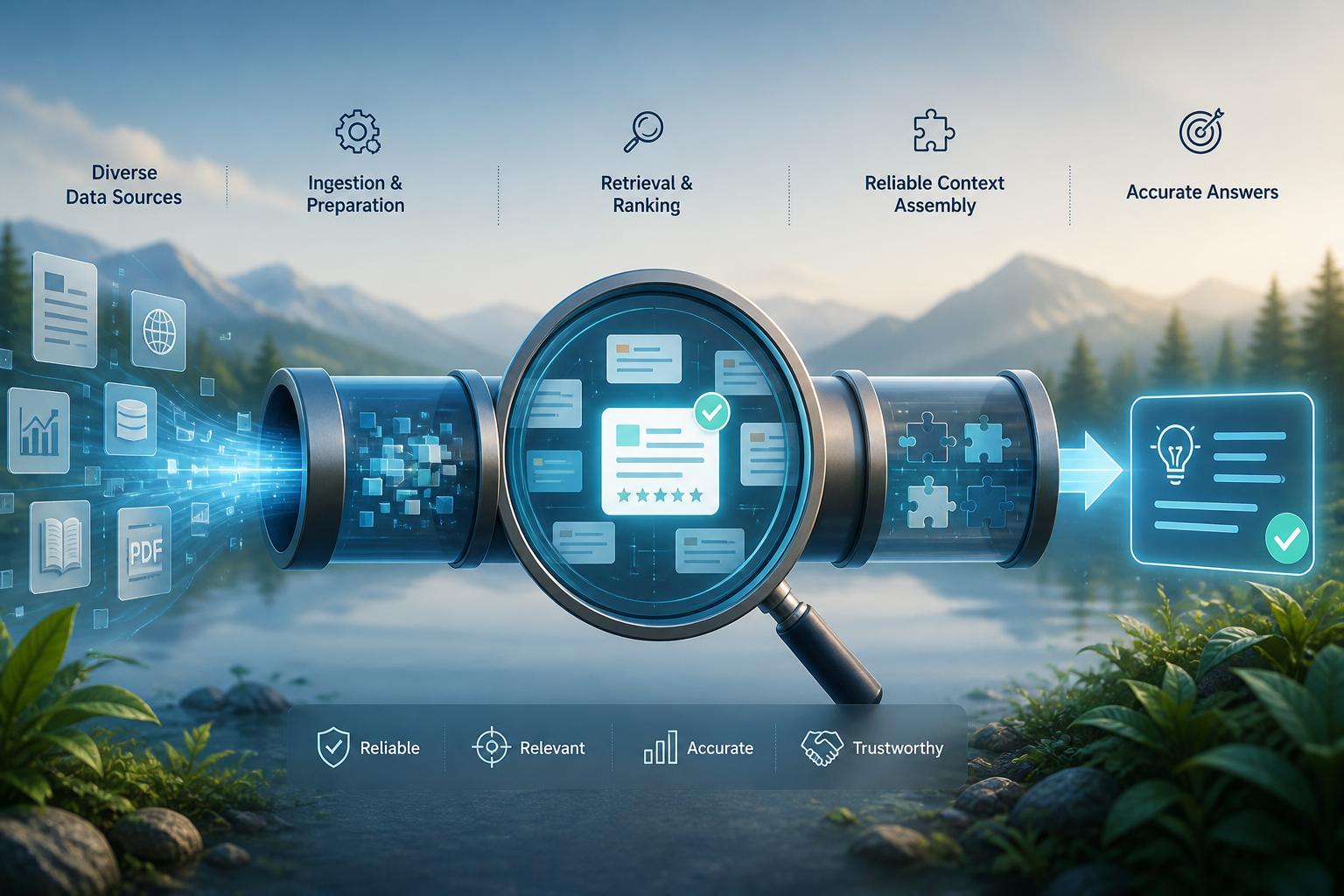
A useful RAG system starts with the material it is allowed to search. Sources should be current, trustworthyand clearly identified. Old policy documents, duplicate support articlesand files without ownership or dates can all create confusion later. If the underlying content is unreliable, better prompts will not fix the problem.
It also helps to divide documents into meaningful sections rather than chopping them into arbitrary pieces. A section should include enough surrounding context to preserve the point being made-definitions,exceptions,dates,and steps frequently enough matter-but not so much unrelated text that the relevant answer gets buried.
Metadata is part of this work, not an afterthought.Details such as source, section title, publication date, document type, audienceand access permissions can help the system narrow its search before it ranks passages. The goal is not to hand the model every possible match. It is to give it a small set of passages that directly support a useful answer.
Before those passages reach the model, the system should weed out duplicates and weak matches. In many cases,it makes sense to combine semantic search with exact-term matching,especially when a question includes a product name,policy number,error code,or other language that must be matched precisely. If the available evidence is thin or contradictory,the answer should acknowledge that rather of smoothing over the gap.
Choose Tools That Fit the Content
Embedding models, vector databasesand chunking rules are closely connected. An embedding model should work well with the language people actually use in the collection.Internal acronyms, legal language, technical documentation, source code, and everyday customer questions can behave very differently in search. A small set of realistic test questions is usually more revealing than a generic demo.
the database or search layer should support the way the information will be used. For many teams, that means reliable metadata filtering, manageable document updates, and search performance that remains acceptable as the collection grows. The important question is not whether a passage appears similar to the query in isolation. It is whether the retrieved context gives the model enough information to answer without inventing missing details.
chunk size deserves the same practical attention. Very small chunks can produce precise matches but separate a rule from its exception or a step from its explanation. Very large chunks preserve context but may bring in too much irrelevant text and use more prompt space. Starting with natural boundaries-headings, paragraphs, recordsor functions-is often sensible. A little overlap can definitely help were an idea continues from one section to the next.
Keep the relevant metadata attached to each chunk. Then review failed searches over time. If the right document appears but the answer lacks an critically important detail, the chunks might potentially be too narrow. if unrelated documents keep winning, the issue might potentially be filtering, embeddingsor the way the query is being interpreted.
Test for Trust, Speed, and safety
Before deploying a RAG system, test whether its answers actually stay tied to the material retrieved. A worthwhile evaluation set includes routine questions, vague requests, questions with no answer in the source collection, outdated documents, and sources that disagree with each other. Reviewers should assess both the final answer and the evidence behind its important claims. A polished answer is not necessarily a well-supported one.
Three questions are especially useful:
- Groundedness: does the answer stay within the available evidence?
- Latency: Is the response time suitable for the people using it?
- Security: Are permissions, sensitive information, and untrusted document content handled carefully?
speed and security should be considered early, not added at the end. Measure response time across realistic queries, including broad searches and questions with few useful matches. Some uses may justify an extra step to improve retrieval quality; others may need a faster, simpler path.
Retrieved documents should also be treated as untrusted input. A document may contain misleading instructions, accidental sensitive dataor content a particular user should not be able to access. Permission checks, careful handling of document instructionsand records of what was retrieved can help reduce those risks. never assume that text pulled from a knowledge base is safe simply because it came from an internal system.
The Point of RAG
Retrieval-augmented generation is most useful when an answer needs to reflect information outside a model’s training data. It can definitely help connect people with current documentation, policies, and knowledge they already maintain-but only when retrieval is accurate, access is controlledand the model is expected to show uncertainty when the evidence is not there.
Start with clean sources, test with real questions, and pay close attention to the answers that go wrong. In practice, a dependable RAG system is less about adding more documents and more about retrieving the right evidence at the right time.
AI tools built by Emerald Force
Built and supported by Emerald Force.
You might also like
- AI Agents Today: Useful but Still Need Oversight
- How AI Enables Robots to Perceive, Plan, and Interact
- Retrieval-Augmented Generation: A Clear Guide
- Why Smaller Tuned Models Win Focused AI Tasks
- Protect Family From AI Scams: Verify Before Paying
- Will AI Become Conscious? No Evidence So Far
- Where AI Agents Excel: Structured Digital Workflows
- How AI Strengthens Finance Teams and Reporting
- Can AI Fake Photos? How Synthetic Images Look Real
- AI Handles Routine Service; Humans Handle the Rest