
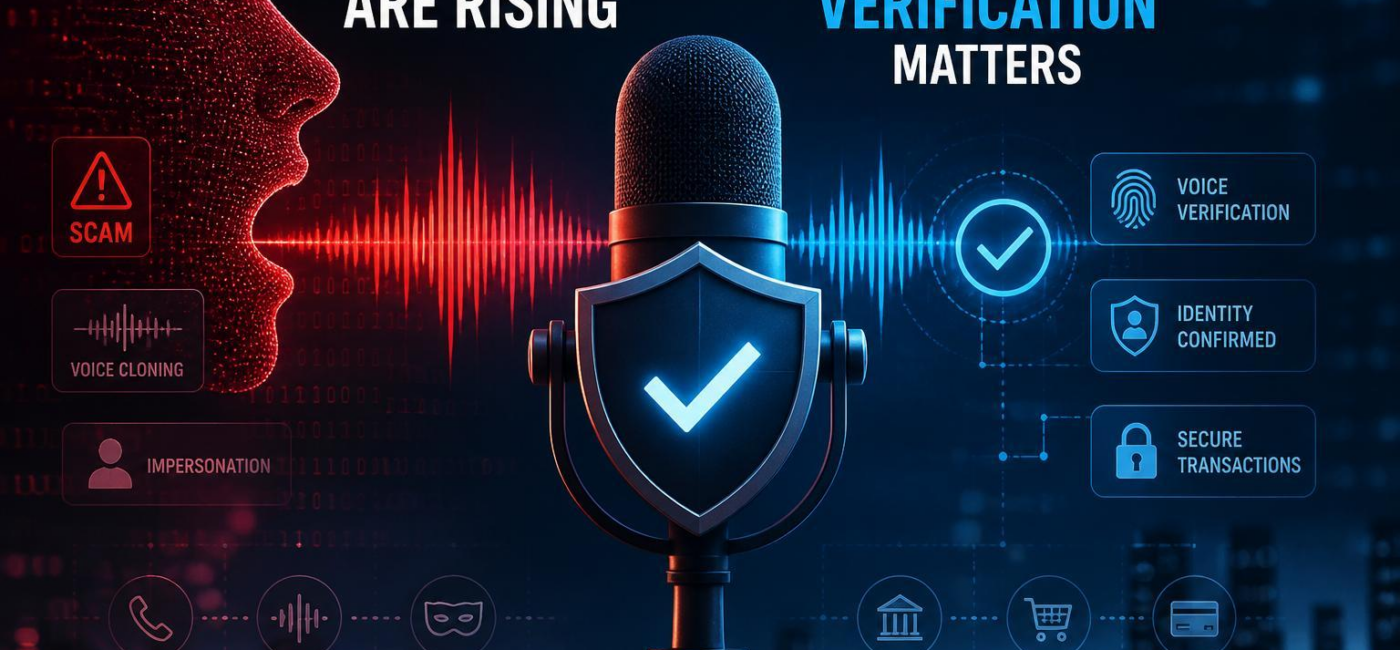
AI voice scams are becoming harder to spot. With a short clip from a social-media video, voicemail, podcastor public interview, criminals can create a voice that sounds remarkably like someone you know. The call may seem to come from a relative in trouble, a manager with an urgent requestor a client asking for a last-minute change.
That is why more families and companies are adopting simple callback and verification procedures. The goal is not to become suspicious of everyone. It is to make sure an unexpected request is real before money, informationor access changes hands.
Why Cloned Voices Can Be So Convincing
A familiar voice creates an instant sense of trust. Scammers know thatand they often build their calls around urgency: a medical emergency, an arrest, a confidential paymentor a sudden change to bank details. The story is meant to make the listener react before they have time to slow down and question it.
The voice alone is no longer reliable proof of identity. A request deserves extra scrutiny when it involves money, passwords, one-time codes, account accessor sensitive information-especially if the caller insists that it must be handled instantly or kept secret.
If something feels unusual, end the call and contact the person another way. Use a number already saved in your phone,a company directory,or another established channel. Do not rely on a number supplied by the caller.

What Can happen When a Call Is Not Verified
A convincing impersonation can lead to real damage in a matter of minutes. Someone posing as a spouse, colleague, executiveor client may ask for a wire transfer, gift cards, account credentials, payroll changesor a revised payment destination. Once money or personal information is sent, recovering it can be difficult.
The fallout is not always limited to the original loss. Stolen information can be used for unauthorized purchases, account takeoversor further attempts to impersonate the victim. There is also a personal cost. Many people feel embarrassed after falling for a call that sounded genuine, but these scams are designed to exploit trust, concernand the instinct to help.
Familiarity is not the same as verification. A real relative, coworker, or client will understand why you need to call back or confirm an unusual request through another channel.
A Simple Way to Verify Urgent Requests
The best defence is a routine that people can follow without having to make a judgment call in the moment. For families, that may mean agreeing that any urgent request for money gets a callback to a known number. Some families also use a private passphrase,though it should not be based on information that could be found online.
At work, the same principle applies. Requests involving payments, banking details, customer records, payroll, passwords, or confidential files should be confirmed independently. That might mean checking a request in an established company system, calling a known extensionor asking another authorized person to review it.
- Call back through a trusted number or established contact method.
- Confirm unusual requests through a separate channel before taking action.
- Never share passwords,one-time codes,or financial details based on a voice call alone.
These steps may feel slightly inconvenientand that is the point. Scammers depend on speed, pressure, and secrecy.Taking a few minutes to verify breaks the pattern they are trying to create.
Make Verification Part of the Process
High-risk requests should have a clear process behind them. Decide in advance which situations require a callback, a second approvalor written confirmation. common examples include transferring money, changing payment details, releasing sensitive records, resetting accessor bypassing normal approval steps.
A good protocol also takes the social pressure out of the moment. Employees should know they can verify a request from a senior leader without worrying that they are being difficult. Family members should know it is indeed okay to hang up, pauseand check. The process should apply even when the voice sounds familiar and the request seems urgent.
AI voice scams are increasingly common, but they do not have to be easy to carry out. Treat an unexpected call as an unconfirmed request, not as proof. A callback, a second channelor a fast confirmation question can be enough to stop a costly mistake before it happens.
AI tools built by Emerald Force
Built and supported by Emerald Force.
You might also like
- AI Can Build Websites: From HTML to Backend Scaffolds
- AI Voice Scams Are Rising: Why Verification Matters
- Letting AI Run Terminal Commands: Essential Safeguards
- AI Lowers Routine Costs, but Expertise Still Decides
- AI Agents Today: Useful but Still Need Oversight
- How AI Enables Robots to Perceive, Plan, and Interact
- Retrieval-Augmented Generation: A Clear Guide
- Why Smaller Tuned Models Win Focused AI Tasks
- Protect Family From AI Scams: Verify Before Paying
- Will AI Become Conscious? No Evidence So Far