

The united States does not have one comprehensive federal AI law. Instead, AI governance is developing through a mix of existing federal laws, agency enforcement, court decisionsand state-level rules.That can feel messy, especially for organizations using the same tool across several markets, but the basic principle is straightforward: using AI does not remove the legal responsibilities that already apply to a business.
Federal agencies use the authority they already have
Federal agencies do not need to wait for a single AI-specific statute before taking action. They can apply the laws Congress has already enacted to the conduct around an AI system, including deceptive marketing, unsafe products, discriminatory employment practices, unlawful credit decisions, privacy failures, and sector-specific violations.
The Federal Trade Commission, for example, may examine whether a company has made misleading claims about an AI product or used consumer data in ways that cause unfair harm. Employment regulators can assess whether automated screening tools lead to unlawful discrimination under existing civil-rights laws.In many cases, the central legal question is not whether an algorithm was involved. It is whether the system caused a harm that the law already prohibits.
This gives agencies a practical path to investigate complaints, issue guidance, bring enforcement actionsand, where authorized, adopt rules. But it does not produce one national standard for every AI use. expectations can still vary depending on the industry, the data involvedand the decision the system influences.
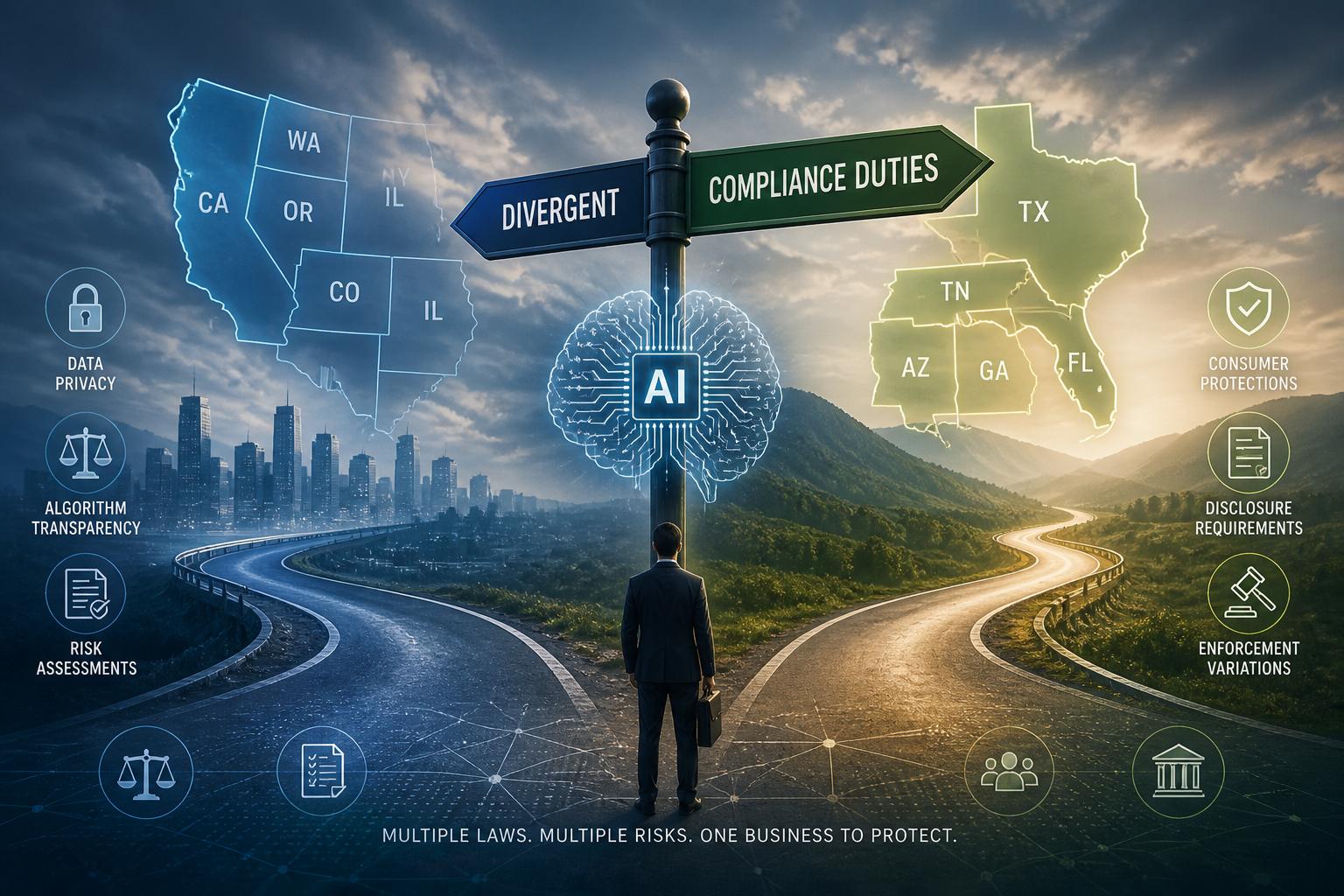
States are adding their own rules
State laws do not form a single compliance code, either. Some focus on transparency and notice when people interact wiht automated systems. Others address risk assessments, documentation, human review, synthetic media, employment toolsor other high-impact uses.
For a business operating across state lines, the same AI system may create different obligations depending on where customers, applicants, employeesor other affected people are located. One state may require a disclosure. Another may focus on testing or oversight. A third may regulate a narrow use case, such as AI in hiring or consumer-facing chatbots.
The challenge is not just keeping up with newly enacted laws. Organizations also need to understand where a tool is used,what decisions it informs,what data it handles,and whether a vendor’s promises actually address the organization’s own legal risk. An AI inventory, clear internal ownershipand records of testing and review can make that work far more manageable.
Responsibility does not disappear when a system is automated
A model’s role in a decision does not erase the duty attached to that decision. Courts and regulators are likely to ask a familiar question: who had the ability to prevent the harm? In hiring, lending, housing, insuranceand consumer transactions, that question may reach both the company that developed the tool and the organization that chose to rely on it.
A vendor’s claim that a system is objective is not enough on its own. Employers still need to consider whether an automated screening process disadvantages protected groups or fails to account for disability-related needs. consumer-facing businesses need to consider whether automated denials, pricing, recommendationsor other decisions raise fairness, noticeor disclosure concerns. Vendors also have responsibilities tied to product design, data practicesand marketing claims.
In practiceorganizations should be able to explain what a system is for, what data it relies on, who can override its outputand how a disputed result will be reviewed. Legal exposure rarely depends on whether a person or software made the decision alone. It depends on the harm, the laws that apply, and whether the responsible parties took reasonable steps to identify and address problems.
Build one practical governance program
Complying with a particular state rule or agency requirement is not the same as managing AI responsibly. A system might meet one jurisdiction’s notice requirement while still creating avoidable problems in hiring, lending, insurance, education, or customer service.That is why organizations benefit from a single internal governance program rather than a collection of disconnected legal checklists.
That program should apply to tools developed in-house and also systems purchased from vendors or adopted by individual business units. At a minimum, it should identify the organization’s AI systems and their owners, review higher-risk uses before deployment and after material changes, document data sources and known limitationsand establish a clear path for human review and incident response.
as the United States relies on a legal patchwork rather than one AI law, there is no shortcut to compliance. The most durable approach is to understand the laws that already apply, track state-specific obligationsand maintain enough oversight to catch problems before an automated system turns them into real-world harm.
AI tools built by Emerald Force
Built and supported by Emerald Force.
You might also like
- AI Can Build Websites: From HTML to Backend Scaffolds
- AI Voice Scams Are Rising: Why Verification Matters
- Letting AI Run Terminal Commands: Essential Safeguards
- AI Lowers Routine Costs, but Expertise Still Decides
- AI Agents Today: Useful but Still Need Oversight
- How AI Enables Robots to Perceive, Plan, and Interact
- Retrieval-Augmented Generation: A Clear Guide
- Why Smaller Tuned Models Win Focused AI Tasks
- Protect Family From AI Scams: Verify Before Paying
- Will AI Become Conscious? No Evidence So Far