

When people ask weather open source AI is better than closed AI, the honest answer is: it depends on what they need it to do. Open source offers more flexibility and transparency, while closed systems may provide stronger vendor support, managed infrastructureand built-in safety tooling. Neither approach is automatically the right fit. The better choice comes down to how much control your organization needs-and how much responsibility it is prepared to take on.
More Control With Open AI
Open AI systems give technical teams more room to adapt a model to the way they already work. They can choose were it runs,connect it to approved data sources,refine prompts and interfaces,and adjust supporting tools for a specific audience. That can be valuable when a business uses specialized language, has unusual privacy requirements, or needs the AI to fit into existing internal systems.
That kind of customization is not just a nice extra. If an AI tool cannot work with a team’s processes, terminologyor data rules, it can quickly become another source of friction. Open systems can also give organizations more visibility into the software they are using and more freedom to avoid relying entirely on one vendor.
Of course, control comes with work. Someone still has to manage access, test changes, document decisions, apply updatesand monitor how the system is being used. Open source AI can be a strong long-term option for teams with clear requirements and the technical capacity to maintain it. For teams without that capacity, the added freedom may feel more like a burden than a benefit.
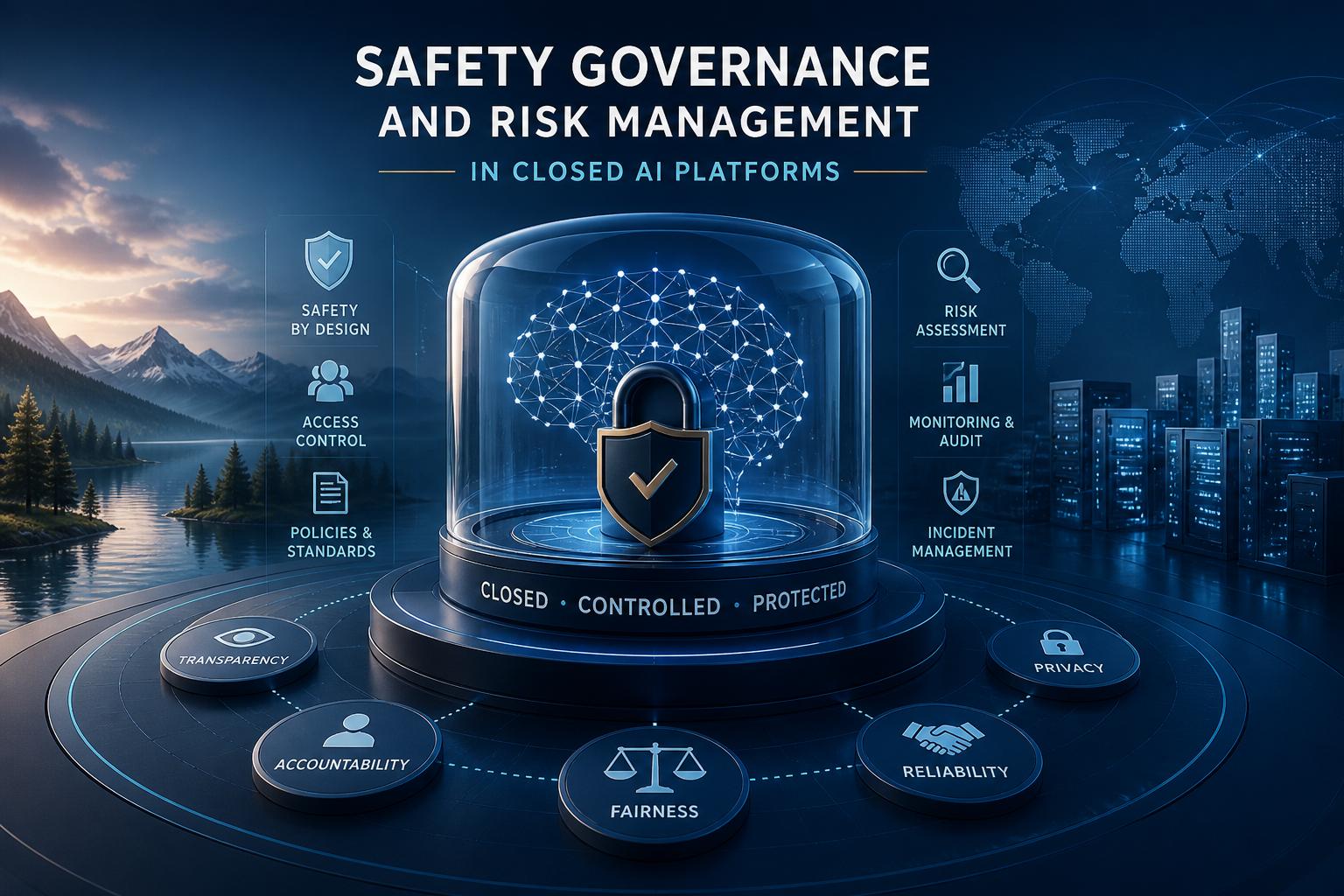
How Closed Platforms Handle Safety
Closed AI platforms usually place more of the operational burden on the provider.The vendor runs the model, manages the hosting environment, controls updatesand may offer built-in features such as account permissions, logging, rate limits, and content controls. For organizations that want a clearer support path when something goes wrong, that centralized setup can be appealing.
Still, a vendor’s safeguards do not replace internal rules. Organizations need to decide what information employees can enter into the system, who is allowed to use it, and when a person must review AI-generated work. A closed platform can definitely help reduce some operational complexity, but it cannot make those decisions for the customer.
The trade-off is visibility. Customers may receive documentation about a provider’s security and safety practices, but they often have less ability to inspect the model, change its underlying controlsor test every update before it affects their workflows. Before adopting a closed platform, it is indeed worth asking straightforward questions about data handling, retention, access controls, incident reportingand administrative oversight.
Support, Reliabilityand Cost
The difference between open and closed AI becomes especially clear after the initial rollout. Closed platforms typically offer a defined vendor relationship: documentation, managed updates, service channelsand someone accountable for the underlying product. that can be a meaningful advantage for teams with limited machine-learning expertise or demanding uptime and compliance needs.
Open systems have support too, but it looks different. Help may come from community forums, public issue trackers, consultantsor an internal engineering team that can inspect and modify the software directly.That independence can be useful, but it also means the organization may need to diagnose problems and maintain its own environment when updates or integrations break.
Cost should be considered over the full life of the system,not just at the point of purchase. An open model may have no per-request license fee, but infrastructure, security reviews, monitoring, integration workand skilled staff still cost money. A closed service may reduce maintenance effort,yet usage-based pricing and dependence on a single provider can become more meaningful as use grows. The key question is not simply which option is cheaper today, but which one is sustainable for the organization to operate over time.
Making the Choice
there is no universal winner in the open-versus-closed AI debate. Open models often make sense for organizations that need control over deployment, data handling, customizationor integration with internal tools. Closed models can be a better fit when managed operations, dependable vendor support, and ready-made safeguards matter more than direct access to the model itself.
The deciding factor is usually operational maturity. An organization using an open system needs people who can manage testing, access, monitoring, updatesand misuse risks. A closed platform can reduce some of that workload, but it may limit customization and make the organization more dependent on a provider’s pricing, policiesand product decisions.
Choose the approach that fits your team’s risk tolerance, technical resources, and long-term expectations-not the one with the most attractive label.
AI tools built by Emerald Force
Built and supported by Emerald Force.
You might also like
- AI Can Build Websites: From HTML to Backend Scaffolds
- AI Voice Scams Are Rising: Why Verification Matters
- Letting AI Run Terminal Commands: Essential Safeguards
- AI Lowers Routine Costs, but Expertise Still Decides
- AI Agents Today: Useful but Still Need Oversight
- How AI Enables Robots to Perceive, Plan, and Interact
- Retrieval-Augmented Generation: A Clear Guide
- Why Smaller Tuned Models Win Focused AI Tasks
- Protect Family From AI Scams: Verify Before Paying
- Will AI Become Conscious? No Evidence So Far