

Can AI help finance teams? Yes-when it is indeed used thoughtfully, it can classify transactions, summarize variance, explain trendsand draft management commentary. It can also take some of the repetition out of close and reporting work, giving accountants and finance leaders more time to investigate what the numbers mean. The goal is not to hand financial judgment to a tool. It is to make routine work more consistent, visibleand easier to review.
A faster, more reliable close
Financial close tends to get delayed in familiar places: collecting details from different systems, matching transactions, checking balancesand chasing down exceptions. AI can help move this work along by identifying entries that do not look right, comparing related records, and highlighting missing support before those issues surface at the last minute.
For recurring transactions and reconciliations, automation can reduce the amount of manual matching required. it can also flag duplicate, incompleteor unusual entries for someone to examine. That does not replace the accountant’s role. It helps direct attention to the areas where professional judgment matters most.
A quicker close is only useful if it remains well controlled. Teams still need clear review thresholds, approval stepsand evidence for adjustments. When those controls are built into the process, continuous checks can reduce rework and give leadership an earlier view of issues that could affect results.
Better data for management reporting
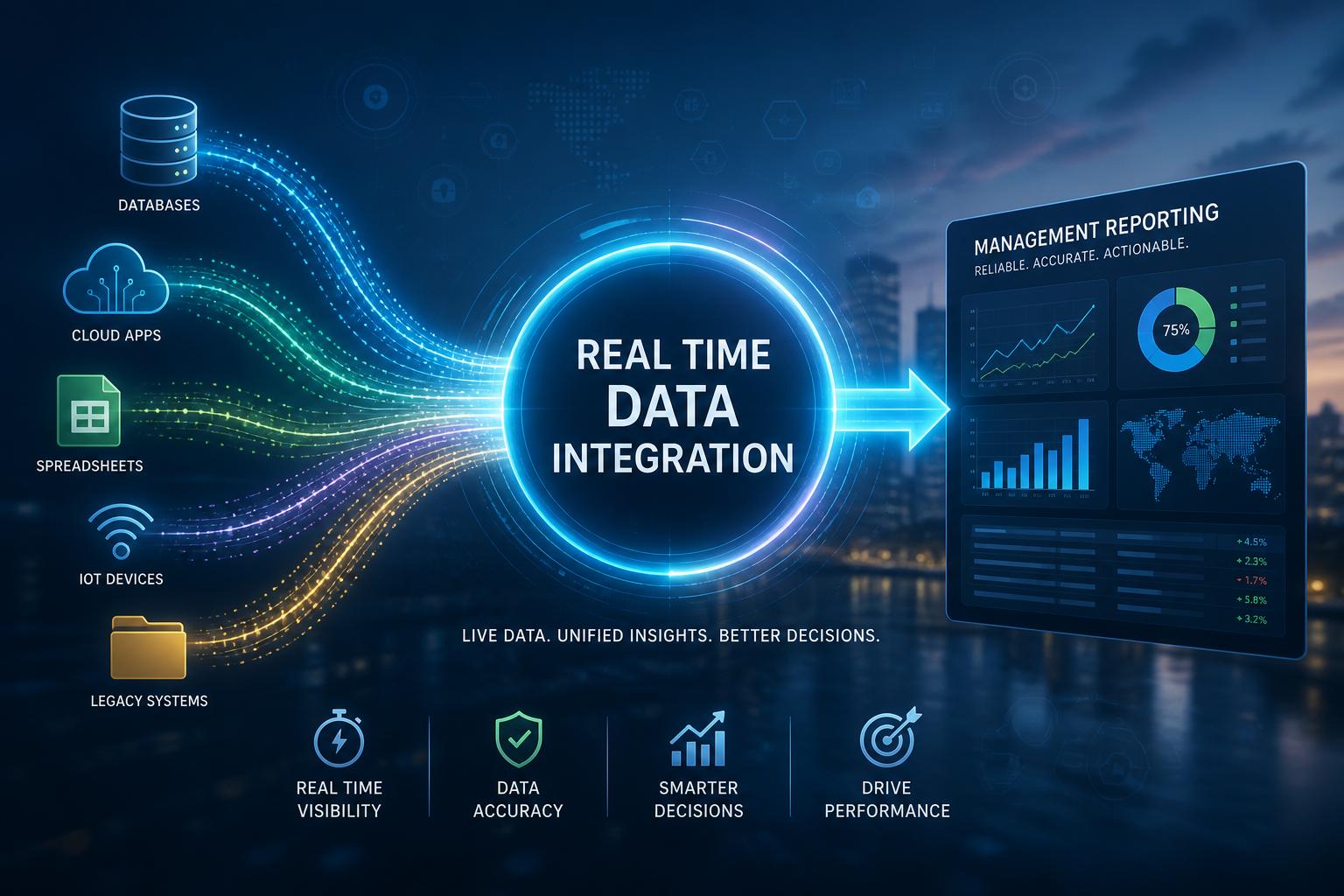
Management reports lose credibility when the figures arrive late or different teams are working from different versions of the same metric. AI-supported data integration can help bring together information from accounting systems, bank feeds, payroll, procurementand operational tools so finance has a more current view of cash, revenue, spendingand open exceptions.
The critically important part is not simply moving data faster. It is establishing a shared source of truth,with clear rules for how records are matched,categorized,and approved. AI can flag incomplete or unusual transactions, identify records that do not reconcile across systemsand help keep dashboards current as approved data changes.
Finance professionals still need to decide weather a change reflects a real business event,a timing issue,or a data-quality problem.But when the underlying records and validation checks are easier to see,reports are easier to explain and defend. Speed should support control, not replace it.
A clearer view of what may be ahead
Forecasting is stronger when finance teams can look beyond last quarter’s results. AI-assisted analysis can bring together past financial data and current operational signals to reveal patterns in revenue timing, spending, collections, and customer activity. That can definitely help teams revisit assumptions earlier and make more informed decisions about budgets, working capitaland resources.
A forecast is not a promiseand AI does not change that. Its value is in helping teams spot changes worth discussing. Such as, it may draw attention to a widening gap between forecasted revenue and current sales activity, late-payment patterns that could affect cash flowor expenses that are moving outside expected ranges.
These signals are most useful when they lead to a closer review rather than an automatic conclusion. Finance leaders should use them to ask better questions, test scenariosand document the judgment behind their decisions.
Keep controls and accountability in place
AI governance belongs in the finance control surroundings, not in a separate technology project.Someone should be accountable for approving use cases, validating the data involved, monitoring outputsand deciding when human review is required. The level of oversight should reflect the risk.Asking a tool to draft a first-pass variance clarification is vrey different from relying on it to influence a forecast, recommend a journal entryor support compliance reporting.
material AI-assisted outputs should be traceable to the source data, the tool or model used, the reviewerand the final decision. Access to sensitive financial and payroll information should be limited to authorized people and approved systems. Where appropriate, teams should retain the relevant prompts, source references, edits, approvals, and exceptions as part of the audit trail.
Regular testing matters too. Finance, security, risk, complianceand internal audit should review whether approved tools are producing reliable results, handling information appropriatelyand staying within policy. Clear documentation of each tool’s purpose, limitations, and escalation path makes that work far easier.
Use AI to support judgment,not replace it
Used well,AI can make finance work less repetitive and reporting more timely. It can help teams classify transactions, identify exceptions, summarize changesand prepare a useful starting point for management commentary. But credible reporting still depends on sound data, strong controlsand people who understand the business behind the numbers.
The best approach is practical: start with well-defined tasks, keep reviews proportionate to the riskand make sure every important output can be checked. That gives finance teams the benefits of faster analysis without giving up the accountability their role requires.
AI tools built by Emerald Force
Built and supported by Emerald Force.
You might also like
- AI Can Build Websites: From HTML to Backend Scaffolds
- AI Voice Scams Are Rising: Why Verification Matters
- Letting AI Run Terminal Commands: Essential Safeguards
- AI Lowers Routine Costs, but Expertise Still Decides
- AI Agents Today: Useful but Still Need Oversight
- How AI Enables Robots to Perceive, Plan, and Interact
- Retrieval-Augmented Generation: A Clear Guide
- Why Smaller Tuned Models Win Focused AI Tasks
- Protect Family From AI Scams: Verify Before Paying
- Will AI Become Conscious? No Evidence So Far