

Can AI review code? Yes-it can flag style issues, bugs, missing tests, and possible security concerns. It does not replace an experienced developer who understands the product, the usersand the trade-offs behind a change.What it can do is make reviews more thorough by drawing attention to problems that are easy to miss when people are moving quickly.
The best results come when AI is treated as another set of eyes in the review process. It can surface questionable logic, suggest tests, point out inconsistenciesand highlight areas that deserve a closer security check.The final decision still belongs to the team.
Finding Logic Errors and Edge Cases
Some of the most expensive bugs are not syntax errors. The code compiles, the main path worksand the problem only appears when a user enters an unusual value or a service responds in an unexpected way. AI-assisted review can definitely help spot those weak points by tracing how values move through a function,comparing branches that should behave similarly,and identifying paths that are never handled.
That might mean noticing that an empty collection can cause division by zero, that a date range leaves out its final day, or that a fallback value hides a failed lookup. It can also draw attention to off-by-one comparisons, null values, conflicting flags, unexpected type conversionsand error handling that reports success before an operation is actually complete.
Rather than simply marking a line as suspicious, a useful review should make the concern concrete. If a checkout routine applies a discount before confirming that the cart is valid, for example, the review may suggest checking an empty cart, a negative quantity, an expired discountand a duplicate order submission. The tool can identify the risk; a human reviewer still has to decide what the business rule should be.
Suggesting Better Tests
AI can be particularly helpful when a change has only been tested along the happy path. A function may return the right result for normal input while failing on blank values, malformed data, boundary conditions, repeated requestsor errors from an outside service. Reviewing code with those situations in mind often reveals assumptions that deserve to be written down as tests.
For a small change, that may be as simple as asking what happens when an expected field is missing.For a larger change, it may mean checking how the application behaves after a timeout, a partial updateor a user clicking the same action twice. In mature codebases, this kind of review matters because the impact of a change is not always obvious from the lines being edited.
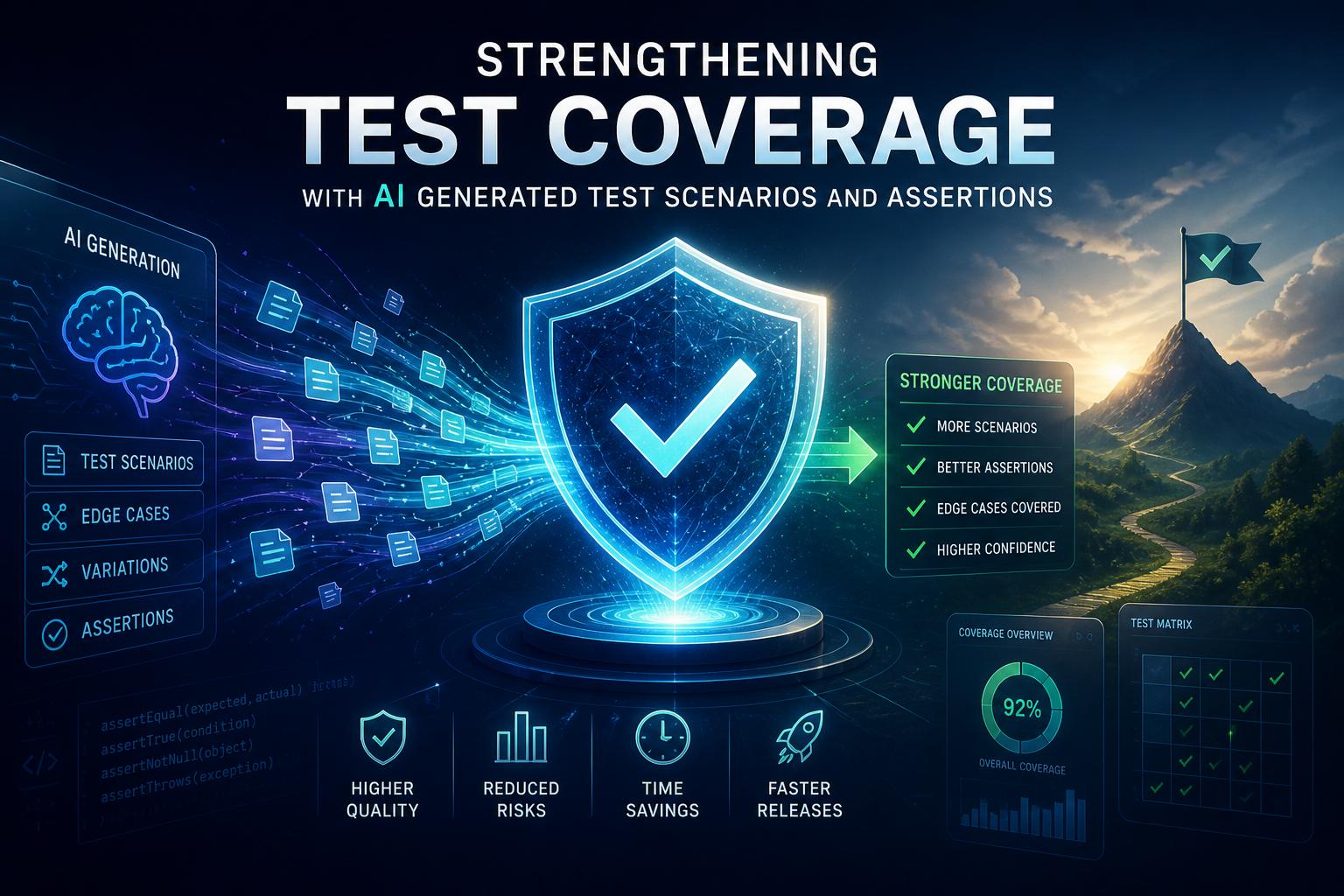
AI-generated test suggestions can also sharpen weak assertions. A test that only checks weather a request finishes may need to verify the response status,stored data,error message,and any side effects. If the feature handles sensitive information,the test may also need to confirm that private data does not end up in logs or returned responses.Suggested tests are still suggestions, though. They need to be checked against the actual requirement before becoming part of the suite.
Keeping Code Consistent
Not every review finding is a bug, but readability matters. Over time, inconsistent naming, unclear abbreviations, deeply nested conditions, copied logicand stale comments can make a codebase harder to work in.AI can catch many of these small issues before they become part of the project’s everyday friction.
The goal is not to make every developer write in exactly the same voice. It is to maintain shared conventions so that the next person opening a file can understand what is happening without first decoding a new naming scheme or error-handling pattern. An AI reviewer can compare a pull request with patterns already used in the repository and point out where a new approach creates unnecessary variation.
These comments are most useful when they explain the reason behind the suggestion. A proposal to simplify a conditional or reuse an existing helper should make the code easier to follow,test,or modify-not just satisfy a rule for its own sake.
Spotting Security Concerns Early
AI-assisted review can also flag code that deserves a security-focused look before it reaches production. Common warning signs include unvalidated input reaching a sensitive operation, credentials committed to source files, database queries assembled from strings, missing permission checksand error messages that reveal too much about the application.
A good review does more than label a possible vulnerability. It points toward a practical next step: use parameterized queries instead of building SQL strings, store secrets in managed configuration rather than in the repository, or check whether a logged-in user is actually authorized to perform a particular action. It can also remind reviewers to consider data from forms, URLs, file uploadsand external services as untrusted until it has been handled safely.
No tool can certify that an application is secure. Security depends on context, system design, dependenciesand the way features are used in the real world. Still, catching a questionable pattern while the change is small is far better than discovering it after release.
AI Helps, but People Still review
AI code review works best as support for thoughtful human review, not a substitute for it.It can help teams find edge cases, improve test coverage, keep code consistentand notice potential security problems earlier. But it cannot fully understand product intent,team priorities,or the consequences of a technical trade-off without human guidance.
Used carefully, it gives reviewers more time to focus on the questions that matter most: whether the code solves the right problem, behaves correctly under real conditions, and can be maintained safely after the pull request is merged.
AI tools built by Emerald Force
Built and supported by Emerald Force.
You might also like
- System Prompts: Rules That Govern AI Behavior
- AI Can Draft Books, but Humans Still Make Them Great
- How AI Reviews Code: Bugs, Tests, Style, and Security
- How AI Is Regulated: From Privacy to AI-Specific Laws
- AI Agent Memory: Goals, Preferences, and Past Steps
Value Lock-In: How AI Can Entrench Narrow Values
- Trust AI for Speed-Verify High-Stakes Facts
Can AI Write Essays? Risks, Accuracy, and School Rules
- How Generative AI Creates Art From Prompts and References
- How Privacy Laws Shape AI Data and Decisions