

Should you trust AI answers? Yes-for speed, synthesis, and finding the right questions to ask. But when the answer could affect someone’s health, legal rights, finances, safetyor reputation, AI should not be the final word. Use AI to get oriented quickly,then verify the vital facts against the original source.
That distinction matters because an answer can sound clear and convincing while still missing a recent update, a legal exceptionor the context that changes its meaning. The safest approach is simple: let AI help you work faster, but let reliable evidence and human judgment determine what you publish or act on.
Build a verification process
For high-stakes claims, start by defining exactly what needs to be checked. Vague questions produce vague answers. If the claim is about a law, identify the jurisdiction and effective date. If it concerns medical guidance, find the original guideline, studyor health authority. If money is involved, go to the filing, statement, contractor regulator notice behind the summary.
AI can definitely help extract claims from long documents, compare versions, spot inconsistenciesand organize notes. That is valuable work. Still, it should not decide whether the evidence is strong enough. A person who understands the subject and the consequences should make that call.
It also helps to keep a basic record of the review: what claim was checked, which sources were consulted, when the review happened, what remains uncertainand who approved the final wording.That turns “the AI checked it” into a process that can be reviewed, improvedand defended later.
Follow the evidence back to the source
A rapid answer is only useful if you can see where it came from. Look for the source closest to the fact itself: a court filing,official notice,original research paper,public record,company filing,or direct statement from the responsible association. News coverage and expert commentary can be helpful, but they are often one step removed from the underlying evidence.
Before relying on a source, check who published it, when it was publishedand whether it supports the exact point you want to make. A citation is not enough on its own. The source might potentially be outdated, describe a different situation, or contain a narrower conclusion than the AI summary suggests.
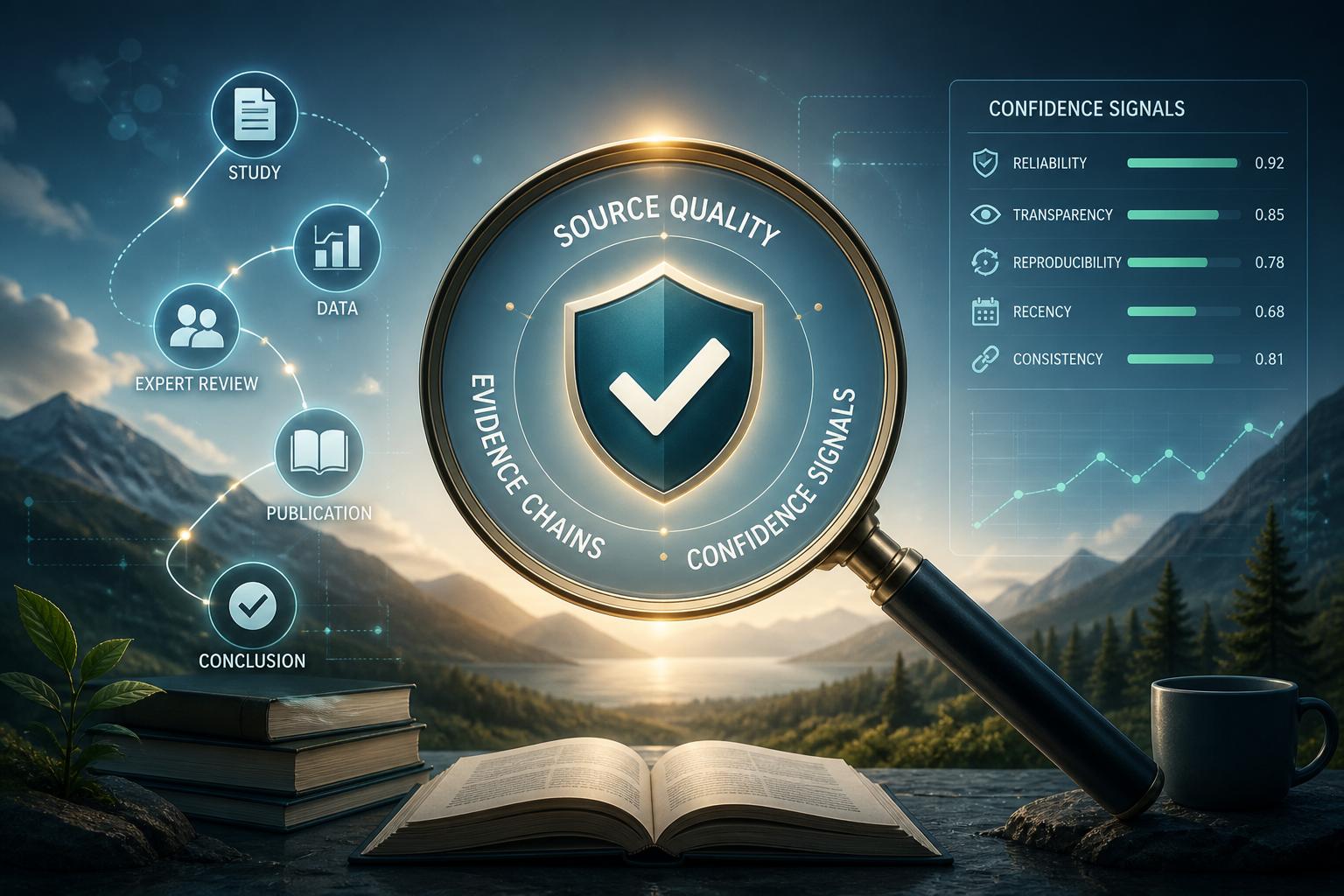
Think of each important claim as an evidence chain. You should be able to move from the final sentence back thru any reporting or analysis to the original record. If that chain breaks-or if the source does not clearly say what the answer claims-treat the result as unconfirmed.
- High confidence: Current primary sources clearly support the claim.
- Moderate confidence: Credible sources support it, but critically important details need confirmation.
- Low confidence: The claim rests on old material, vague attribution, weak citationsor inference.
Use AI for the first pass, not the final decision
AI is especially good at handling volume. It can pull key points from a long report, compare contract language, flag differences between documents, or surface references worth reviewing. Used well, it gives people a faster starting point and reduces the chance that an critically important detail is overlooked.
But speed is not certainty.Medical, legal, financialand current topics often depend on details that change quickly or require professional interpretation. A qualified reviewer should confirm the source,date,context,and meaning before the information informs a decision.
This does not meen every AI-assisted task needs a lengthy review. Match the level of checking to the risk. A rough internal summary may need only a quick source check. Advice that could influence treatment, compliance, investment, eligibility, or a public statement deserves a much higher standard.
Put review rules in place before publishing
The strongest safeguards are built into the workflow,not added after a mistake. Decide in advance which kinds of claims require review before they reach customers, executives, regulatorsor the public. That may include prices, policy interpretations, eligibility rules, contractual terms, medical information, financial figuresand breaking developments.
For those claims, require a traceable source and a named reviewer. Make it clear who can approve the final wording and what happens when the evidence is incomplete or contradictory. If a required source, dateor approval is missing, the content should pause rather than move forward on confidence alone.
AI can make research and drafting faster. It cannot take duty for the consequences of an error.Trust AI for speed and synthesis; verify important facts with primary sources, especially when the stakes are high.
AI tools built by Emerald Force
Built and supported by Emerald Force.
You might also like
- AI Agent Memory: Goals, Preferences, and Past Steps
Value Lock-In: How AI Can Entrench Narrow Values
- Trust AI for Speed-Verify High-Stakes Facts
Can AI Write Essays? Risks, Accuracy, and School Rules
- How Generative AI Creates Art From Prompts and References
- How Privacy Laws Shape AI Data and Decisions
- How to Write AI Prompts That Deliver Results
- AI’s Social Response: Education, Safety, Shared Gains
- Renewable Energy Helps, but Can’t Erase AI’s Footprint
- How AI Models Meaning Without Human Understanding