

How do privacy laws affect AI? They shape what data an organization can collect, process, keep, shareand use in automated decisions. That reaches far beyond a privacy notice or a checkbox at sign-up. It influences the data that goes into a model, the reasons it is indeed used, the explanations people receiveand the safeguards in place when an automated system affects someone’s life.
Use only the data the system needs
Privacy rules often start with a straightforward question: is this data actually necessary for the stated purpose? For AI teams, that changes the usual instinct to gather as much data as possible and sort it out later. A training set should have a clear connection to the job the model is expected to perform.
That may mean removing direct identifiers, leaving out sensitive fields, limiting the sources usedor setting a deadline for deleting raw data. Information collected for one reason cannot automatically be kept forever because it could become useful someday. More data is not always better data, especially when it adds privacy risk without improving the system in a meaningful way.
A smaller, well-documented dataset can also be easier to review. Teams can better trace where the information came from,whether it was collected appropriately,whether it contains inaccurate or sensitive material,and whether it could create unfair outcomes. Data minimization does not stop AI advancement. It asks organizations to be able to explain why each type of data belongs in the system.
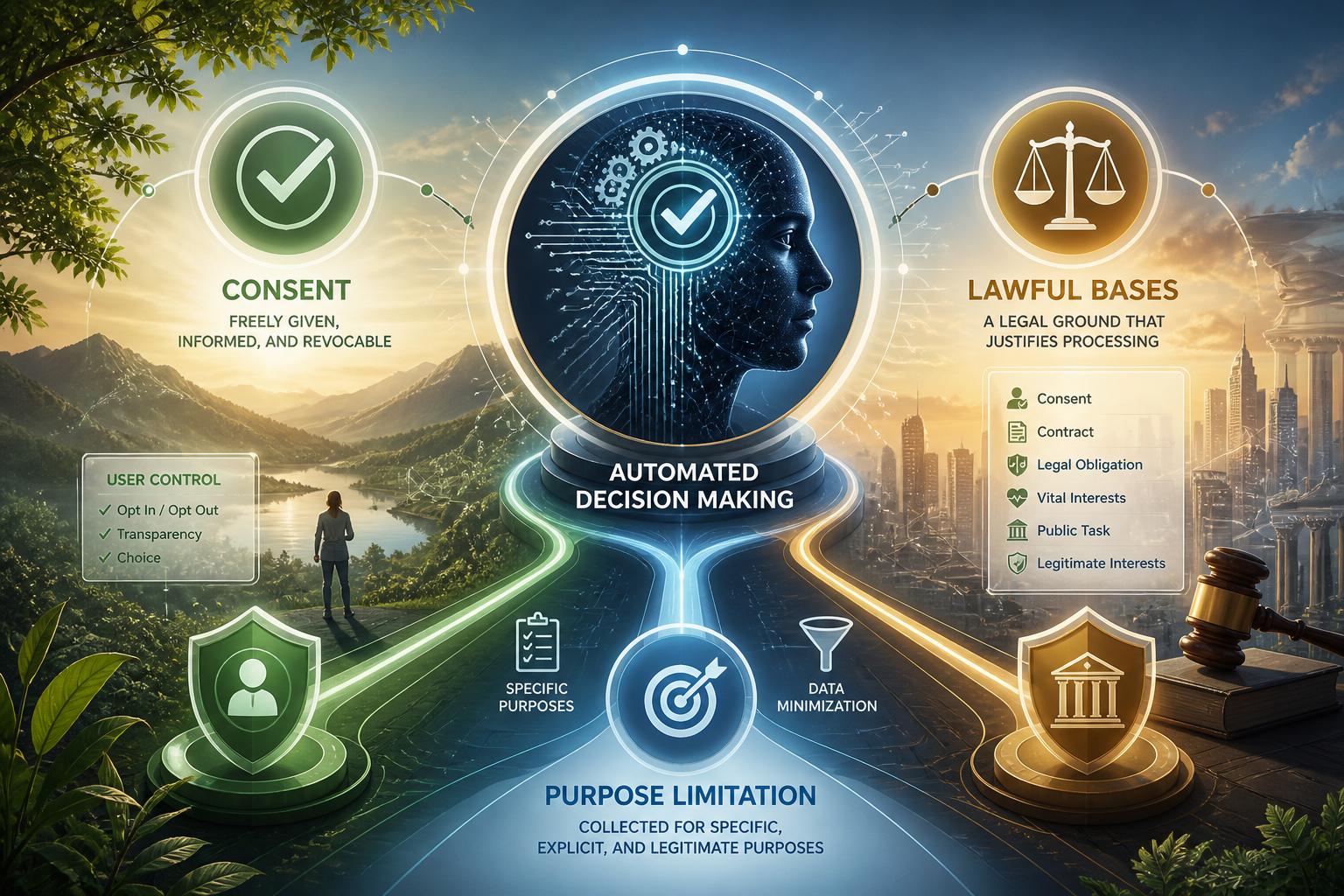
Set a clear purpose before using the data
Consent is not a blank check for every possible future use of personal information. If someone agrees to receive a service update, that does not necessarily mean the organization can use the interaction to build a profile, train a modelor influence a decision about that person. The intended use needs to be clear from the start.
This is where purpose limitation matters. Organizations should define whether data will be used to train a model, detect fraud, recommend content, assess risk, rank applicantsor support another specific activity. Repurposing information simply as it might be valuable later can create legal and trust problems.
Consent is only one possible legal basis for processing personal dataand it may not be appropriate when people cannot realistically say no without losing an important service or opportunity. Depending on the law and the circumstances,processing might instead be tied to a contract,a legal obligation,or another recognized basis. Whatever basis applies, automated decisions involving employment, credit, housing, insurance, educationor essential services call for extra care because the consequences can be notable.
Give people useful answers about automated decisions
When an AI system helps make a decision about someone, a vague statement that “AI was used” is rarely helpful. People should be able to understand the purpose of the processing, the kinds of personal data involvedand the likely effect of the decision. That matters when a system contributes to a denied application, a changed price, a restricted accountor a risk score.
Explainability does not mean publishing source code. It means giving people a clear description they can understand and use.In many situations, individuals may have rights to see the personal data used about them, correct inaccurate information, object to certain profiling, or seek human review where the law provides that option.
Those rights affect system design.Organizations need records that connect a model’s output to the data, buisness rules, and review process behind it. Human review should be more than a rubber stamp: the reviewer needs the authority, contextand time to reconsider the result. Clear appeal channels and reliable correction processes make it possible for people to challenge decisions that are wrong or incomplete.
Build privacy into the process
Privacy by design begins before a model is trained or a vendor is chosen. Teams should decide what personal information is necessary, document why it is neededand set retention periods that match the purpose. Keeping data indefinitely “just in case” is difficult to defend and can create unneeded exposure.
In practice, this includes separating identifying details from training or evaluation data where possible, limiting access based on job responsibilitiesand recognizing that prompts, uploaded filesand model outputs can contain personal information. Systems should also have workable ways to handle access, correctionand deletion requests.
Privacy review should continue after launch, not end when a tool goes live. New data sources, major model changes, outside integrationsand high-impact uses all deserve another look.Good records help show why data was used, who approved the use, how long it will be keptand what happens if the system produces an unexpected or harmful result.
Privacy laws do not require organizations to avoid AI altogether. They require a more disciplined approach: collect less, use data for clear reasons, explain meaningful automated decisionsand give people a way to question information that affects them. Done well, those practices support both compliance and more trustworthy AI.
AI tools built by Emerald Force
Built and supported by Emerald Force.
You might also like
- How Privacy Laws Shape AI Data and Decisions
- How to Write AI Prompts That Deliver Results
- AI’s Social Response: Education, Safety, Shared Gains
- Renewable Energy Helps, but Can’t Erase AI’s Footprint
- How AI Models Meaning Without Human Understanding
- AI Can Fake Documents-Why Verification Matters
AI Can Feel Like a Friend, but It Is Not One
- Can AI Take Meeting Notes? It Captures Decisions
- How Platforms Detect AI-Generated Abuse Online
- Renewables Help, but Cannot Erase AI’s Footprint