

Value lock-In: How AI Can Entrench Narrow Values
Value lock-in is the concern that powerful AI systems may entrench the preferences of a narrow group. That risk does not usually come from a single dramatic decision. It builds gradually: through the data a system is trained on,the goals its developers prioritize,and the institutions that decide what counts as a good outcome.
AI can be useful precisely because it makes decisions and recommendations at scale. But scale also gives early design choices a long reach. when those choices reflect only the perspectives of large institutions, dominant culturesor well-represented groups, the system can make those values feel normal, neutraland tough to challenge.
How values enter AI systems
AI systems are not value-neutral. Their priorities are shaped by who funds them, which data sources are selected, how outputs are filteredand the measures used to decide whether the system is performing well.A model trained mainly on material from large corporations, established media, academic institutionsand government bodies may treat those perspectives as more complete or credible simply because they appear more often in the data.
That can leave out voices that are less visible online: local knowledge, informal care networks, minority languages, community traditionsand dissenting political views. Their absence does not mean they are unimportant. It may simply mean they were not widely digitized, preservedor recognized as authoritative by the people building the system.
The issue becomes more serious when AI is used in workplaces, schools, public servicesand online platforms. A hiring system may repeat an employer’s past idea of who looks “qualified.” A moderation tool may treat an unfamiliar dialect as suspicious. An educational assistant may reward standardized answers while overlooking culturally grounded ways of reasoning. These outcomes can seem objective because they are automated, even when they reflect assumptions that were never openly debated.
When patterns become rules
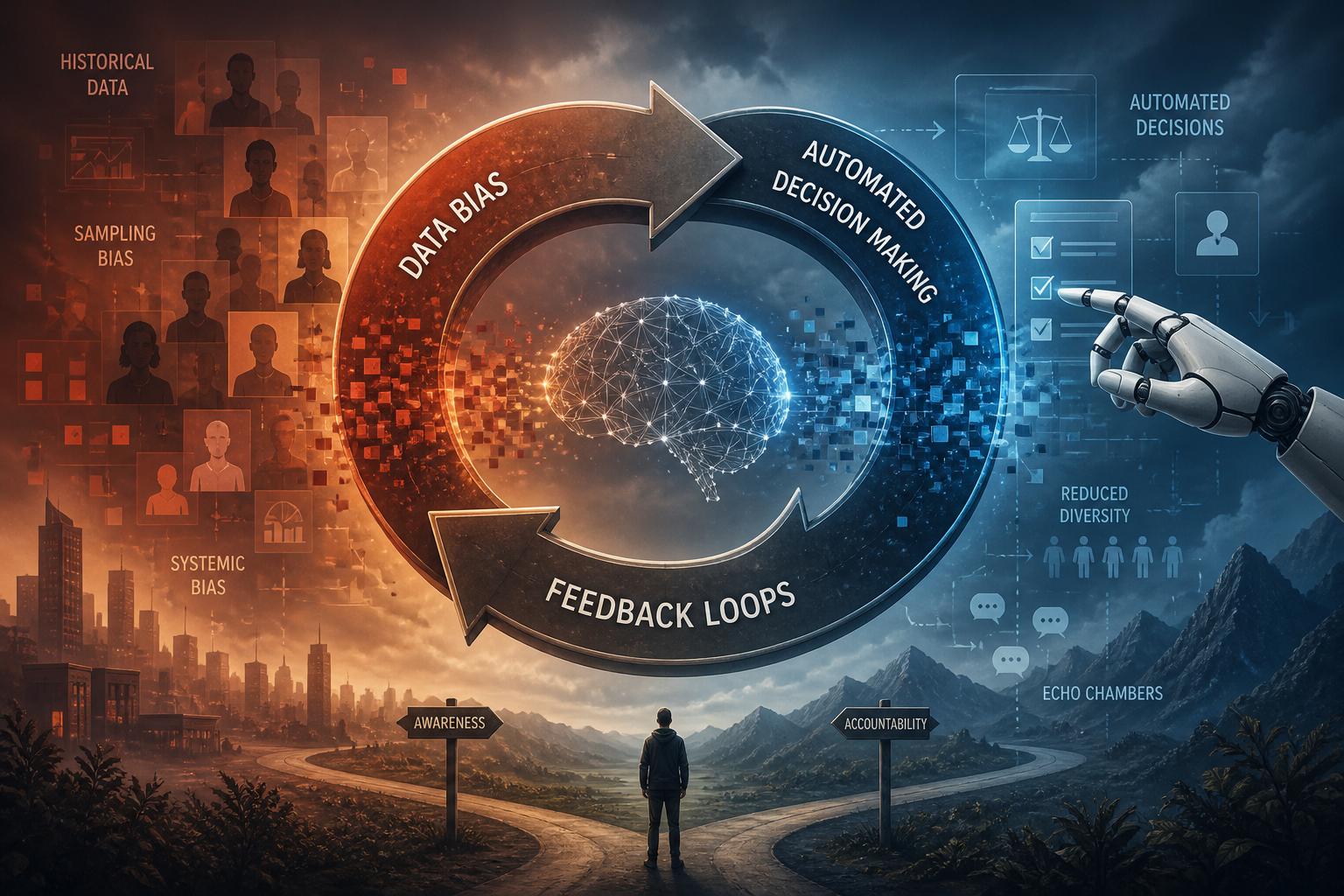
Feedback loops are one of the clearest ways value lock-in can take hold. Consider a hiring tool trained on past hiring decisions. If previous decision-makers favored candidates from certain schools, networksor career paths, the system may learn that those traits predict merit. Its recommendations can then influence future hiring,creating new records that appear to confirm the same preference.
Over time,a historical pattern can turn into an institutional rule without anyone explicitly choosing it. The system is not necessarily “biased” in a simple technical sense; it might potentially be faithfully reproducing the judgments embedded in the records it was given. That is exactly why historical data deserves scrutiny rather than automatic trust.
Automation can also blur obligation. When a person makes a difficult decision, there is at least a clear decision-maker who can be asked to explain an exception or reconsider a result.When a system produces a score, rankingor advice, staff may defer to it even when they have doubts. This matters most in decisions affecting work, credit, housing, education, public benefits, online visibilityand other crucial opportunities.
- Feedback loops can turn past outcomes into evidence of future merit.
- Biased records can make old inequalities look like neutral patterns.
- Automated authority can weaken accountability if no one is responsible for questioning the result.
Making room for disagreement
preventing value lock-in is not just a matter of writing broad ethical principles. It requires giving the people affected by an AI system a real role in shaping it. Workers,users,subject-matter experts,civil-rights advocates,and communities likely to bear the cost of mistakes should be involved before deployment and throughout the system’s use.
That involvement needs to be more than consultation after key choices have already been made. People should be able to question the system’s goals, point out harms that designers missedand press for changes when a model favors one group’s definition of success over another’s. Pluralism does not mean every disagreement has an easy answer. It means important disagreements are not hidden behind a claim of neutrality.
Clear records also matter. Organizations should be able to explain the system’s purpose, the kinds of data and evaluation criteria used, the trade-offs they acceptedand who is authorized to change the system. An audit trail is useful not because it makes a model perfect, but because it gives people something concrete to examine when a decision seems unfair or harmful.
People affected by high-impact automated decisions also need accessible ways to appeal. A meaningful appeal process should not require technical expertise or legal resources that most people do not have. It should offer a genuine review, including the possibility that the automated result was wrong or inappropriate for the individual case.
Protecting choice and cultural difference
Policy should treat human choice as a practical requirement, not a public-relations promise. When an automated system ranks, recommends, translates, moderatesor allocates opportunities, people should know when it is influencing an outcome. They should also have realistic options to question it, seek human review where appropriateor use an option process.
This is especially important for systems that effect rights, livelihoods, education, housing, healthor civic participation. In these settingsorganizations should be expected to document the value judgments built into their systems and explain how they handle conflicts between efficiency, fairness, safety, privacyand access.
Cultural diversity needs more than a generic statement about fairness. A system trained mainly on dominant languages, institutionsand social norms may treat its own assumptions as global. Regionally appropriate evaluation,independent review,and procurement standards can help identify whether a system handles minority viewpoints,local language,and lawful dissent responsibly.
The goal is not to freeze culture in place or pretend that every preference deserves equal weight. It is to make sure automated systems do not quietly turn a limited set of values into permanent social defaults. AI will always reflect choices. The question is whether those choices remain visible, open to challengeand responsive to the people who must live with their consequences.
AI tools built by Emerald Force
Built and supported by Emerald Force.

You might also like
- AI Agent Memory: Goals, Preferences, and Past Steps
Value Lock-In: How AI Can Entrench Narrow Values
- Trust AI for Speed-Verify High-Stakes Facts
Can AI Write Essays? Risks, Accuracy, and School Rules
- How Generative AI Creates Art From Prompts and References
- How Privacy Laws Shape AI Data and Decisions
- How to Write AI Prompts That Deliver Results
- AI’s Social Response: Education, Safety, Shared Gains
- Renewable Energy Helps, but Can’t Erase AI’s Footprint
- How AI Models Meaning Without Human Understanding