

Can AI spread misinformation? Yes. It can generate false content at scale and tailor it to different audiences, making deceptive messages easier to produce, testand circulate. That does not mean AI creates the problem on its own. People and organizations still choose the claims, the targetsand the channels. But AI can make a misleading campaign faster, cheaper, and harder to recognize.
How AI Can Help Target Receptive Audiences
AI tools can sort large amounts of public and commercially available details into audience groups based on interests, browsing habits, language, location, social connectionsand online reactions. In the wrong hands, that information can definitely help a campaign identify people who might potentially be more likely to respond to fear, distrust, angeror a particular personal concern.
The system does not need a deep understanding of an individual. It only needs to detect patterns that suggest wich wording, imageor emotional angle is most likely to get attention or reduce skepticism. A misleading message can then be rewritten for different groups: one version may sound like a local concern, another like a financial warningand another like a political argument.
That process can be repeated. Campaigners can try several headlines, images, tones, or calls to action and watch which versions gain the most engagement. Misinformation becomes less like a single broadcast and more like a cycle of testing and adjustment.
of course,people are not fixed or predictable targets,and treating them that way is both inaccurate and ethically troubling. Useful safeguards include limits on opaque profiling, clearer disclosure around political and issue-based targetingand better controls that explain why someone is seeing a particular post or advertisement.
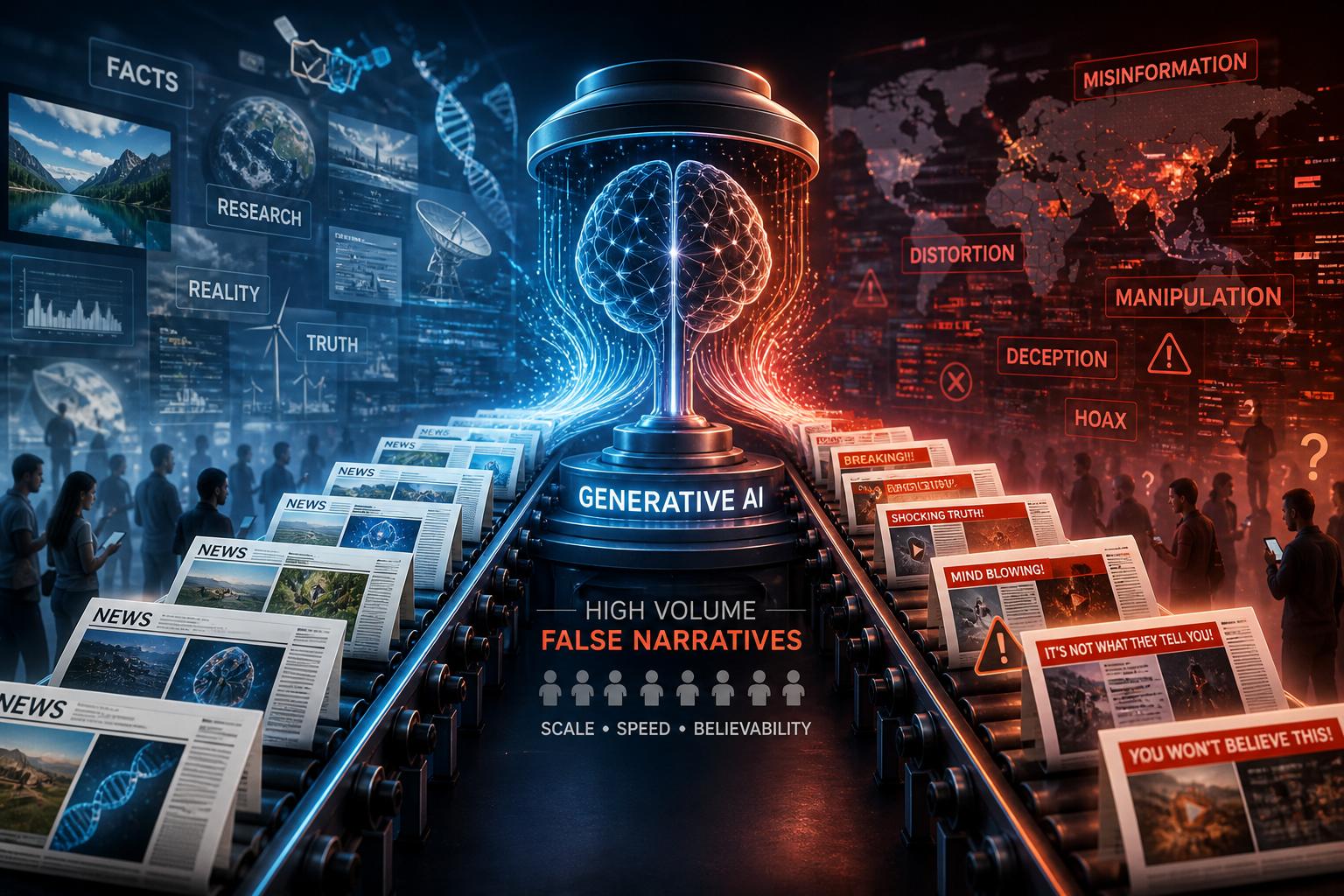
How Generative AI Makes False Claims Easier to Produce
Generative AI does more than speed up writing. It can reshape the same unsupported claim for different settings and audiences. One version might read like a worried parent’s social post. Another might look like a technical explainer,a local news update,or a string of comments from supposedly self-reliant people.
The underlying allegation may still be false or unproven,but each version can feel at home wherever it appears. AI can also produce many variations of the same message, making coordinated material less obvious than identical copy-and-paste posts.
Polished grammar, confident language, invented contextand plausible-sounding references can give weak claims an appearance of credibility. Readers may see the same idea repeatedly without realizing that the apparent agreement was manufactured. Familiar wording, a measured toneand specific details can all create a sense of trust-but none of them are evidence.
That does not mean every AI-generated statement is deceptiveand polished writing is not proof that a source is unreliable. The real test is whether a claim can be traced to credible sources, supported by verifiable evidenceand confirmed independently.
Why Misleading Content Can Travel So Quickly
Proposal systems do not need to believe a false claim to help spread it. They often respond to signals such as clicks,watch time,comments,shares,and repeat views.misleading content is frequently designed to trigger those reactions quickly: a frightening headline, a video stripped of context, a fabricated quoteor a dramatic claim about a hidden threat.
AI can make that process easier to scale by creating many versions of a message and adjusting the language for different audiences. The message that gets the strongest response can be repeated or adapted again, often before accurate information has had time to catch up.
As engagement builds, a platform may show the content in more feeds, search results, suggested videosor group discussions. Repetition can make a weak claim feel familiar, and familiarity can be mistaken for credibility. AI-generated replies, repostsand image variations may add to the illusion that a message has broad public support when it does not.
This is one reason corrections can struggle to keep pace. A correction usually requires context, sourcingand care. A misleading post can be brief,emotional,and ready to share almost promptly.
Making AI-Enabled Deception Harder to Spread
Detecting misinformation requires looking beyond a single post. One questionable claim may seem minor on its own,but it becomes more serious when large networks repeat it,connect it to a breaking event,and push it toward a narrowly defined audience.
Platforms can look for unusual copying patterns,coordinated accounts that repeatedly boost one another,recycled synthetic images,and profiles that change names or identities to avoid enforcement. Labels for AI-generated or heavily altered media can also help, provided they explain what is known and do not imply certainty where none exists.
- Clear provenance: retain information about where media came from and whether it has been altered.
- Useful disclosure: tell viewers when persuasive content was generated, editedor distributed through automation.
- Accountable oversight: make moderation rules, appealsand enforcement practices easier to understand and review.
Obligation should rest with the people and organizations deploying these systems. Political advertisers, publishers, platformsand AI providers all have a role in distinguishing satire from deliberate deceptionordinary automation from covert influence effortsand real debate from manufactured consensus.
Independent researchers also need meaningful access to study systemic risks, while users need straightforward ways to report suspicious content and challenge mistaken labels or removals. The goal is not to treat every synthetic image, videoor post as misinformation. It is to make coordinated deception harder to produce at scale, easier to traceand more costly to distribute.
AI is a powerful tooland its impact depends largely on how people use it. Building healthier information spaces will require better platform practices, clearer accountability, and a public that knows to pause before sharing a claim that seems designed to provoke an immediate reaction.
AI tools built by Emerald Force
Built and supported by Emerald Force.
You might also like
- AI Can Build Websites: From HTML to Backend Scaffolds
- AI Voice Scams Are Rising: Why Verification Matters
- Letting AI Run Terminal Commands: Essential Safeguards
- AI Lowers Routine Costs, but Expertise Still Decides
- AI Agents Today: Useful but Still Need Oversight
- How AI Enables Robots to Perceive, Plan, and Interact
- Retrieval-Augmented Generation: A Clear Guide
- Why Smaller Tuned Models Win Focused AI Tasks
- Protect Family From AI Scams: Verify Before Paying
- Will AI Become Conscious? No Evidence So Far