
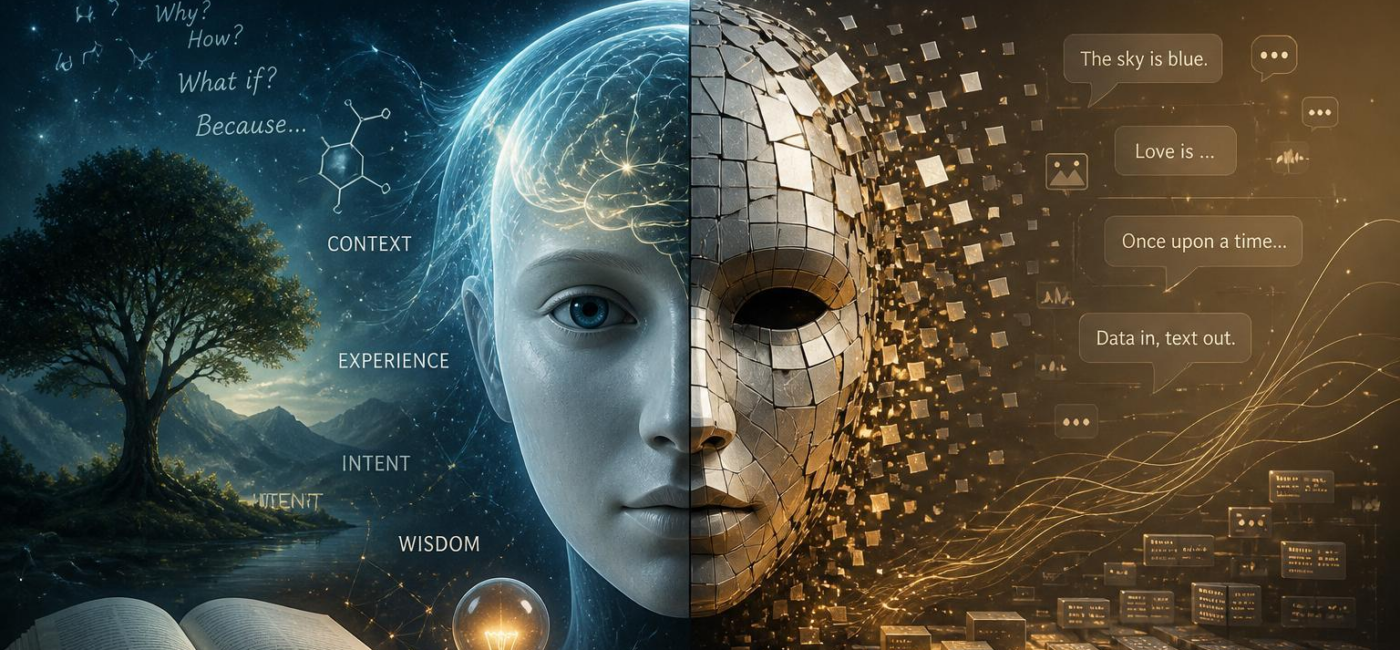
Do AI models understand meaning, or do they simply mimic it well enough to fool us? The honest answer is still unsettled, but one point is clear: AI systems can model patterns in data and often behave as if they understand what we meen. That is not necessarily the same thing as human understanding,which is shaped by experience,perception,intention,and a life lived in the world.
How AI Learns Language Patterns
AI models are trained on large collections of text,images,audio,or code. In broad terms, they learn which pieces of facts tend to appear together and use those relationships to predict a likely next word, caption, answeror action. That process can produce remarkably natural language. A model may learn that ice is associated with cold, that apologies frequently enough follow mistakesor that certain wording can signal uncertainty or sarcasm.
But recognizing those patterns is different from knowing them through experience.A language model does not feel cold, regret hurting someoneor pick up on a tense room through it’s own senses. It has learned how people usually talk about those things. That distinction is easy to miss because the output can be smooth, specificand emotionally convincing.
A model may explain grief, summarize a legal argumentor write a recipe with confidence. Still, it is indeed working from relationships in data rather than direct contact with the physical and social world. Fluent language can look like understanding without proving that it is there. It also helps explain why an AI can give a coherent answer that turns out to be wrong: a plausible response is not the same as a verified one.
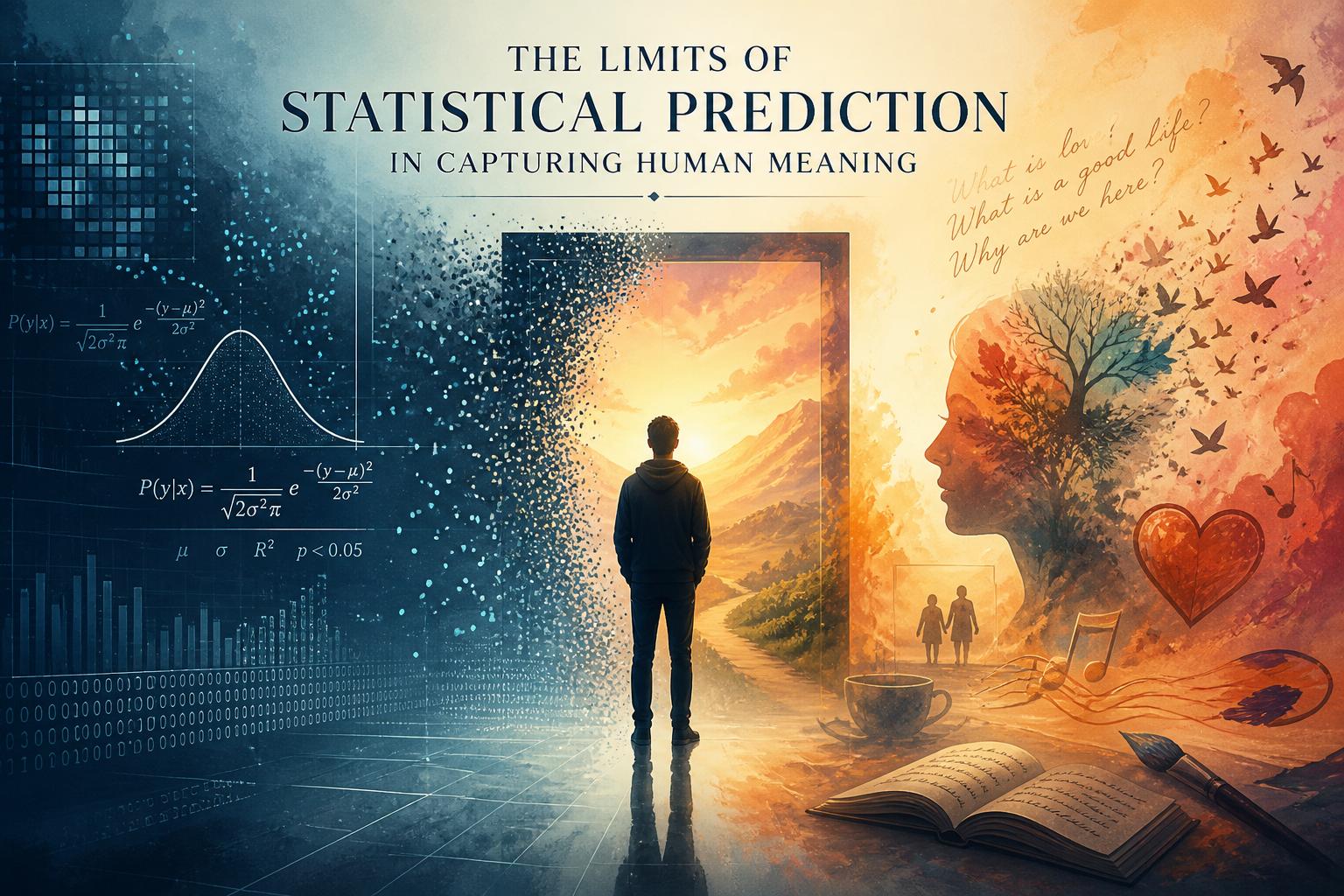
Why Human Meaning Is Harder Than Prediction
Much of interaction does follow patterns, which is why AI can be so useful. It can often recognize that grief calls for comfort,that a question calls for an clarification,or that a certain phrase may carry a particular tone. But meaning is not only about choosing words that commonly go together.
People speak from particular situations. We bring memories, relationships, goals, cultural expectations, and private intentions to even ordinary conversations. Take the phrase, “I’m fine.” Depending on the moment, it can mean exactly that-or it can signal annoyance, fear, exhaustion, politenessor a wish to end the conversation. A model may identify several likely interpretations, but it does not live inside the situation that gives one of them emotional weight.
This matters most when language depends on judgment. Irony, affection, moral hesitation, silenceand cultural references often require an understanding of why someone chose those words at that moment. AI can imitate the language of empathy and insight, sometimes very effectively. Yet sounding empathetic is not the same as caring, and producing a thoughtful explanation is not necessarily the same as having a personal stake in its meaning.
What Would Count as Better Evidence?
A persuasive answer alone does not settle the question. A system can reproduce the shape of a good explanation-the right vocabulary, a confident tone, and a familiar conclusion-without reliably tracking what its words refer to.More revealing tests ask whether it can carry an idea across changing conditions.
For example, does the model still reach the right conclusion when a question is reworded? can it spot a contradiction in the premise, explain the difference between correlation and causation, or say where an analogy breaks down? These are more useful questions than simply asking whether the first answer sounds bright.
there is no single test that cleanly separates reasoning from mimicry. A model may perform well because it has encountered similar material during training,and it may fail on a task even when it has captured part of the underlying idea. The stronger approach is to test the same claim from several angles: change one crucial detail,ask for a counterexample,request an explanation of the assumptions,and see whether the answer changes for the right reason.
Consistency matters, but so does revision. If new information undermines an earlier answer, a capable system should be able to identify what changed and update its conclusion rather than simply restating the original response in different words.
A Practical Way to Judge AI
In everyday use, it is usually more helpful to focus on performance than to demand a final answer to the philosophical question. When someone says an AI “understands,” ask what the system can actually do. Can it explain an idea plainly? apply it to an unfamiliar case? Notice when essential information is missing? Admit uncertainty instead of inventing an answer?
A useful short checklist is:
- Does it keep its reasoning straight when the wording or context changes?
- Can it explain why a conclusion follows from the available evidence?
- Does it revise its answer appropriately when new facts are introduced?
These questions avoid two unhelpful extremes: treating AI as magical or dismissing it as worthless. Many systems can be useful, especially when they are checked carefully and used for tasks that fit their strengths. But reliable performance under variation tells us more than polished prose alone.
The Difference Still Matters
So,do AI models understand meaning? They model patterns in data and can act as if they understand meaning,but their understanding is not the same as human experience. They do not bring a body, a history, personal intentions, or lived consequences to the conversation.
That does not make their output meaningless. It means we should judge it carefully. AI can help people write, explain, analyzeand explore ideas, but fluent language should not be mistaken for proof of comprehension. The best measure is not how human an answer sounds, but how reliably it holds up when the situation becomes more elaborate.
AI tools built by Emerald Force
Built and supported by Emerald Force.
You might also like
- Can AI Identify You From a Photo? Key Risks
AI Models Explained: From Inputs to Outputs
- Synthetic Data: Purpose, Uses, and Limitations
- Preparing Students for Success in AI-Driven Work
- How AI Improves Test Prep With Plans and Practice
- Content Provenance: How Media Origins Are Verified
- AI Chatbots Explained: How They Answer and Act
- U.S. AI Governance: No Single Federal AI Law
- When to Ask for JSON for Structured Output
- Fine-Tuning vs. Retrieval: Model Change or Context