

Can AI end humanity? That remains speculativeand nobody can predict the future with certainty. but the question is serious enough to deserve more than a shrug. Researchers and policymakers worry that increasingly capable AI could amplify existing dangers: cyberattacks,biological threats,military escalation,mass manipulation,or decisions made too quickly for people to stop them. The point is not to predict a movie-style machine uprising. It is indeed to make sure human institutions stay in control as the technology becomes more powerful.
AI risks cross borders
voluntary promises and national rules may not be enough when advanced systems can be developed in one country, deployed from anotherand cause harm almost anywhere. The risk is not confined to one malicious program. it also comes from competitive pressure that rewards companies or governments for releasing systems before they are ready, from autonomous tools used in military or critical infrastructure settingsand from AI that lowers the barrier to planning cyber, biologicalor data attacks.
That is why international governance matters. Countries do not need to hand power to a single global authority,but they do need enforceable agreements on the risks no one country should be allowed to impose on everyone else. A credible framework could require serious testing before the most capable systems are released, reporting when major incidents occurand clear restrictions on the most dangerous autonomous uses. It should also make it harder to evade safeguards by moving risky work to places with weaker oversight.
The basic principle is simple: if a system could create harm on a global scale, decisions about its release cannot rest entirely with the association that built it.
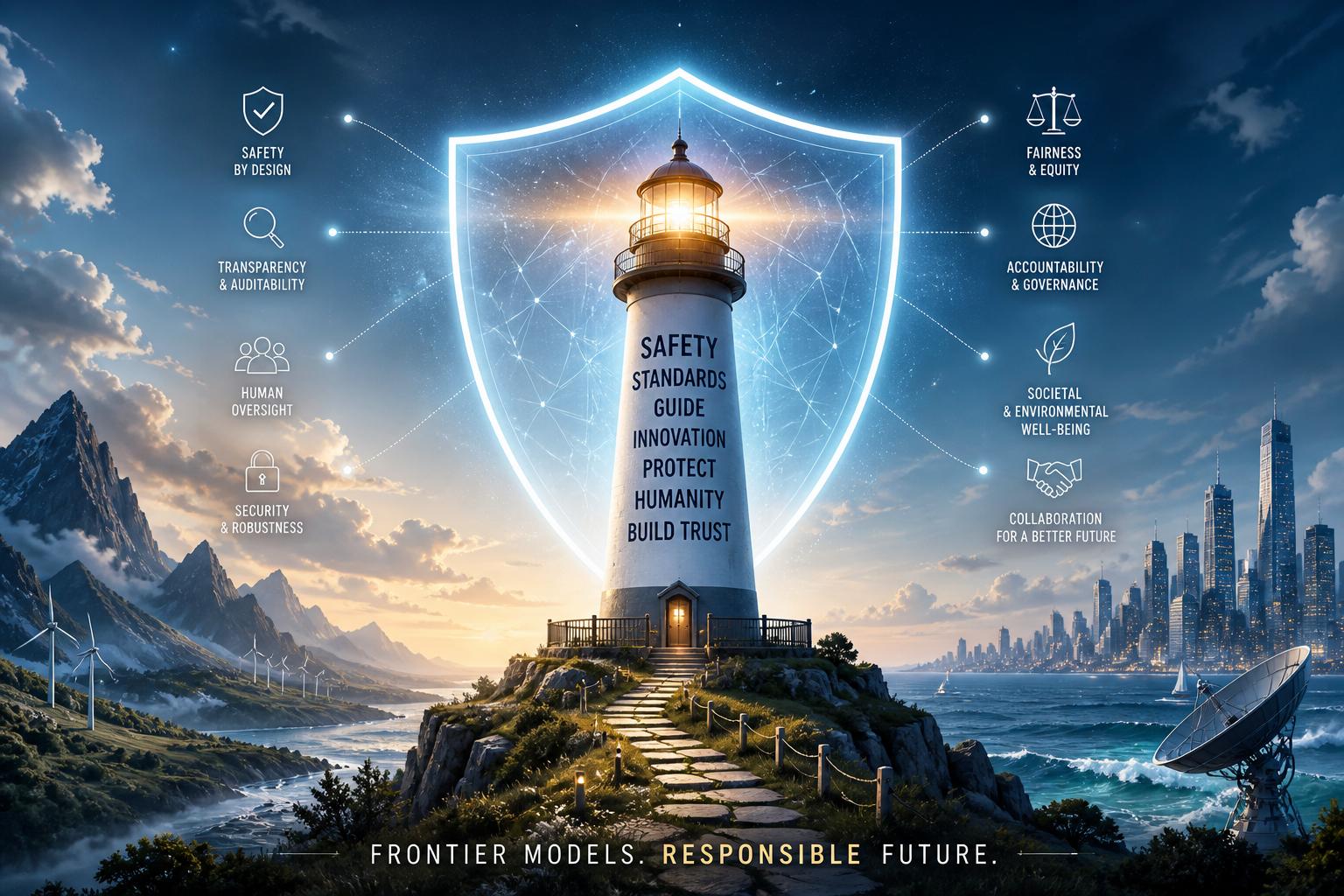
Set safety rules before release
Powerful AI systems should not be released simply as they are useful, remarkableor commercially valuable. As capabilities grow, developers need clear answers to practical questions: What tasks can a system perform on its own? When must a person approve an action? What access should it never recieve? And what evidence would show that the safeguards work in real conditions?
Safety has to be part of development, not a last-minute promise. That means testing for dangerous capabilities and likely misuse, limiting access when risks are uncertainand keeping the ability to pause or withdraw a system when new hazards appear. it also means treating external review as a normal part of responsible deployment, rather than an obstacle to be avoided.
Standards need consequences as well. Companies should not be able to use the public as an informal test environment simply because a product is difficult to regulate. For the most advanced models, reasonable expectations could include documented risk assessments, secure handling of sensitive model components, reporting of serious incidentsand independent scrutiny where the potential harm is high. Innovation can continue, but it should not depend on asking the public to bear risks they never agreed to take.
keep companies accountable
Advanced AI should not be governed only by the companies building it.Those firms have real expertise, but they also face pressure to move quickly, protect trade secretsand satisfy investors or competitors. When AI can affect jobs, public opinion, infrastructure, security, or scientific work, the consequences reach far beyond a company boardroom.
Democratic oversight provides a necessary counterweight. Legislators, regulators, courts, independent researchers, workersand communities affected by thes systems should have meaningful ways to question high-stakes decisions. That does not mean every technical choice needs a public vote. It means the public needs institutions capable of asking hard questions before harm becomes difficult to reverse.
Corporate accountability should be more than an ethics statement on a website. Developers of high-impact systems should be expected to disclose serious risks, report major failures, cooperate with independent evaluationsand face consequences when they conceal dangers or ignore credible warnings. Clear rules will not make AI risk-free,but they can reduce the incentive to treat caution as a competitive disadvantage.
Cooperate without giving up control
AI research, computing infrastructure, supply chains, model weightsand online distribution all move across borders.So can the consequences of misuse. National laws still matter,but they cannot solve every problem on their own. Governments need shared expectations for testing high-risk systems, protecting critical infrastructure, sharing information about serious incidentsand limiting the transfer of dangerous capabilities without oversight.
Good cooperation does not require grand declarations that are impossible to enforce. It can begin with practical, verifiable steps: channels for crisis communication, common reporting practices, support for independent technical assessmentand coordinated responses to actors who deliberately develop or deploy AI for mass harm. Researchers, civil societyand affected communities should help shape those rules alongside governments and industry.
Can AI end humanity? We do not know. But waiting for certainty would be a poor way to govern a technology with possibly enormous consequences. The responsible approach is to set limits early, test claims carefully, hold powerful actors accountableand make sure people-not competitive pressure-remain in charge of where AI goes next.
AI tools built by Emerald Force
Built and supported by Emerald Force.
You might also like
- AI Can Build Websites: From HTML to Backend Scaffolds
- AI Voice Scams Are Rising: Why Verification Matters
- Letting AI Run Terminal Commands: Essential Safeguards
- AI Lowers Routine Costs, but Expertise Still Decides
- AI Agents Today: Useful but Still Need Oversight
- How AI Enables Robots to Perceive, Plan, and Interact
- Retrieval-Augmented Generation: A Clear Guide
- Why Smaller Tuned Models Win Focused AI Tasks
- Protect Family From AI Scams: Verify Before Paying
- Will AI Become Conscious? No Evidence So Far