

Governments are under growing pressure to use AI, whether to improve public services, manage large volumes of informationor help staff make routine decisions. But buying a tool is not the same as being able to govern it. The answer to whether governments should build internal AI capacity is yes: public institutions need enough in-house expertise to buy, regulateand use AI responsibly.
That does not mean every agency needs its own research lab or custom-built model. It means having people who understand the technology well enough to ask sensible questions, set boundariesand recognize when a vendor’s claims do not match the realities of public service.
Assessing AI Before It Is Bought
A polished presentation can make almost any AI product look useful. What matters is whether it works reliably in the setting where an agency plans to use it. Staff need to be able to look beyond sales materials and ask practical questions: What information does the system rely on? When is it likely to get things wrong? Could it affect some residents differently from others? Can its performance be tested with local data and real workflows?
Internal expertise helps agencies seperate a useful tool from an expensive dependency. The right mix may include technical staff, lawyers, procurement specialists, policy teams, privacy officersand people who understand the service itself.Together, they can set expectations before a contract is signed, including requirements for documentation, testing, security, accessibility, human reviewand incident reporting.
Just as crucial, agencies need the ability to keep checking a system once it is indeed in use. A tool that performs well in a limited trial may create problems when it reaches a larger or more varied public population. Someone inside government must be responsible for noticing those problems and deciding what happens next.
Keeping Public Data Under Public Control
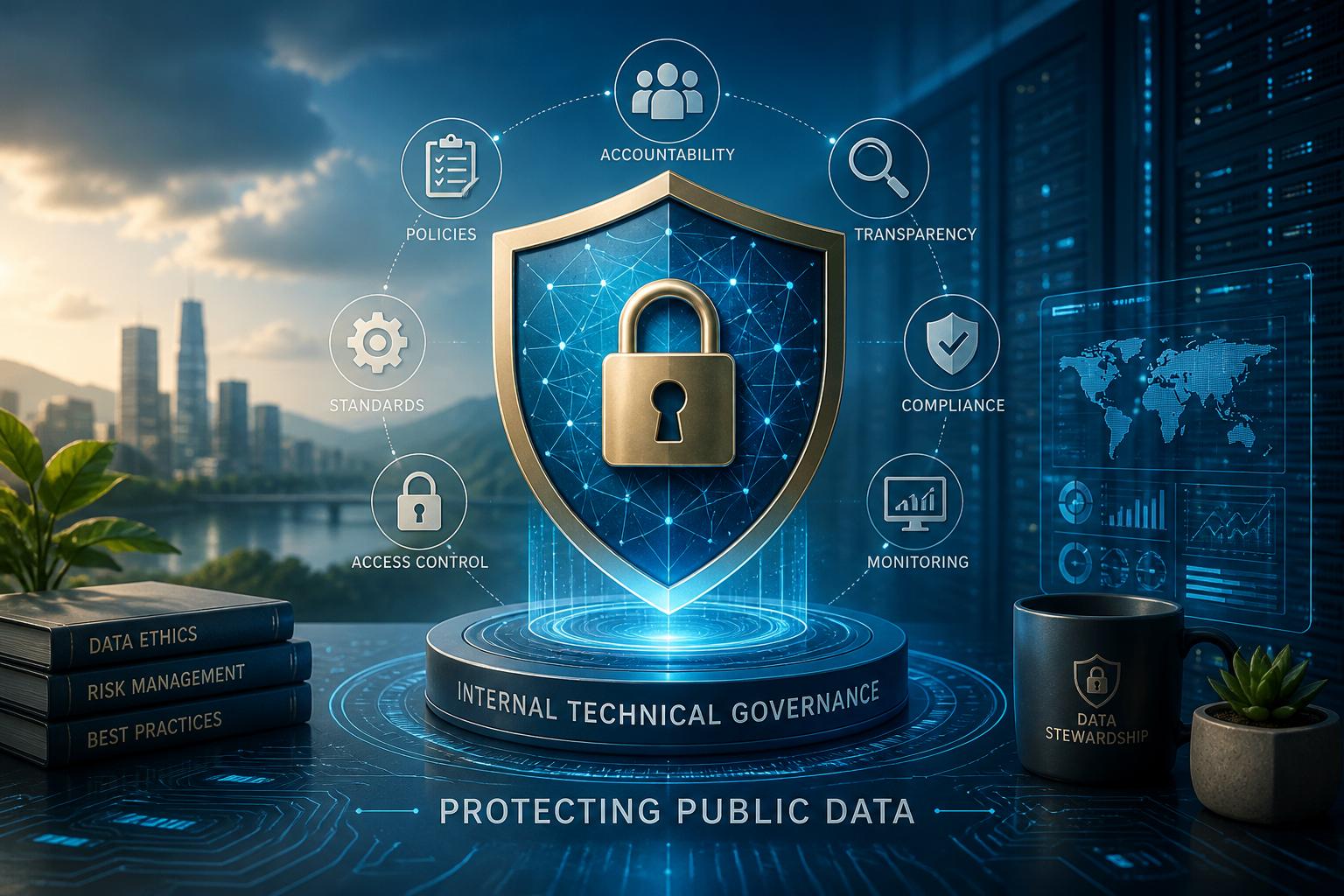
Data protection cannot be reduced to a sentence in a vendor contract. AI tools may handle benefit records, case files, maps, public commentsand other information that becomes more sensitive when it is combined, analyzed, or shared at scale. Agencies need people who can determine exactly what data is leaving government systems, where it is stored, who can access itand whether it can be kept or used for purposes beyond the original service.
Those questions are not merely technical details. They shape whether an agency can meet its privacy obligations and respond honestly to the public when concerns arise. Internal teams can establish rules for approved data uses, require security reviews before a new tool connects to agency systemsand maintain records of how information is handled.
Public data deserves public accountability. When an AI system touches personal information or records that may later be reviewed in court,by auditors,or by the public,the agency cannot afford to be vague about how the system works. Knowing enough to oversee the technology makes it easier to prevent avoidable disclosures and act quickly if something goes wrong.
Buying Without Becoming Dependent
Government procurement should secure more than a login to a vendor platform. Agencies need a workable understanding of what they are buying and a realistic way to leave if the system no longer serves the public interest. that includes access to clear documentation, usable data exports, evaluation recordsand the training needed for staff to supervise the tool.
Exit planning should begin before the contract does. If an agency cannot retrieve its own data in a usable format, understand how a system has been configuredor move to another provider without disrupting a public service, it has given up too much control. Vendors can bring valuable knowledge and products, but they should not become the sole source of expertise about a government’s own operations.
In-house AI staff make procurement language more meaningful. They can identify vague promises, assess whether proposed terms are workableand insist on transition support when a contract ends. that protects the agency’s ability to pause, changeor replace a system when circumstances demand it.
making Oversight Part of Daily Work
AI oversight cannot be handed off simply because a system was purchased from a private company. Government tools may influence benefit eligibility, case management, public safety workand access to essential services. Officials need to understand how those tools where selected, tested, monitoredand challenged when their outputs affect real people.
That responsibility works best when it is part of ordinary operations, not a final compliance check after decisions have already been made. Technical staff should work alongside program leaders, legal counsel, privacy officers, procurement teamsand frontline employees. Frontline staff, in particular, often see failures first: an incorrect advice, an unusual case the system cannot handle, or a process that makes it harder for a resident to get help.
Clear internal ownership also gives agencies the confidence to intervene. If evidence shows that a system is unreliable, unfair, or impractical to explain, the agency should be able to pause it, change how it is usedor retire it altogether. Residents should not have to navigate a vendor’s black box to question a government decision. The agency using the tool must be ready to explain the process,review the outcome,and take responsibility.
Conclusion
Governments do not need to build every AI system themselves.They do need the knowledge to make informed choices about the systems they use. Internal AI capacity helps public institutions evaluate vendors,protect sensitive data,avoid unneeded dependency,and remain accountable for decisions made in the public’s name. Without it, oversight becomes little more than trust in a contract.
AI tools built by Emerald Force
Built and supported by Emerald Force.
You might also like
- Can AI Fake Photos? How Synthetic Images Look Real
- AI Handles Routine Service; Humans Handle the Rest
- How AI Can Scale and Tailor Misinformation
- AI Helps Both Sides: Security Choices Decide
- Few-Shot Prompting: Learning from a Few Examples
- Inference Cost: The Compute Behind Model Outputs
- How to Benchmark Tools Before Buying: A Practical Guide
- Can AI Remove Backgrounds? A Proven Vision Use Case
- How AI Clusters Customer Feedback and Detects Sentiment
- AI Center of Excellence: Standards and Adoption