
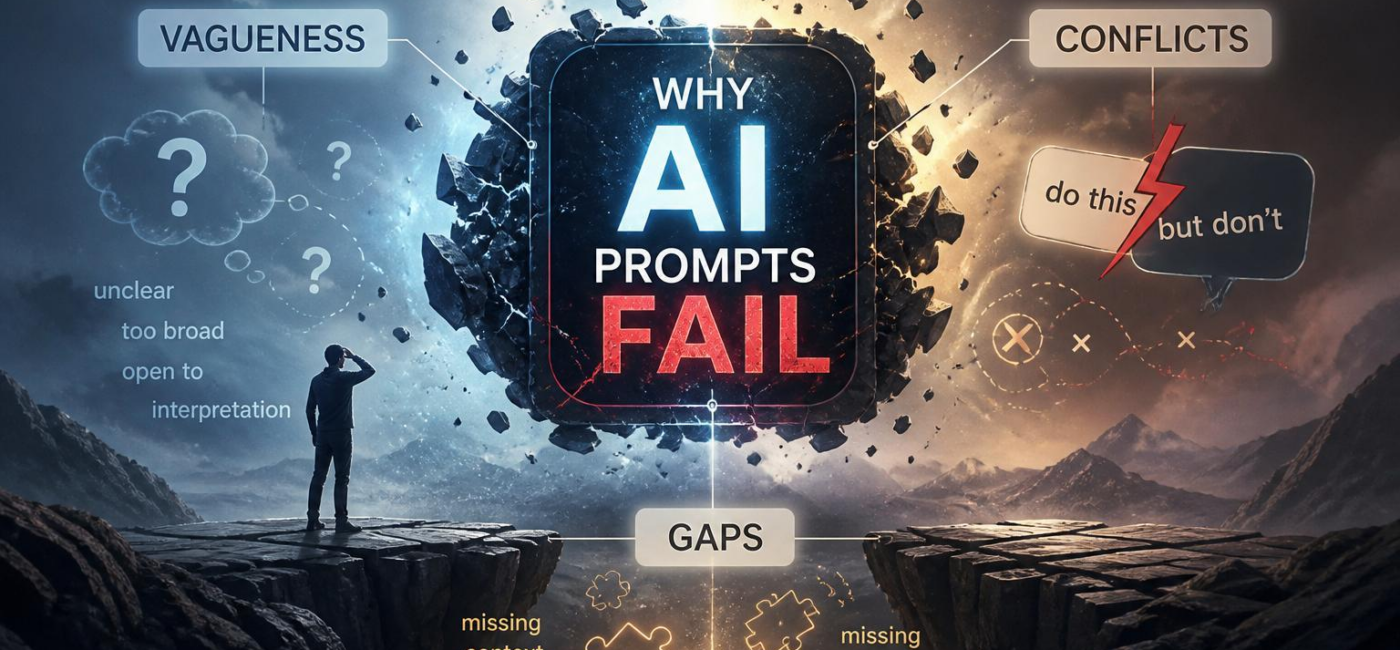
AI prompts fail for a simple reason: the model is often asked to make decisions the writer has not made. When a task is vague, contradictory, underspecifiedor depends on facts the model does not have, it may still produce an answer that sounds convincing. That does not make the answer useful-or accurate.
Better results usually come from better instructions. You do not need to write a long, complicated prompt. You do need to be clear about the job, the audience, the facts that matterand the limits the response needs to respect.
When the Prompt Is Too Vague
A request like “write something professional about our product” leaves a lot unanswered. Who is it for? What does the product do? Is this a sales page,an email,or a short description? How formal is “professional”? What claims are acceptable?
When those details are missing,the model fills in the blanks with reasonable-sounding guesses. That can lead to copy that is polished but off target: too formal for customers,too technical for beginners,or too generic to say anything useful.Plausible is not the same as correct.
Specificity gives the model a frame to work within. For example, “Explain our appointment policy” could produce several very different answers. “Write a 150-word, pleasant policy notice for first-time patients. explain the 24-hour cancellation rule without sounding punitive” gives the task a clear direction.
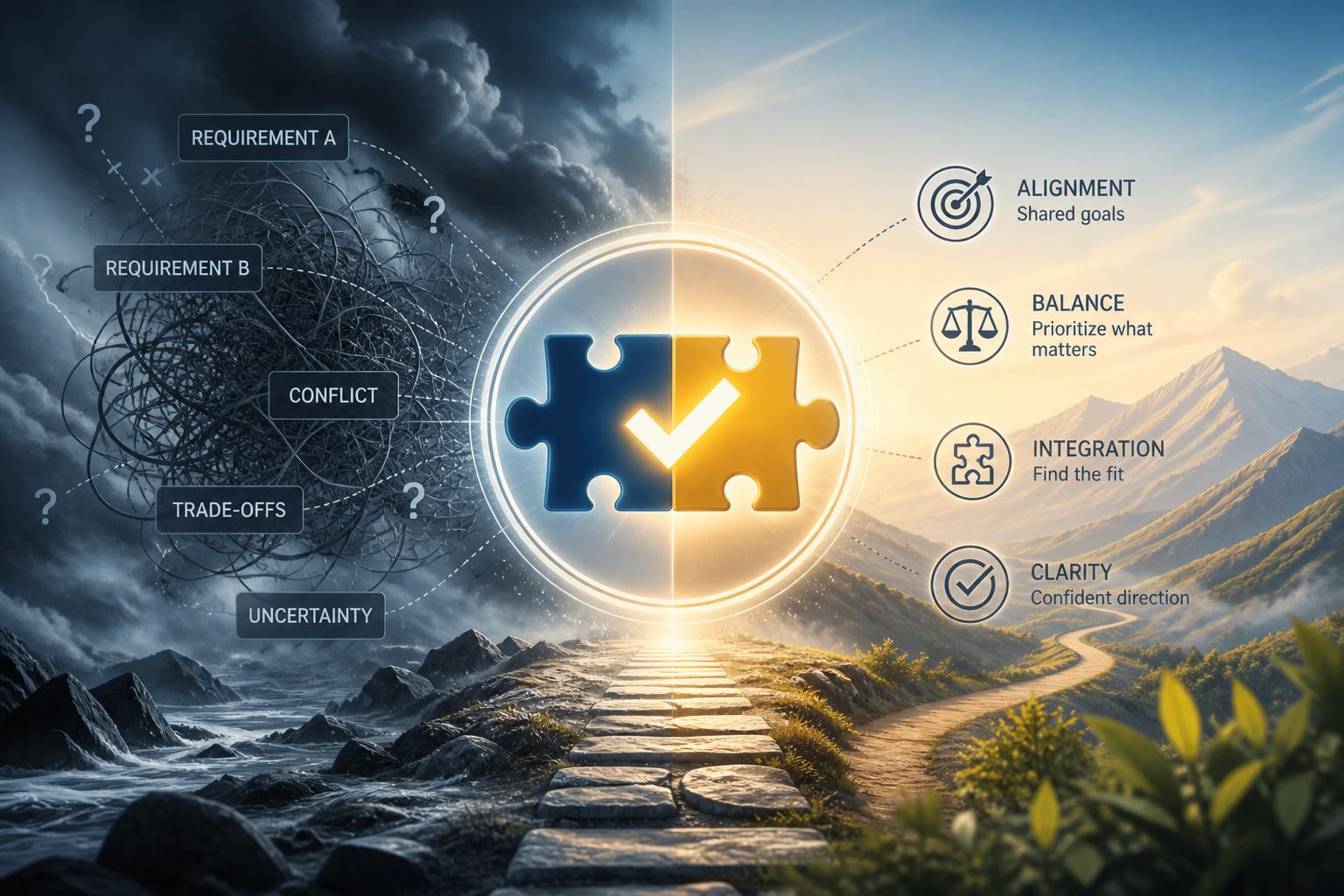
When Instructions Pull in Different Directions
Some prompts fail because the instructions conflict. “Write a brief,detailed report” asks for two things that may not fit together. So does “be persuasive but completely neutral,” or “cover every option in fewer than 100 words.”
In those cases, the model has to guess which instruction matters most. It may choose brevity over completeness, tone over precisionor one requirement over another without telling you why.
Before you write the prompt, decide what is non-negotiable and what is simply preferred. If you need a complete guide, give it enough room to be complete. If you wont a balanced analysis, do not also ask the model to sell a position.If the audience is expert, say whether technical terms are welcome or whether you want plain language with only necessary jargon.
It also helps to state the order of priority. For many tasks, that might be accuracy first, required facts second, format third, and tone last. You can also build in exceptions when needed: “Keep this under 300 words unless a safety issue requires a fuller description.” That is much clearer than expecting the model to figure out when brevity should give way to detail.
Give It the Context It Needs
A prompt may sound clear while leaving out the facts that actually determine the answer. “Write a customer email about the delay” does not explain what was delayed, who the customer is, whether the reason can be shared, how serious the problem is, or what remedy is available.
Without that context, the model may invent a reason for the delay, promise something you cannot offeror choose a tone that does not fit the situation. The same issue appears whenever a task depends on internal policies, current information, product details, legal limits, or other facts the model cannot know unless you provide them.
Include the practical details: who the audience is, what happened, which facts must be included, which claims are off limitsand any rules the response must follow. Context is not extra background. It is part of the assignment.
Be equally clear about what success looks like. “Make this landing page better” is too open-ended.Better in what way-clearer pricing, fewer support questions, a warmer tone, more qualified leadsor a simpler explanation? A more useful instruction might be: “Draft a 300-word page for first-time buyers. Explain the return policy in plain English,avoid urgency claims,and end with one calm purchase prompt.”
What a Useful Prompt Includes
A good prompt gives the model a clear job, a defined reader, and a few boundaries. It does not need to anticipate every possible detail,but it should settle the decisions that would otherwise be left to guesswork.
For instance, “Write about email security” could go in almost any direction. “Write a 400-word explanation of email security for small-business owners. Use three short paragraphs, define phishing in plain Englishand avoid technical jargon and sales language” is far easier to answer well.
Keep the task at the center of the prompt, then add only the constraints that support it. If you want a concise explanation, do not demand exhaustive coverage. If you need a formal tone, do not also request playful jokes. And when accuracy depends on source material, provide that material rather than assuming the model knows it.
One especially useful instruction is: “If a key detail is missing,ask one clarifying question rather than making an assumption.” It will not solve every problem, but it can prevent a confident-looking answer from being built on details that were never true.
Clear Prompts Leave Less to Guesswork
why do prompts fail? Usually because the request leaves too much open, asks for incompatible thingsor relies on information the model has not been given. A strong prompt does not need to be rigid or wordy. It simply gives the model enough direction to do the work you actually need.
Start with the goal. name the audience. Provide the facts that matter. Set the limits. Then make it clear what should happen when information is missing. The result is not just more polished output-it is output that is more likely to be usable.
AI tools built by Emerald Force
Built and supported by Emerald Force.
You might also like
- Can AI Fake Photos? How Synthetic Images Look Real
- AI Handles Routine Service; Humans Handle the Rest
- How AI Can Scale and Tailor Misinformation
- AI Helps Both Sides: Security Choices Decide
- Few-Shot Prompting: Learning from a Few Examples
- Inference Cost: The Compute Behind Model Outputs
- How to Benchmark Tools Before Buying: A Practical Guide
- Can AI Remove Backgrounds? A Proven Vision Use Case
- How AI Clusters Customer Feedback and Detects Sentiment
- AI Center of Excellence: Standards and Adoption