
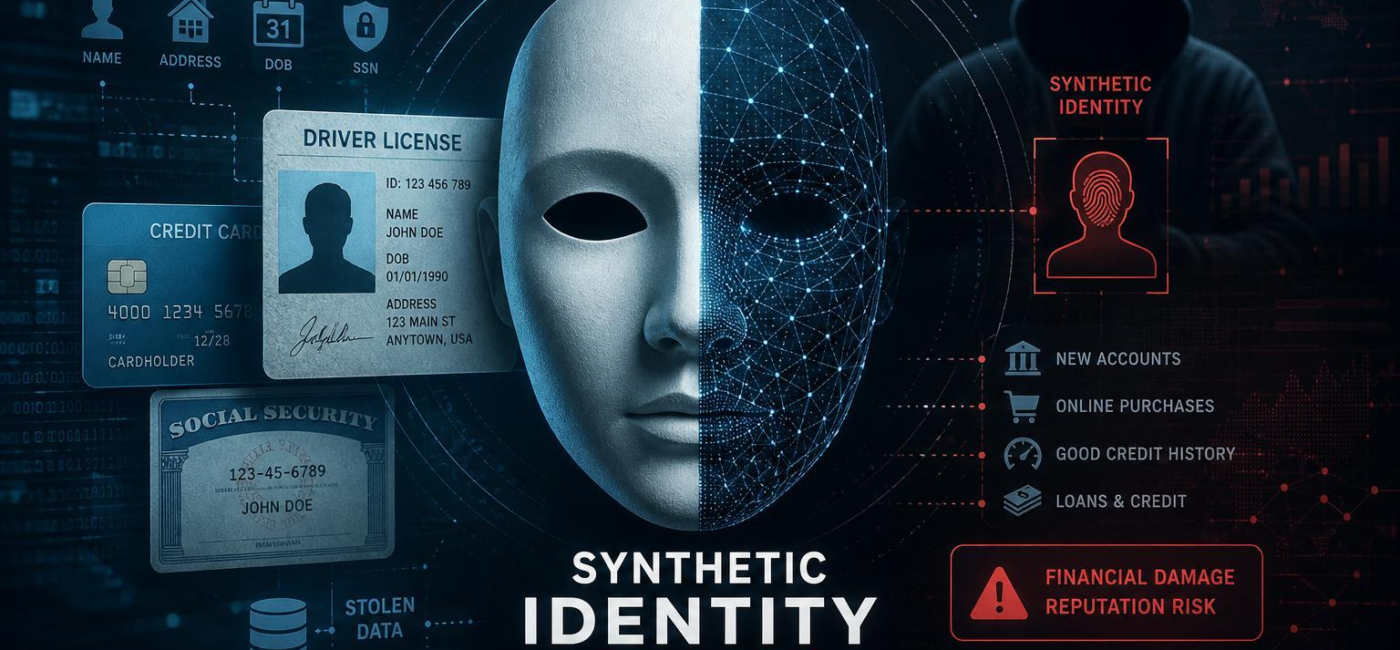
Synthetic identity fraud is fraud using a fake identity built from real and invented information. Rather of impersonating one person outright, the fraudster creates a new persona that can pass basic checks, open accountsand gradually build credibility.
how fake identities are created
A synthetic identity typically starts with one piece of legitimate information, such as a Social Security number.Fraudsters may target numbers associated with children, older adults with limited recent credit activityor others who may not notice a problem right away. They then pair that real identifier with made-up details: a name, date of birth, address, phone number, email accountand sometimes employment or income information.
The result is not quite traditional identity theft. The profile does not fully belong to a real person,but it can look convincing enough to lenders,retailers,banks,and other organizations that compare only a few data points at a time.
Onc the identity is established,the fraudster may work to make it appear more legitimate. That can mean opening lower-risk accounts, using an address that receives mail, making small payments on timeor building credit activity slowly.Some of the information may be entirely invented, while other details are borrowed from public records or real people.
Why it can be hard to spot
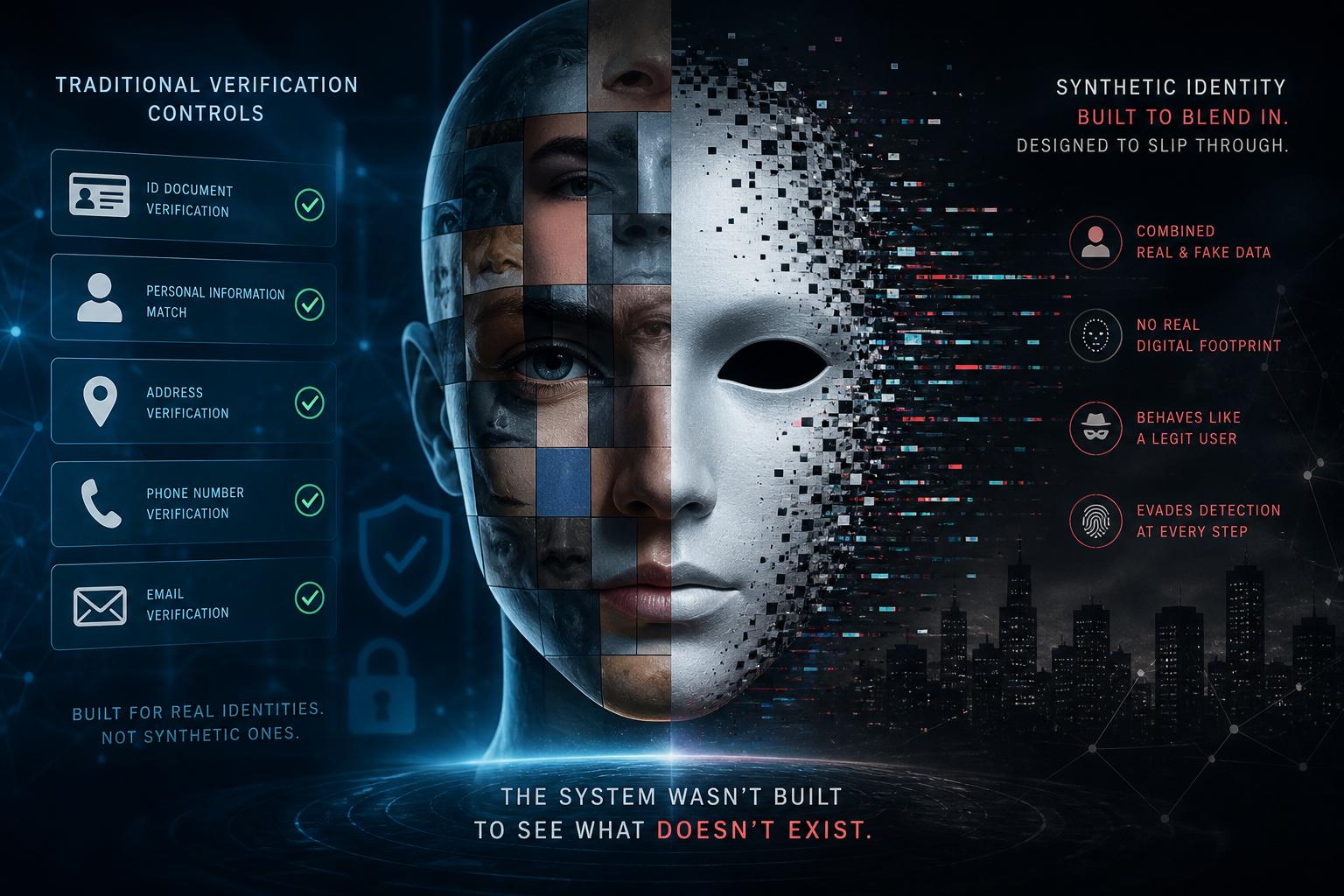
Synthetic identity fraud can slip through standard verification because parts of the application may be real. A valid Social Security number, such as, may not immediately conflict with a fabricated name or address. Many verification processes are designed to confirm that individual details exist, not to determine whether those details belong together in the life of one genuine person.
The fraud also tends to develop slowly.A new account may initially look like a cautious customer with limited credit history: small transactions, modest balancesand regular payments. Over time, the synthetic identity can gain enough credibility to qualify for larger credit lines, additional productsor higher-value purchases.
That is why a single check at account opening is rarely enough. Detecting this type of fraud often requires looking at the full pattern over time, including whether contact information, devices, addressesor funding sources connect accounts that shoudl have no relationship to each other.
Warning signs across accounts
Synthetic identity activity does not always produce one clear red flag. More often, it appears as a series of small inconsistencies. An account may have a plausible name and address but little evidence of a normal financial history. It may also share a phone number, email address, device, mailing addressor bank account with several supposedly unrelated customers.
Other signs can emerge after the account is opened.A customer might build a modest payment record for months and then suddenly seek larger credit limits, make high-value purchases, request expedited transfersor update several contact details at once. None of those actions proves fraud on its own. Together, they may warrant a closer review.
Patterns across the wider customer base matter as much as the individual account.Similar applications, matching payment timing, repeated transaction amountsor coordinated changes to customer details can reveal a network of manufactured identities that would be difficult to spot one account at a time.
How organizations can reduce the risk
Organizations should treat identity verification as an ongoing process, not a one-time approval step.Initial checks should compare customer information against reliable sources and look for obvious mismatches.after onboarding, monitoring should continue as the account develops.
It is also useful to look for relationships among applications. Repeated use of the same device, phone number, address, employer, recovery contactor funding source may point to coordinated activity. Reviewing those links can be more revealing than focusing only on whether one application appears valid in isolation.
Teams should pay particular attention to early account behavior, especially rapid credit-limit requests, unusual transaction patterns, abrupt changes to contact information, or activity that does not fit the customer profile. Fraud, operations, complianceand customer-service teams need enough shared context to recognize when a small discrepancy is part of a broader pattern.
Synthetic identity fraud is difficult because it is built to look ordinary at first. The best defense is a combination of careful verification, ongoing monitoringand a willingness to investigate the connections between accounts before a seemingly low-risk profile turns into a larger loss.
AI tools built by Emerald Force
Built and supported by Emerald Force.

You might also like
- Can AI Fake Photos? How Synthetic Images Look Real
- AI Handles Routine Service; Humans Handle the Rest
- How AI Can Scale and Tailor Misinformation
- AI Helps Both Sides: Security Choices Decide
- Few-Shot Prompting: Learning from a Few Examples
- Inference Cost: The Compute Behind Model Outputs
- How to Benchmark Tools Before Buying: A Practical Guide
- Can AI Remove Backgrounds? A Proven Vision Use Case
- How AI Clusters Customer Feedback and Detects Sentiment
- AI Center of Excellence: Standards and Adoption