

Human in the loop means a person reviews,guides,or approves AI actions before or after they happen. The level of involvement should depend on what the system is doing and what coudl go wrong. An AI tool can sort applications, flag transactions, draft replies, or suggest next steps, but a person or organization still owns the consequences.
Who is responsible for an AI decision?
Accountability works best when it is assigned clearly. Every meaningful AI action should have a named person or role responsible for it-not just a vague sense that “the team” is watching. Someone needs to set the system’s purpose and limits, someone needs to decide when its recommendations can be usedand someone needs to respond when an outcome is wrong.
That does not mean every AI-assisted task needs a manager’s signature.Routine,low-risk work might potentially be checked through sampling and audit logs. But decisions that affect someone’s money, safety, access, rightsor reputation need a clear human decision-maker who can step in. Oversight only matters when the reviewer has the context, authorityand time to act.
It also helps to separate the roles involved. A system owner can define the tool’s intended use and monitor its performance. A decision owner can approve or reject higher-impact recommendations. Reviewers can examine questionable inputs and routine samples, while an incident owner can investigate harmful outcomes and make sure the underlying problem is addressed. The exact titles may vary, but the responsibility should not be ambiguous.
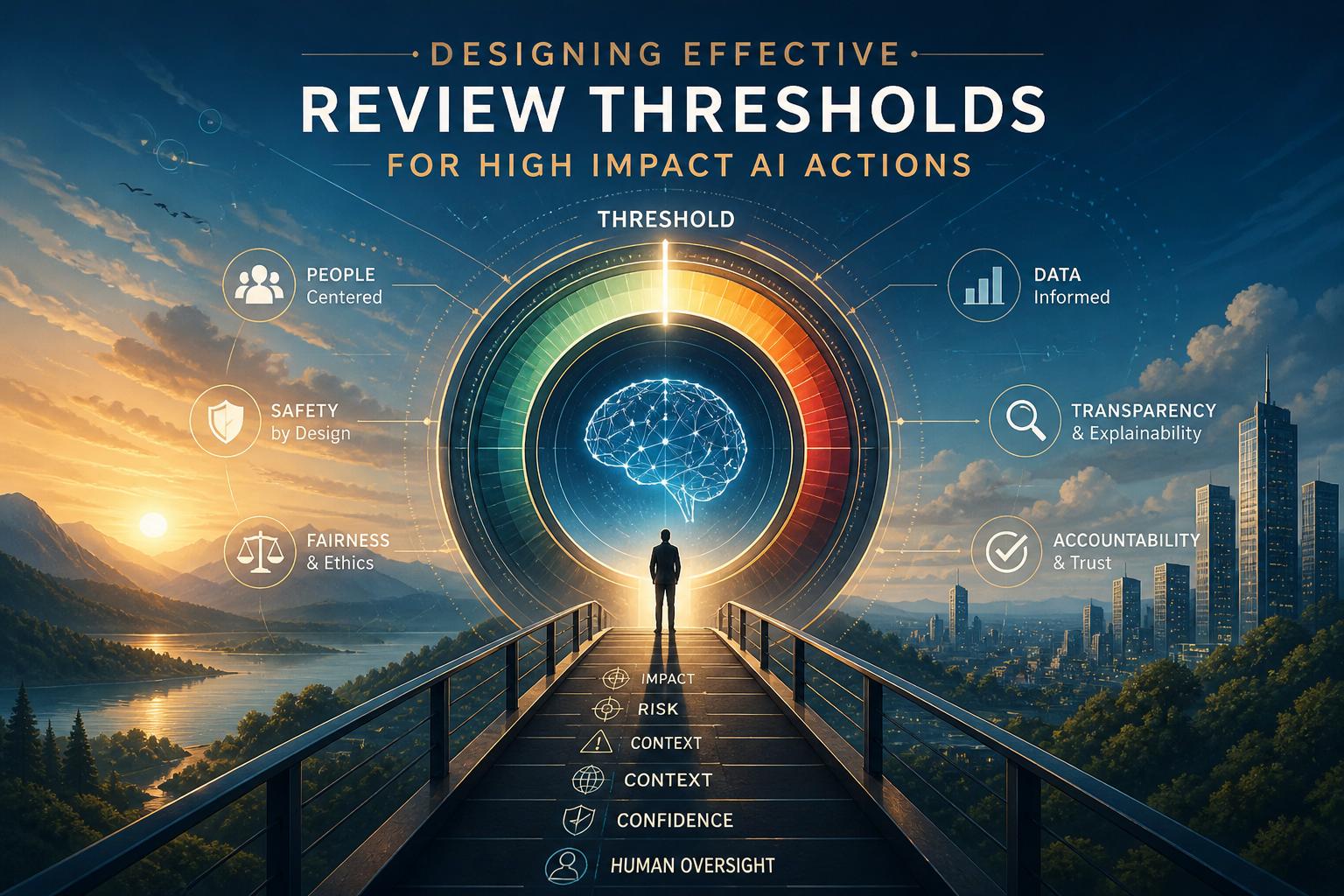
Decide when people need to step in
Not every AI action deserves the same level of review. A tool that drafts an internal meeting summary carries a different risk from one that approves a loan, changes a medical priority, blocks an account, releases fundsor sends a legal notice. The useful question is not simply whether the AI seems confident. It is indeed: what happens if this decision is wrong?
Human review should happen earlier when an action is difficult to reverse,affects a person directly,relies on sensitive facts,or could be hard to explain later. In lower-impact situations, organizations may allow the system to complete the task and review a sample afterward. For moderate-risk work, review can be triggered by low confidence, incomplete informationor a policy exception. High-impact actions should generally wait for an accountable person to approve them before they take effect.
The threshold needs to be practical. Teams should be able to recognize it in the moment: a payment over an internal limit, a suggestion that changes eligibility or access, a decision involving sensitive dataor an action that cannot easily be undone. Review should not become a ceremonial click-through. The person reviewing the case must be able to reject it,change it,or pause it.
Make escalation and overrides clear
AI systems need a reliable way to hand a decision back to a person. That is especially vital when the system is uncertain, the request falls outside policyor the consequences are significant. A good escalation process makes three things clear: what triggers review, who receives the caseand what information they need to make a decision.
The handoff should show the proposed action, the relevant inputs, the applicable policyand a plain-language explanation of any uncertainty. If reviewers have to reconstruct the case from scratch, decisions become slower and less consistent. They should be able to see what the AI suggested without being pressured to accept it.
People also need a visible way to override the system. They should be able to stop, amend, approve, or reverse an AI action, with a record showing both the system’s recommendation and the person’s final decision. Recording the reason for an override matters too. Over time, those notes can reveal unclear policies, recurring edge casesor parts of the workflow that need to be redesigned.
Check whether oversight is actually working
Human oversight should be tested, not assumed. Regular audits can review a representative sample of AI actions, including routine approvals, escalations, reversals, and cases where a person disagreed with the system. The goal is not just to count mistakes. It is to understand whether reviewers had enough information, whether they intervened at the right pointand whether the final outcome followed the organization’s own rules.
A useful audit follows the full path of a decision: what the AI recommended, what the reviewer saw, what they decidedand what happened afterward. That makes it easier to spot weak points in the process. For example, frequent corrections may suggest that the system is missing critically important context, while repeated escalations may show that a policy is too vague for routine use.
Feedback from reviewers is just as valuable. They should have a straightforward way to flag unclear recommendations, missing evidence, repeated exceptionsor situations where the system seems more certain than it should be. Those observations can inform updates to prompts, policies, interface design, and reviewer guidance.
Human-in-the-loop oversight is not about putting a person in front of every automated task. It is indeed about placing people where their judgment matters most, giving them the ability to actand learning from the decisions they make. When that structure is clear, AI can support work without obscuring who remains responsible for the outcome.
AI tools built by Emerald Force
Built and supported by Emerald Force.
You might also like
- AI in Healthcare: Support, Not Autonomous Care
- The Best Prompt Format: Clear, Contextual, Specific
- The Total Cost of Enterprise AI Adoption
- AI Can Scaffold Apps-But Real Products Need Engineers
- Can AI Grasp Causality Beyond Scientific Correlation?
- Voice Cloning Permission: Consent, Rights, and Law
- How Ordinary People Should Use AI Wisely
- AI Sustainability: Scaling Benefits Beyond Costs
- Can AI Upscale Old Photos Without Inventing Details?
- Human-in-the-Loop: Oversight of AI Actions