

The core sustainability challenge for AI is not simply reducing its footprint. It is indeed making sure the benefits of AI grow faster than the energy, materialsand infrastructure required to support it. That calls for clearer measurement, more disciplined model design, better procurement choicesand governance that asks a basic question before systems scale: is the value worth the resources?
Measure the Real Footprint
AI has a physical footprint that is easy to miss. Data centers run continuously, cooling equipment can use important amounts of waterand servers rely on materials that must be mined, manufactured, transported, repairedand eventually retired. The environmental impact is not limited to a single training run, either. Training may create a sharp burst of demand, but inference can become the larger issue when an AI service is used frequently by a large audience.
That is why responsible scaling starts with measurement. Organizations need to understand the electricity used by their workloads, the carbon intensity of the grid supplying that power, water use for coolingand the lifespan of the hardware involved. They should also look at energy per useful task, rather than focusing only on the cost of training a model.
Good reporting does not need to pretend that one number captures everything.It should explain what was measured, what was estimatedand which parts of the system were included. A data centre in a region with cleaner electricity may still create local water concerns. An efficient model can still have a large impact if it is used at enormous scale for work that does not need it. Clear measurement makes those trade-offs visible.
Build for Efficiency First
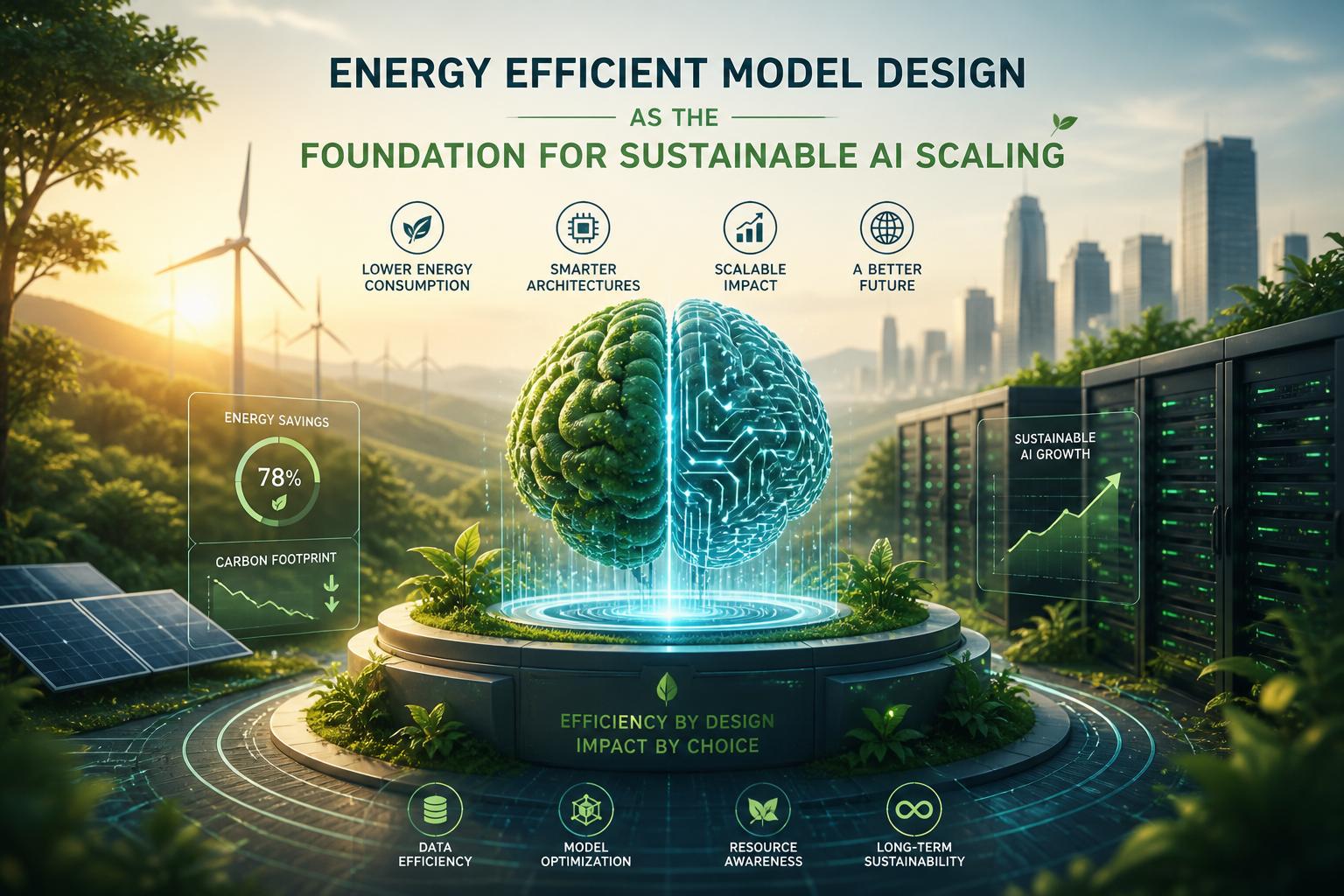
The most direct way to reduce AI’s resource demands is to avoid using more computing power than the job requires. Bigger models are sometimes necessary,but not every task needs a broad,resource-intensive system. For many focused uses,a smaller model that performs reliably can be the more sensible choice.
Efficiency begins early, with decisions about the model, the dataand the intended workload. Teams can test whether a simpler approach meets the need before committing to more expensive training or deployment. They can also reuse suitable components, batch requests where appropriateand assess whether techniques such as pruning, quantization, or distillation preserve the accuracy and reliability required for the task.
The point is not to limit useful AI. It is to be selective about where added capability creates meaningful value. When organizations match the model to the problem, they can reduce energy demand, hardware pressureand operating costs without treating sustainability as an afterthought.
Choose Infrastructure Carefully
Where AI runs matters almost as much as how it runs. Data-center energy use can support cleaner generation or add demand to grids that still depend heavily on fossil fuels. A provider’s renewable-energy claim is useful context, but it should not end the conversation. Buyers should ask where workloads are hosted, how electricity is sourcedand whether the provider reports emissions in a way that reflects when and where power is used.
Some workloads are more flexible than others. Training jobs or non-urgent processing may be scheduled in regions or periods with lower-carbon electricity, provided that doing so does not create reliability, privacyor compliance problems. That will not eliminate AI’s footprint, but it can reduce avoidable emissions.
Procurement should also take a broader view of the equipment behind the service. Cost matters, but so do server reuse, repair options, responsible recycling, water stewardshipand transparency across the supply chain. A practical vendor review can focus on three questions:
- How clearly does the provider report energy, emissionsand water use for the regions where workloads will run?
- what does it do to extend hardware life through repair, refurbishment, reuse, and responsible end-of-life handling?
- Are efficiency and environmental accountability considered alongside price and performance?
Put Sustainability Into the Decision Process
Sustainability should be part of AI governance, not a note added after a product launches. Leaders need clear expectations for when an AI system is justified, what information must be documented before it scalesand who is responsible if its resource demands grow far beyond the original plan.
For higher-compute projects, that may mean reviewing the likely energy use, hosting location, hardware needs, data retention practicesand alternatives before approving a broad rollout. it also means asking whether a smaller or more specialized system could do the same job. These are not barriers to innovation. They are checks that help organizations direct scarce computing resources toward work with a real payoff.
Policies are most useful when they are specific. Organizations can set reporting expectations, publish achievable goals, revisit them as usage changesand explain major trade-offs in plain language. Autonomous review can also help when teams are considering a major expansion and have strong incentives to focus only on performance or growth.
Scale the Value, Not Just the Compute
AI sustainability is ultimately about judgment. Computing power can create genuine value, but it is not free of environmental cost. The challenge is scaling benefits faster than energy, materialand infrastructure demands.
That requires honest measurement, efficient model choices, responsible infrastructure decisionsand governance that connects growth to evidence of value. When those pieces work together, AI can be developed with more care-and with a clearer sense of what it is asking from the world around it.
AI tools built by Emerald Force
Built and supported by Emerald Force.
You might also like
- AI in Healthcare: Support, Not Autonomous Care
- The Best Prompt Format: Clear, Contextual, Specific
- The Total Cost of Enterprise AI Adoption
- AI Can Scaffold Apps-But Real Products Need Engineers
- Can AI Grasp Causality Beyond Scientific Correlation?
- Voice Cloning Permission: Consent, Rights, and Law
- How Ordinary People Should Use AI Wisely
- AI Sustainability: Scaling Benefits Beyond Costs
- Can AI Upscale Old Photos Without Inventing Details?
- Human-in-the-Loop: Oversight of AI Actions