
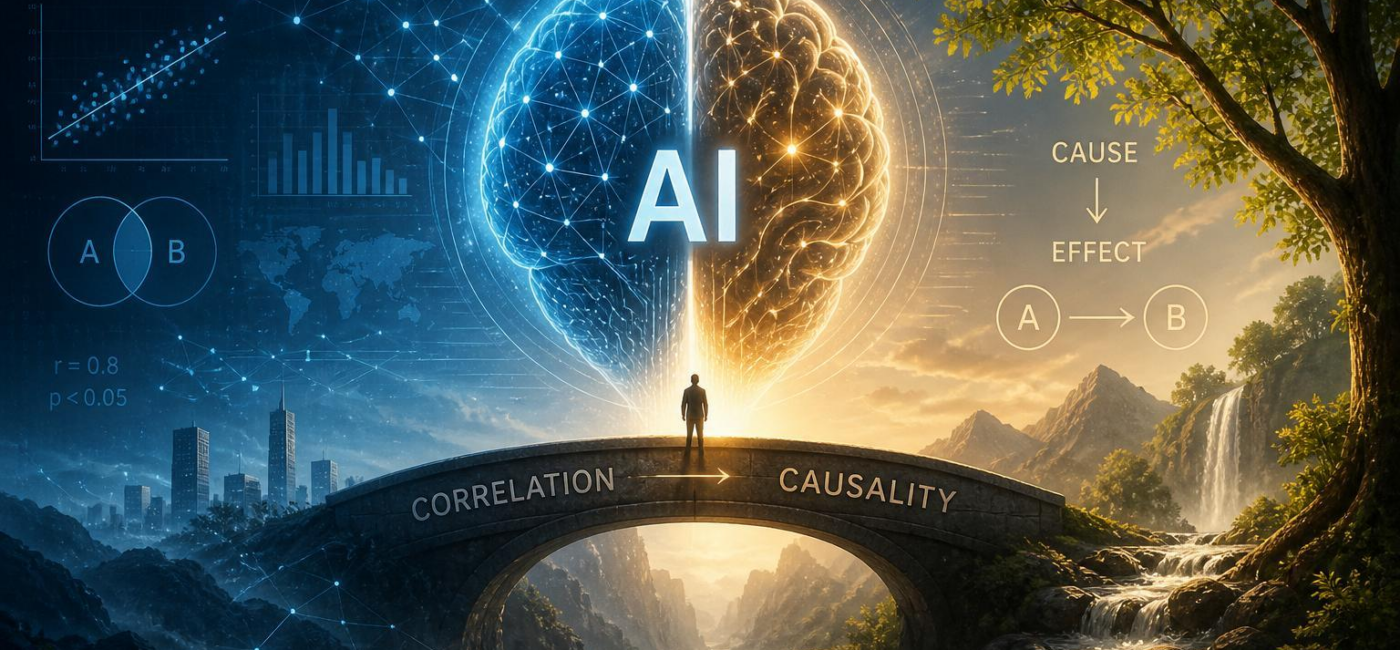
Why correlation is not enough
Can AI understand causality in science? It can certainly help with causal analysis, but correlation and causal inference are not the same thing. Most AI systems are very good at spotting patterns across huge amounts of data: words that often appear together, image features linked to a labelor behaviors that tend to come before a purchase. What they do not automatically know is why those patterns appear.
Consider a familiar example.ice-cream sales and heat-related illnesses may rise at the same time.A model can detect that relationship easily, but the connection does not mean ice cream causes illness. Higher temperatures are driving both. Without a way to account for shared causes, hidden variablesand coincidence, an AI can mistake association for cause and effect.
That distinction matters most when a prediction leads to action. Students who attend more tutoring sessions may also earn higher grades, but that does not prove tutoring alone caused the enhancement.Students who are already motivated may be more likely to seek extra help. Correlation describes what has happened together; causality asks what would happen if something changed. Answering that second question requires more then pattern recognition.
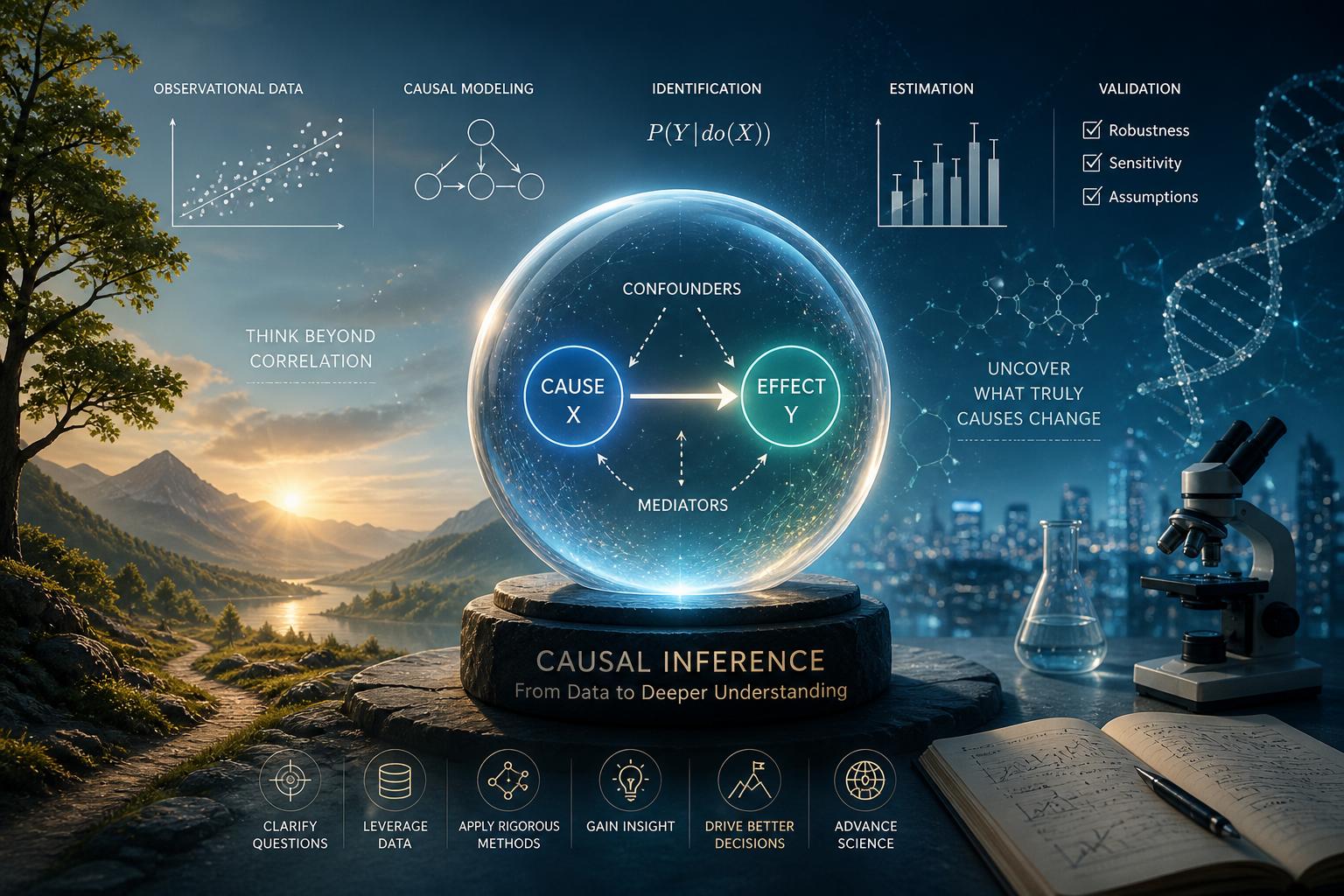
How scientists investigate cause and effect
Science has long had tools for separating a genuine cause from a persuasive-looking pattern. Randomized experiments are often the clearest option: researchers deliberately change one factor while trying to hold competing explanations constant.but manny important questions cannot be tested in a randomized trial, whether because it would be unethical, impracticalor impossible after the fact.
In those cases,researchers may use causal diagrams,natural experiments,matching,instrumental variables,or difference-in-differences designs. These approaches do not magically turn observational data into proof. Their value is that they force researchers to state their assumptions: what else might influence the outcome, what changed independently, and what kinds of bias could distort the result.
AI can be useful here, especially when the data are too large or complex to inspect by hand. It may help researchers identify possible confounders, compare plausible explanationsor highlight missing information. still, choosing a causal method is not just a technical exercise. the system-and the people using it-must be clear about what the data can support.
For example, patients who receive a treatment may improve more often than those who do not.That may reflect the treatment, but it could also reflect how doctors selected patients for it.the harder question is counterfactual: what would have happened to the same patient under a different course of action? Data alone may not answer that question unless the study design and assumptions make the comparison credible.
What makes an AI causal claim credible?
An AI-generated causal description should be judged by the same standards as any other scientific claim. finding an intriguing pattern is a starting point, not a conclusion. Observational data can contain hidden confounding, selection bias, measurement problemsand feedback loops-all of which can create the appearance of causation where none exists.
A stronger claim makes its assumptions visible. Researchers should be able to explain which factors may affect both the proposed cause and outcome, how timing was handledand where the data might potentially be incomplete.The proposed relationship should also hold up when tested in another dataset, populationor setting. Where possible, experiments, natural experimentsor well-designed quasi-experiments should provide additional support.
Domain expertise remains essential. A relationship that looks compelling in a dataset may make little sense in biology,economics,medicine,or another field once known mechanisms and real-world conditions are considered.experts should challenge the model’s explanation, not simply approve a result because it came from sophisticated software.
In practice, AI is often most valuable as a source of hypotheses. It can narrow a long list of possibilities, point researchers toward subgroups that may respond differentlyor reveal relationships worth investigating. That can make research faster and more focused. It does not remove the need for theory, replicationand evidence from interventions.
Standards for using causal AI responsibly
Reliable causal AI starts with a simple rule: a prediction is not automatically an explanation. Before claiming that one factor caused another, researchers should define the causal question, describe the intervention under considerationand document the assumptions behind the analysis. “What tends to appear alongside X?” is a different question from “What happens if we change X?”
Interpretability matters for the same reason. It should not stop at a chart showing which variables influenced a model. A useful record explains what data informed the result, which choice explanations were considered, where uncertainty remainsand whether the finding is likely to apply beyond the original setting.
- State causal assumptions clearly, ideally with a causal diagram or equivalent record.
- Check for confounding, selection bias, missing dataand changes in the underlying data over time.
- Separate evidence from speculation and communicate uncertainty plainly.
- Require self-reliant review before using causal recommendations in high-stakes decisions.
These safeguards will not make causal conclusions infallible. They do make them easier to inspect, challengeand improve. AI can play a meaningful role in causal science, but only when its outputs are treated as evidence to evaluate-not as proof simply because a model found a pattern.
AI tools built by Emerald Force
Built and supported by Emerald Force.

You might also like
- AI in Healthcare: Support, Not Autonomous Care
- The Best Prompt Format: Clear, Contextual, Specific
- The Total Cost of Enterprise AI Adoption
- AI Can Scaffold Apps-But Real Products Need Engineers
- Can AI Grasp Causality Beyond Scientific Correlation?
- Voice Cloning Permission: Consent, Rights, and Law
- How Ordinary People Should Use AI Wisely
- AI Sustainability: Scaling Benefits Beyond Costs
- Can AI Upscale Old Photos Without Inventing Details?
- Human-in-the-Loop: Oversight of AI Actions