

Can AI help energy grids? Yes-when it is indeed used as a practical decision-support tool, it can improve forecasting, balancing, maintenanceand day-to-day efficiency.The technology will not replace experienced grid operators or solve every reliability challenge. But it can definately help utilities make better use of the data they already collect, spot risks earlierand respond more deliberately when conditions change.
Catch Equipment Problems Earlier
Grid equipment rarely fails without warning. A transformer may run hotter than usual, a breaker may switch more often than expectedor a cable may show small changes in performance over time. AI can definitely help maintenance teams review signals such as temperature,vibration,load history,oil condition,and switching activity to identify equipment that is beginning to behave differently from normal.
that gives crews a chance to investigate before a minor issue becomes an outage. instead of relying entirely on fixed inspection schedules or reacting only after an alarm sounds, utilities can focus attention on assets showing the clearest signs of stress. Repairs can then be planned during a maintenance window, with the right parts and people available, rather than under pressure during an emergency.
Predictive maintenance dose not replace engineering judgment. It gives engineers more useful evidence when deciding which problems need attention first. That can make maintenance planning more efficient while reducing the chance that one equipment failure leads to a broader interruption.
See Problems as They Develop
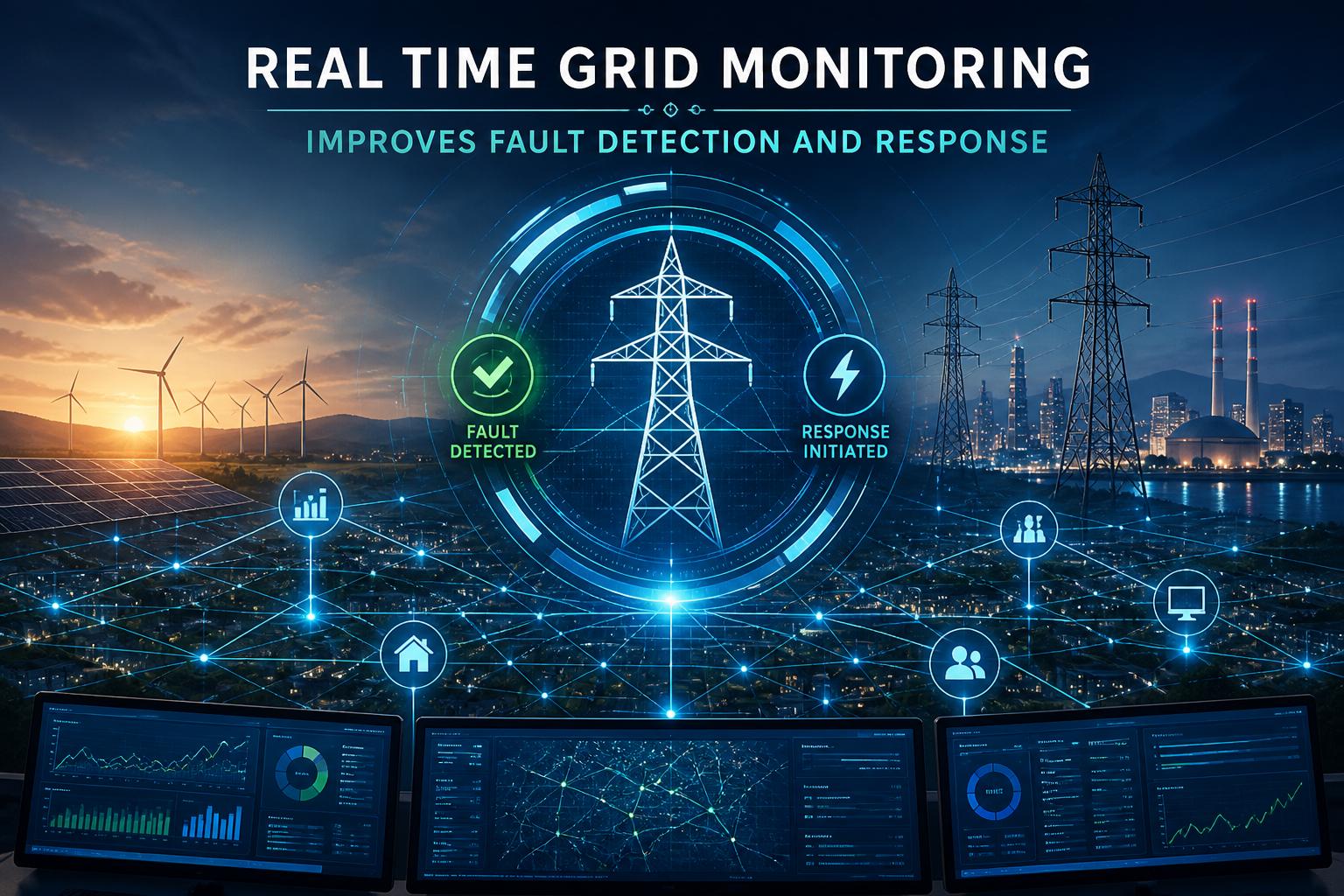
Grid conditions can change quickly. Demand shifts throughout the day, weather affects power lines and renewable generationand equipment faults can spread through part of the network if they are not addressed promptly. AI-assisted monitoring can help operators make sense of data coming from substations, feeders, transformers, and distributed energy resources as those changes occur.
The benefit is not simply receiving more alarms. It is having better context around an event. A monitoring system may help identify where an unusual voltage change began,whether a load pattern looks temporary or more serious,and which parts of the network may be affected. That can help operators separate the signals that need immediate attention from routine fluctuations.
After a disruption, the same visibility can support a faster, more organized response. AI may help narrow down likely fault locations, sort duplicate alertsand show possible options for isolating a problem or restoring service through another path. Operators still make the final operational decisions, but they are less likely to be working from an incomplete picture.
Plan for Demand and Renewable Output
Reliable grid operations depend on keeping electricity supply and demand in balance. That becomes more intricate when demand changes with temperature and daily routines, while solar and wind output depends on weather conditions.Better forecasting helps operators prepare for those shifts rather of reacting after the fact.
AI can improve short-term forecasts by finding patterns across historical demand, weather informationand current grid conditions.if a hot evening is likely to keep air-conditioning use high after solar generation drops,operators can prepare storage,flexible generation,or demand-response programs ahead of time. If strong wind and lower demand are expected,they can make better use of available renewable power rather than curtailing it unnecessarily.
This is one of the clearest answers to the question, “Can AI help energy grids?” It can help turn changing conditions into something operators can plan around. Forecasts will never be perfect, especially during unusual weather or unexpected events, but a stronger view of the next few hours or days supports steadier decisions and fewer last-minute adjustments.
Keep People and Security at the center
using AI in grid operations also raises important questions about security, data qualityand accountability.Connected sensors, control systems, and communications networks all need protection. Strong access controls, network segmentation, ongoing monitoring, and tested response plans can help reduce the risk that bad data or a cyberattack interferes with grid operations.
Human oversight matters just as much.Models can be affected by missing data, sensor errors, unusual weatheror local conditions that differ from what they have seen before. For high-impact decisions such as switching equipment or changing dispatch plans, experienced operators should be able to question a advice, check it against other informationand choose a safer alternative when needed.
Utilities also need clear procedures for operating manually if automated tools are unavailable.Reviewing model performance, access recordsand operational decisions over time helps organizations understand where AI is helping and where more safeguards are needed.
AI Is a Tool for a More Resilient Grid
AI is most useful when it supports the people responsible for keeping the grid safe and reliable. It can definitely help utilities find equipment issues earlier, understand events as they unfold, prepare for changing demandand manage renewable energy more effectively. Used carefully, with strong cybersecurity and human oversight, it can make grid operations more informed, responsiveand resilient.
AI tools built by Emerald Force
Built and supported by Emerald Force.
You might also like
- Protect Family From AI Scams: Verify Before Paying
- Will AI Become Conscious? No Evidence So Far
- Where AI Agents Excel: Structured Digital Workflows
- How AI Strengthens Finance Teams and Reporting
- Can AI Fake Photos? How Synthetic Images Look Real
- AI Handles Routine Service; Humans Handle the Rest
- How AI Can Scale and Tailor Misinformation
- AI Helps Both Sides: Security Choices Decide
- Few-Shot Prompting: Learning from a Few Examples
- Inference Cost: The Compute Behind Model Outputs