
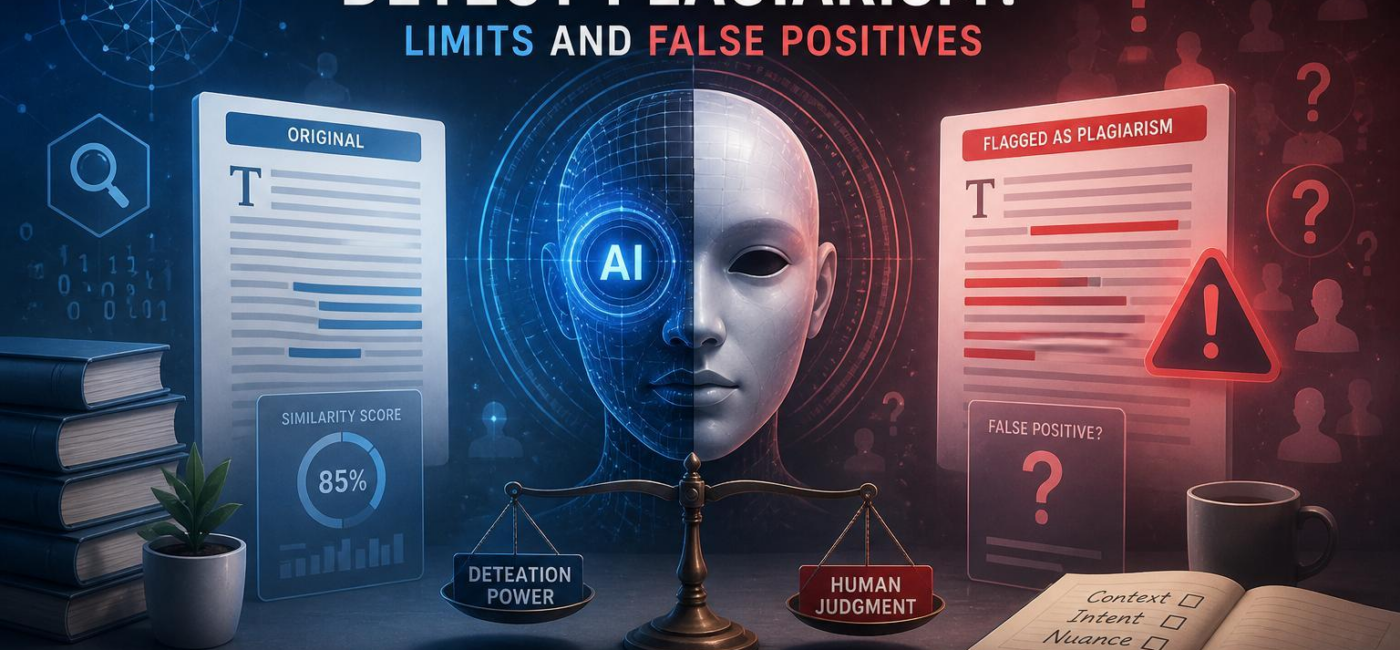
Can AI detect plagiarism? It can help spot text that deserves a closer look, but it cannot make the final call. Most tools are built to find similarities between a submission and material in their databases. That can be useful, especially when there is clear copying, but similarity is not the same thing as plagiarism. common phrasing, correctly quoted materialand shared source documents can all trigger a match.
How plagiarism tools find matches
Plagiarism checkers compare a submission with documents they can access, which may include webpages, academic publicationsand previously submitted work. They often flag exact wording, but they can also identify closely matched phrases, similar sentence patternsor passages that follow the same sequence of ideas.
The resulting similarity score is a starting point, not a conclusion. A passage may resemble existing writing because it uses standard terminology, accurately describes a familiar process, or includes a properly attributed quotation. The score alone cannot tell you whether the overlap is legitimate.
Some tools also claim to assess authorship by looking at writing habits such as vocabulary, punctuation, sentence lengthand recurring grammatical choices. That kind of analysis may raise a question worth checking, but it is indeed not proof that someone else wrote the work. Style can shift with the topic, editing, collaboration, language experienceor simply a writer trying a different approach.
Why false positives happen
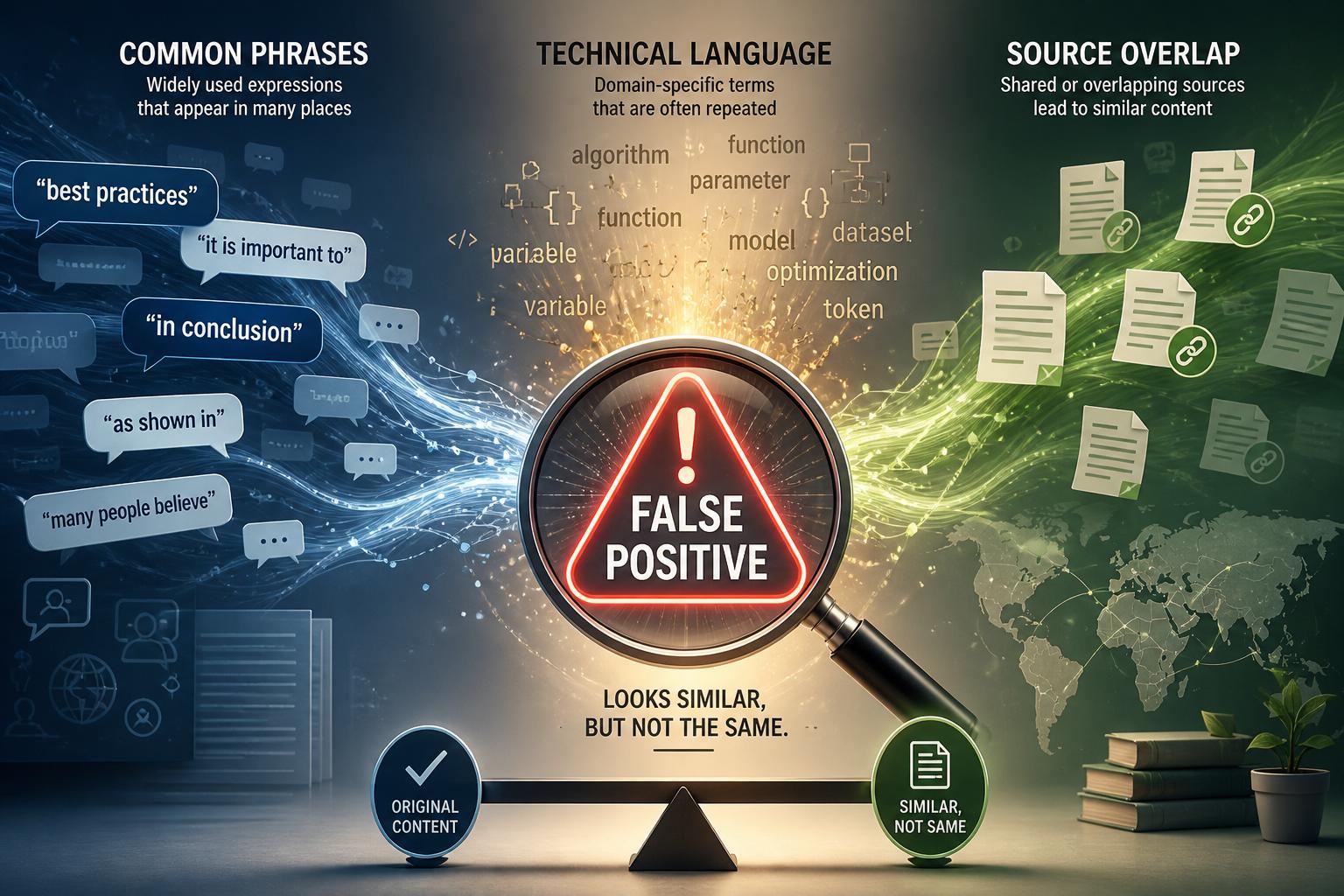
These tools do not read a passage with the judgment of an editor or instructor. They look for matching words and patterns in the material they have indexed. Consequently, ordinary language can produce an alarming-looking report. A phrase like “results may vary depending on the situation” may appear in thousands of places without suggesting that one writer copied another.
The same issue comes up with standard definitions, legal wording, academic conventions, recipe directions, product names, and familiar transitions. Technical writing can be especially tough. A medical term, legal standardor software command may have one precise name, and changing it just to avoid a match can make the writing worse, not better.
Writers may also overlap because they used the same underlying source. Two people reporting on a public announcement, research paper, court filingor press release will naturally share dates, names, factsand sometimes similar wording. That does not automatically mean either person copied the other. the real question is whether the writer borrowed someone else’s distinctive expression or reasoning without proper credit.
What AI cannot reliably decide
AI can identify textual overlap, but it cannot reliably determine who originated an idea or whether a writer used a source fairly.Direct copying is usually easier to spot than paraphrasing. Someone can preserve a source’s structure, argumentand distinctive reasoning while changing enough words to avoid an obvious match.
The opposite can happen too. Two writers responding to the same assignment or working from the same facts may independently produce similar sentences.This is why a plagiarism report needs context. A properly cited quotation, a routine definitionor an original explanation that happens to resemble another source should not be treated the same way as a block of uncited, closely copied prose.
AI tools also cannot see the full process behind a piece of writing. they do not know whether the writer had permission to reuse earlier material,followed a school or workplace policy,worked from shared notes,or kept drafts that show how the piece developed. Those details matter when deciding whether there is a real problem.
How to review a flag fairly
When a tool flags a passage, open the source and compare the text directly. Look at what actually matches. Is it an unusual sequence of words? Is it a distinctive idea explained in nearly identical language? Or is it a short, common phrase that could appear almost anywhere?
Check the surrounding context as well.A cited source, quotation marks, a bibliography entry, or an original explanation added by the writer may change the meaning of the match. Assignment instructions, titles, technical termsand standard definitions frequently enough create noise in a report.
It also helps to review the work as a whole. A few scattered matches in routine language are very different from several close, uncited passages drawn from the same source. Before taking action, consider drafts, notes, previous work, and the rules that apply to the assignment or publication. Keep a brief record of what you reviewed and why you confirmed or dismissed the concern.
Conclusion
AI plagiarism tools can be useful for finding material that needs attention, but they are not reliable judges of intent, authorshipor fairness. A match report should lead to a conversation and a careful review-not an automatic accusation. Human judgment is still what separates legitimate overlap from plagiarism.
AI tools built by Emerald Force
Built and supported by Emerald Force.
You might also like
- Can AI Fake Photos? How Synthetic Images Look Real
- AI Handles Routine Service; Humans Handle the Rest
- How AI Can Scale and Tailor Misinformation
- AI Helps Both Sides: Security Choices Decide
- Few-Shot Prompting: Learning from a Few Examples
- Inference Cost: The Compute Behind Model Outputs
- How to Benchmark Tools Before Buying: A Practical Guide
- Can AI Remove Backgrounds? A Proven Vision Use Case
- How AI Clusters Customer Feedback and Detects Sentiment
- AI Center of Excellence: Standards and Adoption