
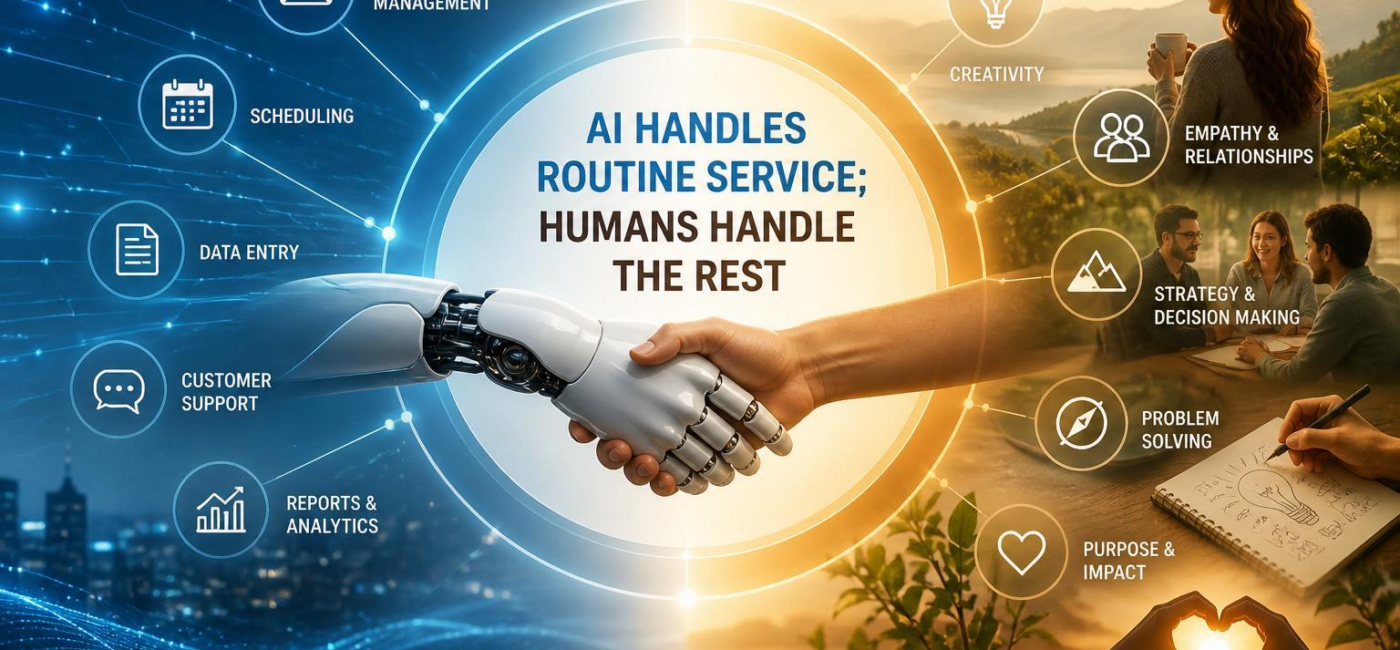
Can AI replace customer service agents? Not entirely. It can take a meaningful share of repetitive work off the team’s plate,but customers still need people when a situation is unusual,sensitive,frustrating,or consequential. The most useful approach is not choosing between AI and human support. It is giving each one the work it is best suited to handle.
What AI can Handle Reliably
AI works best when the request is straightforward, the information is currentand there is a clear approved process to follow. That might mean helping someone reset a password, check an order, reschedule an appointment, update an addressor find the answer to a standard policy question.
In these situations, AI can provide an immediate first response, ask for the missing details, share approved links or formsand complete simple updates where it has permission to do so. It can also collect the basics before passing the case to a person. The goal is not to make every interaction automated; it is to avoid making customers wait for help wiht questions that have a clear,repeatable answer.
If the same verified steps lead to the right answer most of the time, it is a good candidate for automation. If the answer depends heavily on context, interpretationor an exception, it probably is not.
When a Human Needs to Step In
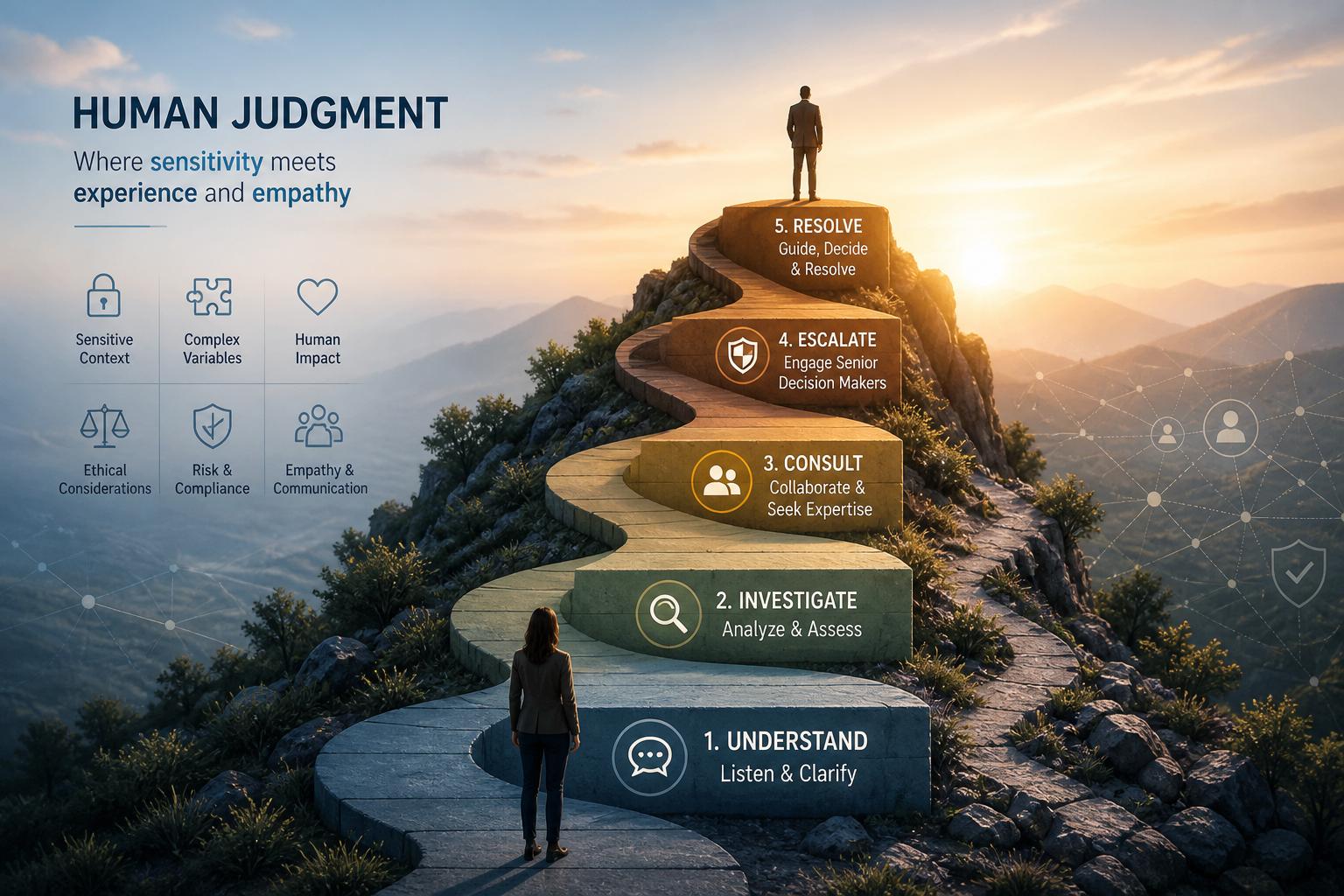
Customers should not get stuck in an automated loop when the issue becomes unclear or personal. A good support system recognizes when routine handling has reached its limit and makes the next step obvious.
That may happen after several unsuccessful attempts, when there is a security or privacy concern, when a customer disputes a decisionor when someone is upset and needs to be heard. Requests involving accessibility needs, financial consequences, safety, or policy exceptions also deserve human attention. In these moments, a scripted answer is rarely enough.
The handoff matters as much as the decision to escalate. The customer should not have to repeat everything thay already explained. A human agent should receive the conversation history, the actions already taken, and any relevant account details before joining the case. customers also need a clear expectation: are they being connected to someone now, waiting for a reply, or receiving a follow-up from a specific team?
Escalation is not a failure of automation. It is indeed how a service team makes sure judgment remains available when it matters.
Use AI to Support Agents,Not Override Them
AI can be especially helpful behind the scenes. During a live conversation, it can bring together recent orders, previous contacts, account detailsand relevant policy information so agents spend less time searching across systems.It may also point out patterns worth checking, such as repeated delivery issues or unusual account activity.
But the agent still has to decide what matters and what to do next. A suggestion that makes sense on paper may not fit the customer’s actual circumstances. An experienced person can ask a follow-up question, recognize frustration, weigh an exceptionand explain the outcome in a way that feels fair.
This is where the answer to “can AI replace customer service agents?” becomes clearer: AI can handle many repetitive cases, but humans are still needed for edge cases, empathy, and accountability. Used well, AI gives agents better context and more time to focus on problems that require care rather than a standard reply.
Keep Clear Rules and Accountability
AI-assisted service only works when someone is responsible for it. teams need clear boundaries around what the system can access, what it is allowed to doand when it must pass a case to a person. If an automated response is wrong, a customer needs a practical way to get it corrected.
That means assigning people to own the quality of automated responses, the accuracy of service informationand the handling of customer data. It also means reviewing escalations, overridesand recurring mistakes. Policies change, products changeand customer concerns change; the automation has to keep up.
Customers should also know whether they are interacting with a system or a person. There is no benefit in disguising the difference, especially when a decision affects someone’s account, money, privacy, or access to service.
Better Service Uses Both
AI is well suited to fast, predictable requests.Human agents are better equipped for the moments that call for context, discretion, reassuranceor a real decision. The strongest customer service model uses automation to make routine help quicker while keeping people available for everything that cannot be reduced to a set of rules.
That balance improves the experience on both sides. Customers get answers faster when the question is simpleand employees can give their full attention when the situation is not.
AI tools built by Emerald Force
Built and supported by Emerald Force.
You might also like
- Can AI Fake Photos? How Synthetic Images Look Real
- AI Handles Routine Service; Humans Handle the Rest
- How AI Can Scale and Tailor Misinformation
- AI Helps Both Sides: Security Choices Decide
- Few-Shot Prompting: Learning from a Few Examples
- Inference Cost: The Compute Behind Model Outputs
- How to Benchmark Tools Before Buying: A Practical Guide
- Can AI Remove Backgrounds? A Proven Vision Use Case
- How AI Clusters Customer Feedback and Detects Sentiment
- AI Center of Excellence: Standards and Adoption