
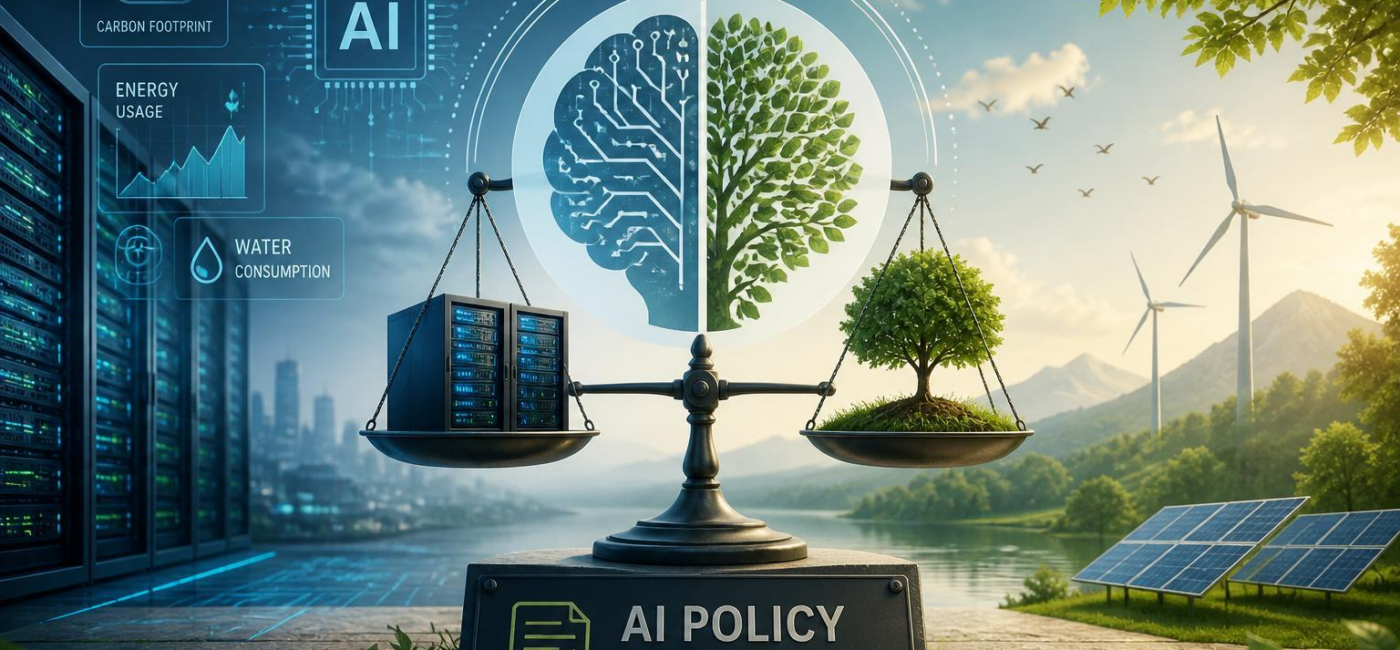
Should environmental impact be part of AI policy? Many experts argue that it should, as AI growth has physical consequences well beyond software. Models run on servers, servers sit in data centers, and those facilities use electricity, water, equipment, and land. As AI becomes more widely deployed, policy discussions need too look past questions of safety, biasand competition to consider the resources required to keep these systems running.
AI Has a Physical Footprint
AI computing is not weightless. Training and operating models consumes electricity, produces heat, and may require water for cooling, depending on the facility and local conditions. The impact does not end at the data center door. Chips, servers, networking equipment, and backup systems all require raw materials, manufacturing, transport, maintenance, and eventual disposal.
That is why environmental claims need context. A system might potentially be more efficient than an earlier version, but that does not automatically make its overall footprint small-especially if it is indeed used at a much larger scale. Good AI policy should consider the full lifecycle of computing, from hardware production to day-to-day operation and end-of-life handling.
Clear measurement is the starting point. Companies should be able to explain what they are measuring, where a workload runs, which resources are includedand whether the figures cover training, routine useor both.Without that detail, broad promises about “green AI” are challenging for regulators, customers, researchersand nearby communities to assess.
Make Efficiency Part of the Design
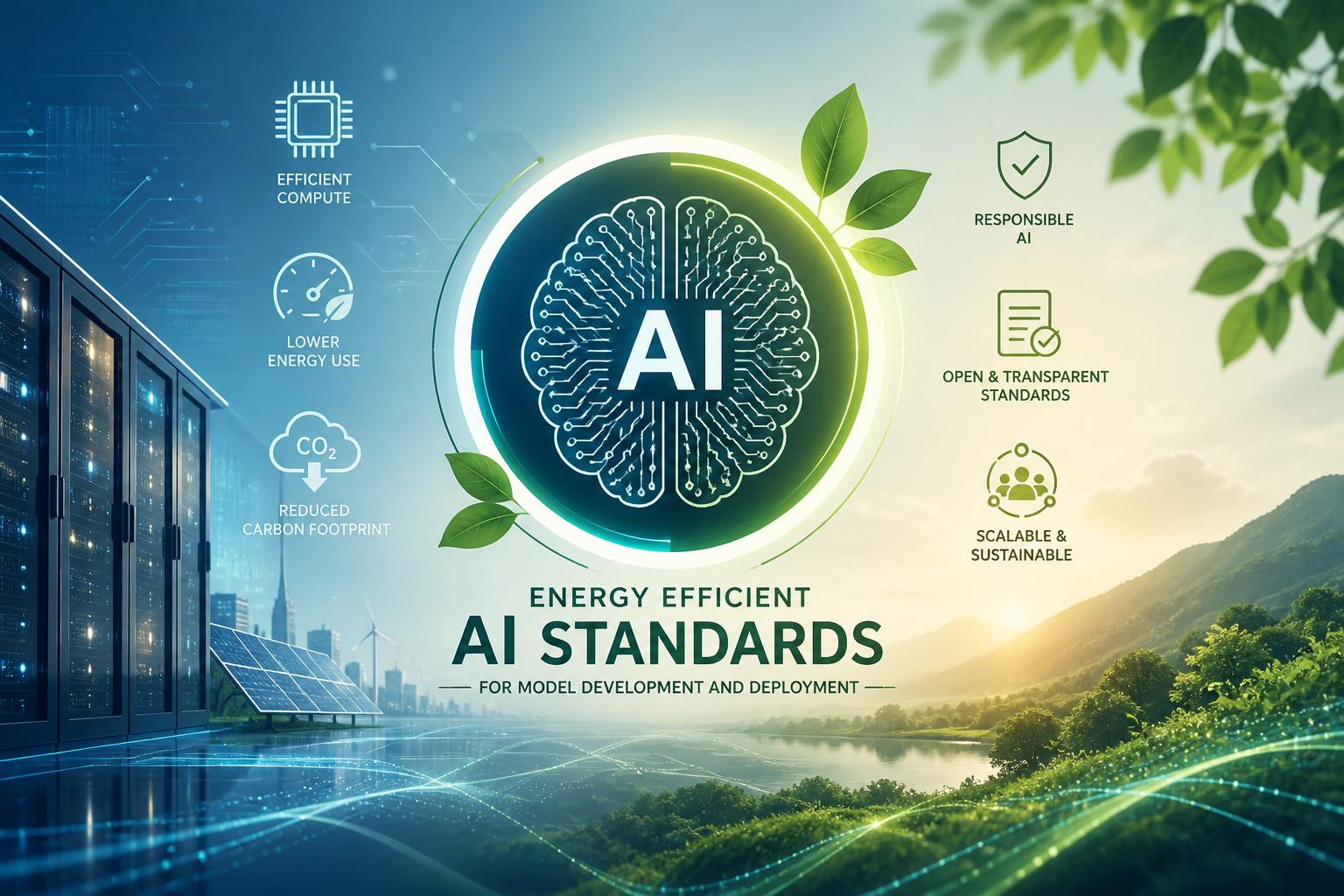
Efficiency should not be treated as a clean-up exercise once a model is already expensive to run. Developers can consider likely energy demand early: during training, testingand everyday use. They can also ask a straightforward question that is sometimes overlooked: does this task really require the largest available model?
In many cases, a smaller or more specialized system may be enough. Models do not need to be updated constantlyand not every request needs a fresh, resource-intensive response. Thoughtful choices around model size, hardware, cachingand how often a system runs can reduce needless computing without undermining the purpose of the tool.
Deployment deserves as much attention as development.A model that seems manageable in a small pilot can have a very different impact when it serves millions of requests or runs continuously. Standards that require regular review of high-cost systems would help organizations weigh their ongoing value against their resource use. Environmental impact should be one factor in responsible AI governance, alongside accuracy, security, and reliability.
Water and Hardware Matter Too
Electricity tends to dominate the conversation, but it is indeed not the only concern. Some data centers rely on water for coolingand that can be especially sensitive in hot or water-stressed regions. Communities deserve clear information about where water comes from, how much is actually consumed, and whether potable water is being used where supplies are already limited.
Hardware is another part of the picture. The rapid turnover of servers, networking equipmentand AI accelerators can add to electronic waste and increase demand for minerals and manufacturing. Longer equipment life, repair options, reuse programsand responsible recycling will not solve every problem, but they can reduce avoidable waste.
Policy can encourage this kind of accountability without prescribing every technical choice. Disclosure requirements, sensible siting rules, and procurement standards can make environmental trade-offs visible before a facility or large-scale AI service is locked in. If an association reports energy use but says nothing about water or discarded equipment, its environmental account is incomplete.
Use Policy to Reward Better Choices
Environmental rules do not have to mean stopping useful AI development. The more practical goal is to make resource use part of the decision-making process. Governments can connect public grants, procurement contracts, tax incentives, or permitting benefits to credible reporting and responsible practices.
For example, public buyers can favor vendors that disclose operational energy use and environmental management practices. Research funding can support smaller,task-specific models when they can do the job well. Data-center incentives can encourage lower-carbon power and more careful water management, while hardware policies can promote repair, reuseand responsible recycling.
Different stages of the AI lifecycle call for different approaches. training a large model, serving it at scale, replacing aging serversand disposing of equipment do not create the same pressures.A useful policy framework recognizes those differences while still setting a clear expectation: organizations should understand and account for the environmental costs of the systems they build and deploy.
Environmental Obligation Belongs in AI Governance
AI policy is often framed around abstract questions-what a model can do, who controls itand how peopel may be affected by its decisions. Those questions matter. But the infrastructure behind AI matters too.
Including environmental impact in AI policy is not about demanding perfection or treating every use of AI as harmful. It is about asking for honest measurement, better design choicesand accountability for the electricity, water, materialsand waste involved.As AI use expands, those basics should be part of the conversation from the start.
AI tools built by Emerald Force
Built and supported by Emerald Force.
You might also like
- Few-Shot Prompting: Learning from a Few Examples
- Inference Cost: The Compute Behind Model Outputs
- How to Benchmark Tools Before Buying: A Practical Guide
- Can AI Remove Backgrounds? A Proven Vision Use Case
- How AI Clusters Customer Feedback and Detects Sentiment
- AI Center of Excellence: Standards and Adoption
- Where AI Coding Excels: Tests, Refactors, Scaffolds
- AI Can Fake Documents-Why Verification Is Essential
- Can AI Identify You From a Photo? Key Risks
AI Models Explained: From Inputs to Outputs