
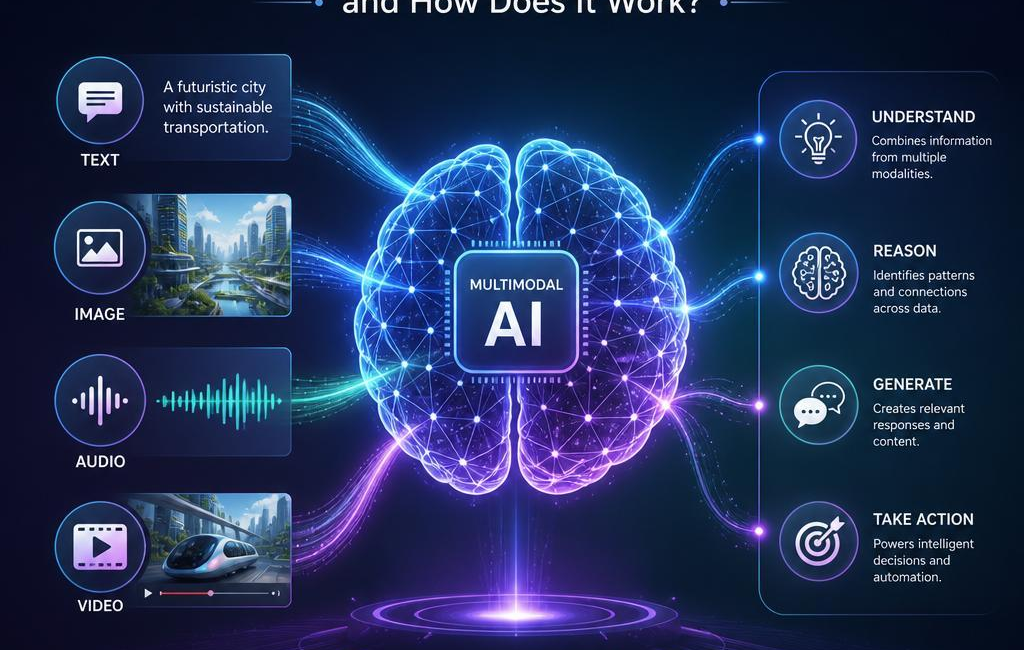
Multimodal AI can work with more than one type of data, including text, images, audio, videoand sensor input. Rather than treating each format as a separate file, it looks for the connections between them. A photo of a wet street, a voice saying “the road is flooding,” and a weather-sensor reading may all describe the same situation. Taken together, they can give the system more context than any one input could provide alone.
That does not mean the system understands the world exactly as a person does. It converts each type of input into patterns it can compare, then uses what it learned during training to make a prediction, generate a responseor identify relevant information. The result can be more useful when the inputs support one another-and less reliable when they are unclear, incompleteor contradictory.
How Multimodal AI Connects Different Inputs
At the heart of multimodal AI is the idea that different signals can describe the same event from different angles. Text may explain an image. audio may confirm what is happening in a video. A chart may make more sense when read alongside the notes that describe it.
This process is frequently enough called data fusion. The system combines information from several sources and considers how well those sources fit together. In certain specific cases, it compares the underlying features of each input early in the process. In others,separate parts of the system interpret the text,image,or audio first,then combine their results.Either way, the goal is simple: use one source of information to fill in gaps or reduce uncertainty in another.
Multimodal models also learn cross-modal relationships. They can learn that a caption often describes the image beside it, that a sound may be linked to an action in a videoor that a document’s text can explain a chart on the same page. Not every input matters equally, though. A sharp image might potentially be more useful than a vague caption, while a precise instruction may matter more than background noise in an audio clip.
How It Interprets Text, Images, Audioand Video
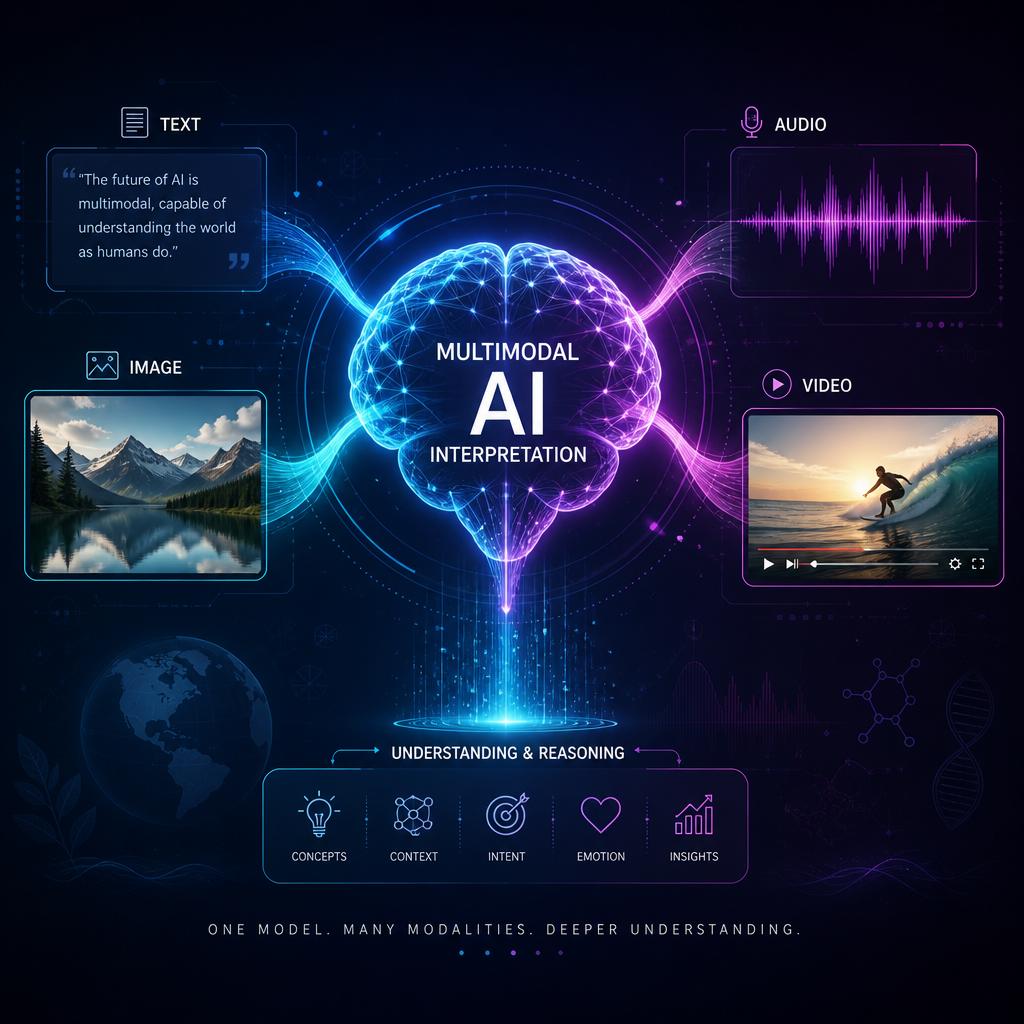
Each format contributes something different. text provides language, labels, instructionsand written context. Images offer visual details such as objects, scenes, layoutsand relationships between items. Audio can include speech, timing, toneand other sounds. Video adds change over time, combining visual frames and, in many cases, sound.
The model turns these inputs into machine-readable representations and compares them with patterns learned from related examples. If a video shows someone preparing food, the spoken narration names ingredients, and the subtitles describe a recipe step, the system can use all three signals to build a more complete interpretation.
This is why multimodal AI can be useful for tasks such as answering questions about a chart screenshot,summarizing a recorded meeting,describing an image,or finding a particular moment in a video. Still, it can make mistakes. A blurry photo, poor audio, missing background informationor an inaccurate label can lead the model toward the wrong conclusion. More inputs do not automatically mean better answers; the quality and relevance of those inputs still matter.
How These Systems learn-and Where they Can Fail
Multimodal systems learn from examples that connect different kinds of information. An image may be paired with a caption, a recording with its transcriptor a video with a description of what happens in it. Over time, the model learns patterns that link words, visuals, soundsand other signals.
Training also helps the system decide how to combine information and respond to mixed-input requests. For example, it may be asked to answer a question about a photo, explain a chartor summarize a recording. The tough part is not simply gathering large amounts of data. The relationships between inputs must be meaningful. A transcript needs to match the recording, a caption needs to relate to the imageand time-based inputs such as audio and video need to line up properly.
Reliability becomes harder as more types of input are involved. A model might read visible text correctly but miss a small visual detail. It may struggle with sarcasm, unclear speech, altered mediaor a caption that does not actually describe the image. Inputs can also conflict with one another.
For that reason, good multimodal systems need careful testing with realistic examples, including weak or incomplete inputs.They should also be designed to handle uncertainty honestly. If an image is too blurry to support a conclusion or an audio clip is missing key context,the system should say so rather than present a confident guess as a fact.
Choosing a Multimodal AI Tool
Start with the problem you want to solve, not the most remarkable demonstration. You might need a tool that reads invoices alongside uploaded photos,helps support teams interpret screenshots and customer messages,or compares product images with written descriptions. Be clear about the inputs it will receive, the output you needand what a person will do with that output.
Test potential tools using material from your real workflow. Include imperfect examples: incomplete documents, low-resolution images, unclear wording, background noiseand situations where one source contradicts another. Accuracy is notable, but it is not the only consideration. Response time, privacy controls, data handling, integration needs, and the ability to review or challenge an answer may all matter just as much.
- Choose a tool that supports the types of information your team actually uses.
- Keep human review in place for high-impact decisions involving safety, finances, approvalsor legal consequences.
- Define acceptable errors, escalation stepsand data-retention practices before rollout.
It is usually wiser to begin with a focused use case than to replace an entire process at once. Give the system access only to the data and tools it needs, then review its outputs and the corrections people make. Those real-world examples can reveal where instructions, permissions, or review steps need improvement.
Conclusion
Multimodal AI brings together text, images, audio, videoand other forms of data so a system can consider a situation from more than one angle. Its value comes from context: an image can clarify a sentence,audio can add meaning to video,and written information can explain what is shown on a screen.
But context is only helpful when the evidence is reliable. The best use of multimodal AI is not to turn uncertain signals into automatic decisions. It is to help people examine information more efficiently, spot useful connectionsand make better-informed judgments.
AI tools built by Emerald Force
Built and supported by Emerald Force.
You might also like
AI Literacy: Understanding, Limits, and Responsibility
- Why AI Pilots Stall: Governance, Workflows, Trust
- How AI Can Help You Cook Smarter Every Day
- AI Disclosure at Work: Policy, Clients, and Risk
- AI Can Build Websites: From HTML to Backend Scaffolds
- AI Voice Scams Are Rising: Why Verification Matters
- Letting AI Run Terminal Commands: Essential Safeguards
- AI Lowers Routine Costs, but Expertise Still Decides
- AI Agents Today: Useful but Still Need Oversight
- How AI Enables Robots to Perceive, Plan, and Interact