
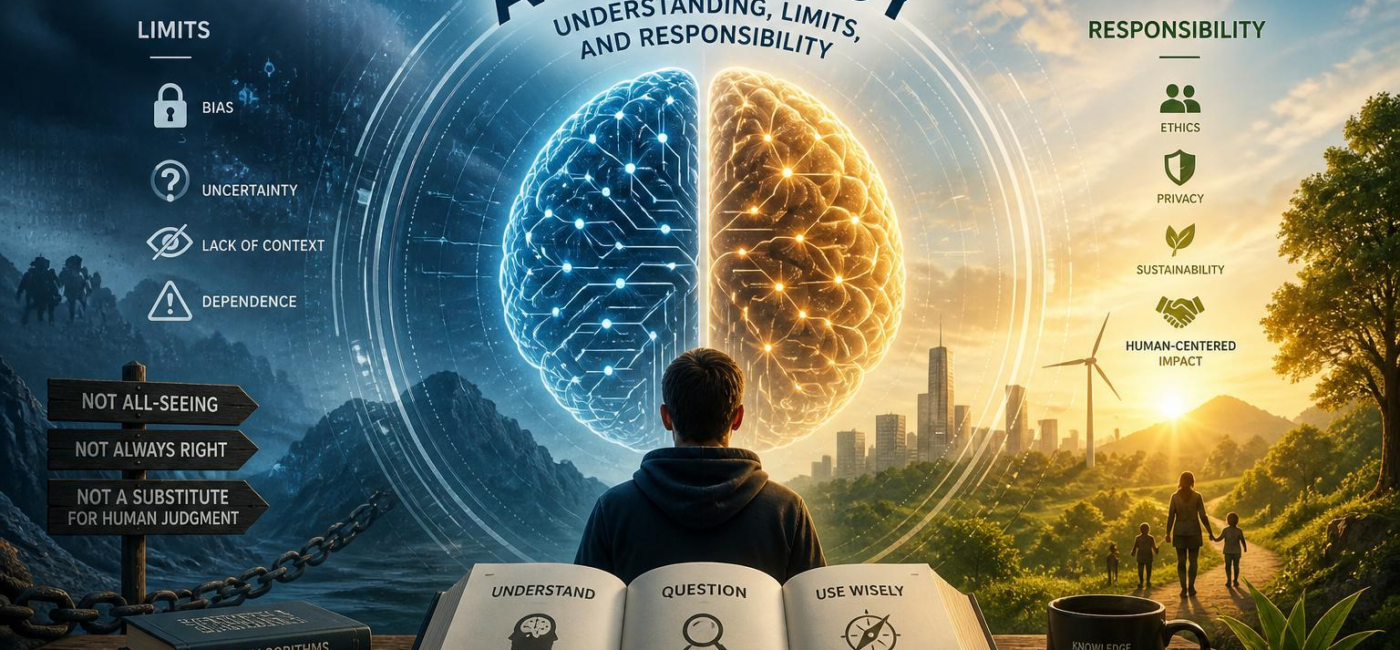
AI Literacy: Understanding, Limitsand Duty
AI literacy is the ability to understand what AI can do, were it can failand how to use it responsibly. It is not about becoming a programmer or knowing every technical detail behind a tool. It is about knowing when AI can be useful, when its answers need closer scrutinyand when a person-not a system-needs to make the call.
AI can definitely help with everyday tasks such as drafting an emailorganizing notes, summarizing a document, or suggesting ways to approach a problem. Those uses can save time, but they do not remove the need for judgment.AI does not truly understand a situation the way a person does. It can miss context, rely on incomplete dataand produce answers that sound convincing even when they are wrong.
Understanding what AI Is Good At
Most AI tools are designed to spot patterns in information and generate likely responses. Depending on the tool, that might mean creating text, sorting data, making recommendations, identifying imagesor predicting what comes next. Used thoughtfully, AI can be a helpful assistant for routine work and early drafts.
The key is to be clear about what you are handing over. AI is often useful for brainstorming, outlining, rewriting, summarizingand exploring options. It is much less reliable when the task requires current facts, personal knowledge, ethical judgment, or a decision with serious consequences. Before using an AI-generated result, ask yourself: what information did the tool have? What might it be missing? Who is responsible for checking the final result?
A sensible approach is to treat AI output as a first draft rather than a finished answer. review names, dates, calculations, sources, and factual claims before sharing anything. If the material could affect someone’s health, finances, education, job, safetyor rights, human review should be central to the process-not an afterthought.

Knowing Where AI Can Go Wrong
One of the most vital parts of AI literacy is recognizing that a polished answer is not necessarily an accurate one. AI systems can provide incomplete, outdatedor false information with a confident tone. They may also invent sources, misunderstand vague questionsor fill gaps in information with guesses that are arduous to spot at first glance.
Bias is another concern. AI reflects patterns in the data it was trained on, as well as choices made by the people who built and use it. if the underlying material leaves out certain communities, repeats unfair assumptions, or reflects past discrimination, the output can carry those problems forward.A system may not intend to be unfair, but its results can still be unfair or harmful.
That is why it helps to look beyond the answer itself. Consider whose perspective may be absent, whether the information is currentand whether the tool had enough context to respond appropriately. The higher the stakes, the less appropriate it is to accept an AI response at face value.
Using AI Responsibly
Responsible use starts with verification. When an answer matters, check it against trustworthy and current sources. This is especially important in areas such as health, law, finance, education, hiringand public services, where a mistake can have real consequences.
Privacy matters just as much. Avoid entering confidential records, passwords, private messages, identifying details, or sensitive workplace information into an AI tool unless its use has been approved and you understand how that information will be handled. Convenience is not a good reason to expose someone’s personal or protected data.
People also need to remain accountable for the work AI helps produce. if you use AI to support a report, recommendation, evaluationor customer response, you are still responsible for what goes out under your name. In situations where people would reasonably want to know that AI played a meaningful role, being clear helps build trust.
Keeping Human Judgment in the Process
AI can support decisions, but it should not quietly replace the people responsible for them. A hiring recommendation, student assessment, medical suggestionor decision about access to services deserves careful human review. People affected by an AI-supported decision should have a way to ask questions, raise concernsand correct mistakes.
Good judgment means slowing down when the answer feels unusually certain, especially if the topic is complex or consequential. Check whether the response is based on evidence or assumption. Look for missing details. Consider whether a different framing of the question would lead to a different answer.
AI literacy is not about trusting every new tool,and it is not about rejecting them outright. It is about using AI with open eyes: appreciating what it can help with, understanding its limits, protecting people’s informationand keeping human responsibility where it belongs.
AI tools built by Emerald Force
Built and supported by Emerald Force.
You might also like
AI Literacy: Understanding, Limits, and Responsibility
- Why AI Pilots Stall: Governance, Workflows, Trust
- How AI Can Help You Cook Smarter Every Day
- AI Disclosure at Work: Policy, Clients, and Risk
- AI Can Build Websites: From HTML to Backend Scaffolds
- AI Voice Scams Are Rising: Why Verification Matters
- Letting AI Run Terminal Commands: Essential Safeguards
- AI Lowers Routine Costs, but Expertise Still Decides
- AI Agents Today: Useful but Still Need Oversight
- How AI Enables Robots to Perceive, Plan, and Interact