

Do AI models understand meaning? They can work with meaning remarkably well, but not in the way people do. A language model learns patterns in the data it is indeed trained on: which words tend to appear together, how ideas are usually connectedand what kinds of responses fit a particular context. that lets it write, explain, translate, summarizeand hold a conversation that can feel thoughtful.
But fluency can be misleading.AI does not have memories, senses, personal goals, or a life outside the text and other data it processes. It can model patterns that look like understanding without sharing the human experience that gives language much of its depth.
How AI Represents Meaning
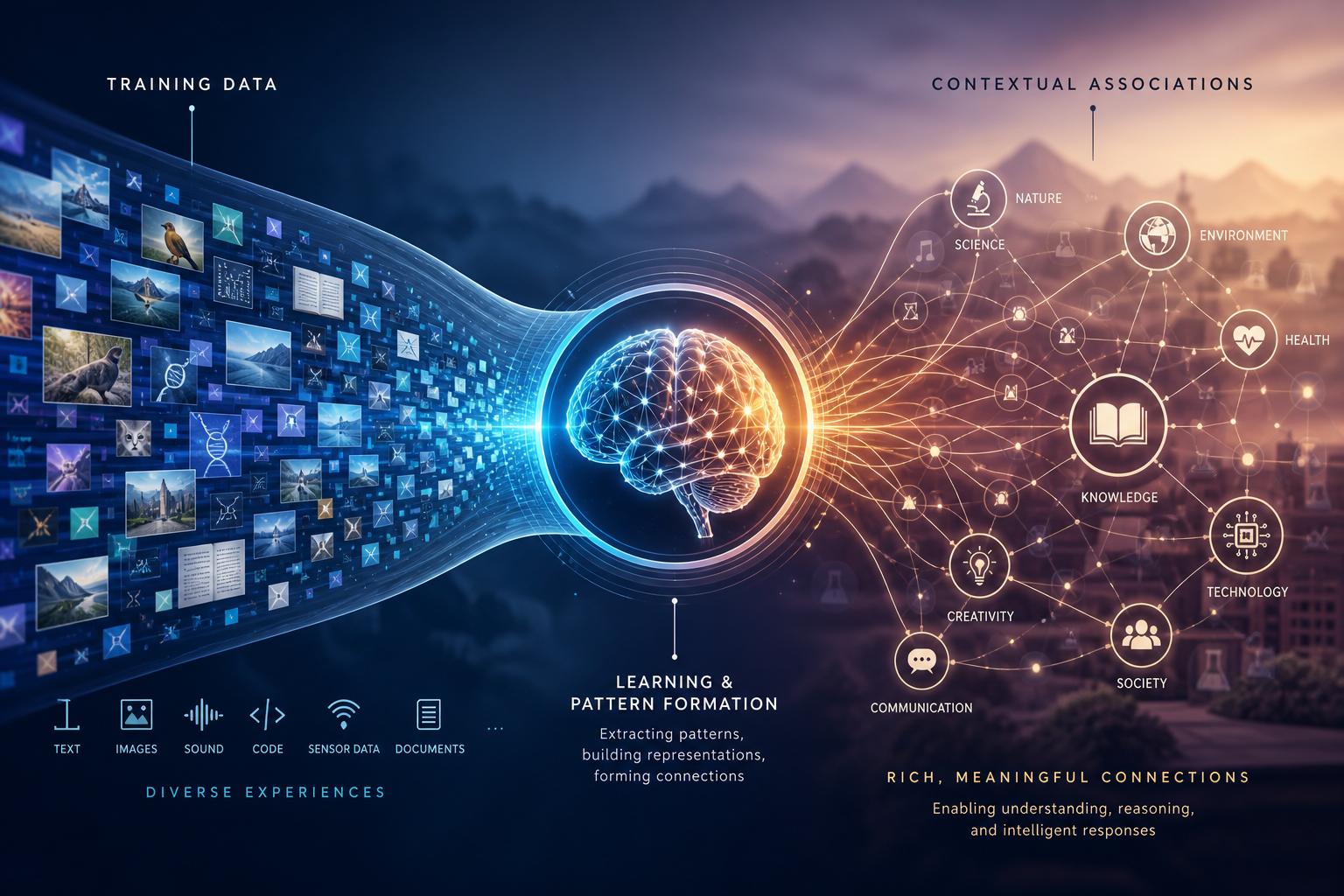
AI models represent meaning through relationships. During training, they encounter many examples of words, phrasesand ideas appearing in different settings. over time, they learn that “river” is frequently enough connected with water, flow, flood, and banks, while “invoice” is more likely to appear near payment, customeror due date.
Those relationships are not stored as tidy dictionary entries. They are spread across a large mathematical system that changes with the surrounding language.That is why a model can usually distinguish between “the bank approved the loan” and “we sat on the river bank.” It does not know either kind of bank through direct experience; it recognizes which meaning best fits the words around it.
This is enough to produce useful results. A model can follow an explanation across several paragraphs, draw connections between related ideasand suggest a likely continuation of a sentence. Still, its grasp of meaning is statistical rather than lived.It does not smell rain, worry about a mortgage payment, or see a river moving past its feet. It predicts language associated with those experiences.
For an AI model, meaning is a network of relationships in data-not a personal encounter with the world.
Why Context Matters So Much
Training data gives a model its sense of context. If it repeatedly sees “bank” near words such as “loan,” “account,” and “interest,” it learns one set of associations. If it sees the word beside “river,” “shore,” or “fishing,” it learns another. When asked to respond, the model weighs those signals and chooses the interpretation that appears most likely.
That process can look a lot like comprehension, especially when the context is clear. But it is still an estimate based on patterns. The model is not drawing on a private understanding of money, water, illnessor emotion. It is working from how people have written and described those things.
The breadth and quality of the training material matter. Familiar patterns are often handled well, while rare phrasing, biased sources, outdated dataor missing cultural context can lead to weak or misleading associations. A model may know that “cold” can refer to weather, illness, or emotional distance because language uses the word in those ways. It has no bodily memory of winter or feverand no felt sense of someone pulling away.
Fluent Language Is Not Human Understanding
A language model can explain a metaphor, imitate a legal toneor describe grief in moving prose. none of that proves it has inner experience or intention. It has learned how people tend to write about those subjects and can produce a response that fits the prompt.
Human understanding involves more than connecting words. It is shaped by perception,memory,relationships,physical experience,consequences,and obligation. We care whether something is true.We can regret a careless statement, recognize when someone is frightened, or change our view after living through an event. AI has no personal stake in its answers, even when the language it produces sounds compassionate or certain.
That distinction becomes especially critically important when the topic carries moral or emotional weight. An AI system can discuss trust, consent, fear, dignityor loss. It can even identify common ways people talk about them. What it cannot do is experience vulnerability, responsibility, or grief. Its response may still be helpful, but it is not a personal judgment in the human sense.
How to Read AI Interpretations Carefully
AI-generated interpretations are best treated as possible readings, not final proof that a text, eventor situation means one thing. A model may spot themes, summarize an argument, or connect ideas that are useful. It can also miss irony, unstated assumptions, cultural context, conflicting evidence, or the writer’s actual intent.
A good frist question is whether the response can be tied back to the source.if an interpretation cannot point to relevant passages, factsor stated assumptions, it might potentially be a persuasive-sounding guess rather than a solid explanation. Fluency is not evidence.
- Check whether the claim matches the source,not just whether it sounds convincing.
- Look for missing qualifications, dates, contextand competing interpretations.
- For important decisions, verify claims with primary sources or qualified human judgment.
The level of scrutiny should match the stakes. A fresh reading of a poem can be valuable even if other readings are equally reasonable. A summary of a contract, medical record, court decisionor past event deserves much closer review. Be wary of answers that sound overly certain, rely on vague referencesor make a complicated question seem settled too quickly.
AI can be a useful partner for exploring ideas and organizing information. It can model how meaning is expressed with surprising skill. But its apparent understanding comes from learned patterns, not from human experience. Keeping that difference in view makes it easier to use AI well-appreciating what it can do without asking it to be something it is not.
AI tools built by Emerald Force
Built and supported by Emerald Force.
You might also like
- Renewable Energy Helps, but Can’t Erase AI’s Footprint
- How AI Models Meaning Without Human Understanding
- AI Can Fake Documents-Why Verification Matters
AI Can Feel Like a Friend, but It Is Not One
- Can AI Take Meeting Notes? It Captures Decisions
- How Platforms Detect AI-Generated Abuse Online
- Renewables Help, but Cannot Erase AI’s Footprint
- How AI Can Produce Racist and Sexist Outputs
- AI in Healthcare: Empowering Clinicians, Not Replacing Them
Artificial Intelligence: Systems That Mimic Human Thought