

Will search as we know it disappear? Probably not. But it is indeed likely to evolve into something more useful than a page of links: answer engines that explain a question in contextand agents that can definitely help carry out simple tasks with the user’s permission.
That shift matters for anyone who publishes facts online.Being easy to find will still matter, but so will being clear, currentand trustworthy enough for an answer engine to use with confidence.
Search Will Focus More on Meaning Than Keywords
Traditional search was built around matching a query to pages containing similar words.That still has value, but it does not always get to the heart of what someone needs.
Take a search for “best way to insure a rental car for a weekend trip.” The person is not just looking for pages containing the words insure, “rental car,” and “weekend.” They may be trying to figure out whether their own auto policy applies, whether a credit card offers coverage, what kind of vehicle they are renting, were they are travelingand how much risk they are agreeable taking on.
Answer engines aim to connect those pieces and provide a useful response, not just a collection of possible sources. The difference is simple: keyword matching asks which pages contain the right terms; contextual search asks what the person is trying to decide, verifyor accomplish.
For publishers,that means the surrounding details matter. Clear explanations, specific dates, well-defined entitiesand direct answers to likely follow-up questions can be more helpful than repeating the same phrase across a page. People still need to recognize the language they searched for, but content should also reflect the real-world context behind the query.
Agents May Help Finish the Job
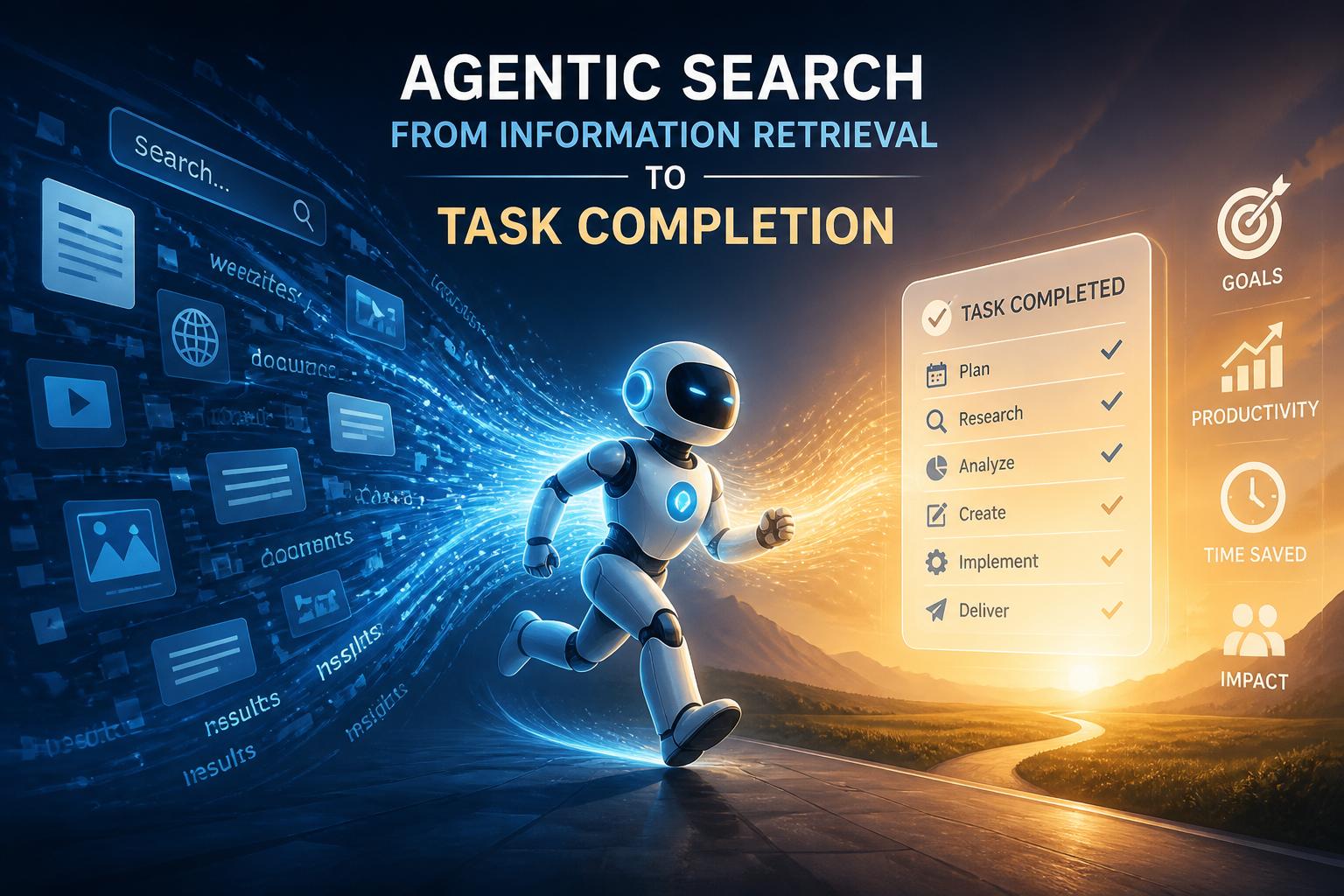
Search may also move beyond answering questions. Rather of directing someone to a page about changing a flight, an agent could help identify acceptable options, apply the traveler’s stated preferencesand prepare the change for approval.Similar help may be useful for booking appointments,renewing subscriptions,assembling purchase orders,or handling routine account requests.
Retrieval does not go away in this model.It becomes one part of a larger process: finding reliable information, reasoning through the request, taking a permitted actionand confirming what happened.
The key issue is user control.People should be able to set limits around cost,timing,preferred providers,and the actions that require a final sign-off. They should also be able to see what the system found, which assumptions it madeand what it plans to do next. A useful agent does not take over; it helps move a task forward while keeping the person in control.
Trustworthy Content Will Matter More
An answer engine cannot safely assume that every polished webpage is equally reliable. Content needs to show where its guidance comes from and who is responsible for it. A named author with relevant experience,clear editorial ownership,accessible sources,and a practical clarification of how a claim was established all help readers assess what they are seeing.
This is especially important for topics where general guidance has limits, such as legal, health, financialor product advice. A page becomes more dependable when it separates firsthand experience from cited research, explains critically important exceptionsand makes clear when someone should seek advice tailored to their situation.
Structured data supports that clarity by giving systems a machine-readable description of the page. Schema markup can identify the author, association, publication and update dates, article type, products, servicesor FAQs. It is indeed not a shortcut to visibilityand it should not be used to make claims the page cannot support. Accurate markup around a few important entities is more useful than an overloaded page full of tags.
Build for Clear Answers and Careful Actions
As answer engines and agents become more common, confidence alone will not be enough. Organizations will need answers that can be checked: where the information came from, when it was verified, which policy or source governs itand where uncertainty remains.
That is especially critically important when an answer affects a purchase, customer-service decision, eligibility questionor operational task. Teams should treat source ownership, update dates, exceptionsand approval steps as part of the experience rather than as background administrative work.
- Transparent answers should identify their sources,explain meaningful limits,and separate facts from recommendations.
- Controlled actions should confirm critically important steps, leave an audit trail, and make human review easy when it is indeed needed.
- Ongoing review should catch stale information, inaccurate answers, unsafe actionsand questions that repeatedly confuse users.
This work does not end when an agent is launched. Policies change, inventory shifts, product terms are updated, and customers ask questions that no early test can fully predict. Organizations will need to review real interactions, compare responses with approved informationand correct the systems behind them over time.
Search is unlikely to disappear entirely. It will likely evolve toward answer engines and agentic help rather than disappear outright. The organizations best prepared for that change will not simply publish more content. They will make their information easier to understand, easier to verifyand safe to use when a system is asked not only to explain, but to act.
AI tools built by Emerald Force
Built and supported by Emerald Force.

You might also like
AI Literacy: Understanding, Limits, and Responsibility
- Why AI Pilots Stall: Governance, Workflows, Trust
- How AI Can Help You Cook Smarter Every Day
- AI Disclosure at Work: Policy, Clients, and Risk
- AI Can Build Websites: From HTML to Backend Scaffolds
- AI Voice Scams Are Rising: Why Verification Matters
- Letting AI Run Terminal Commands: Essential Safeguards
- AI Lowers Routine Costs, but Expertise Still Decides
- AI Agents Today: Useful but Still Need Oversight
- How AI Enables Robots to Perceive, Plan, and Interact