
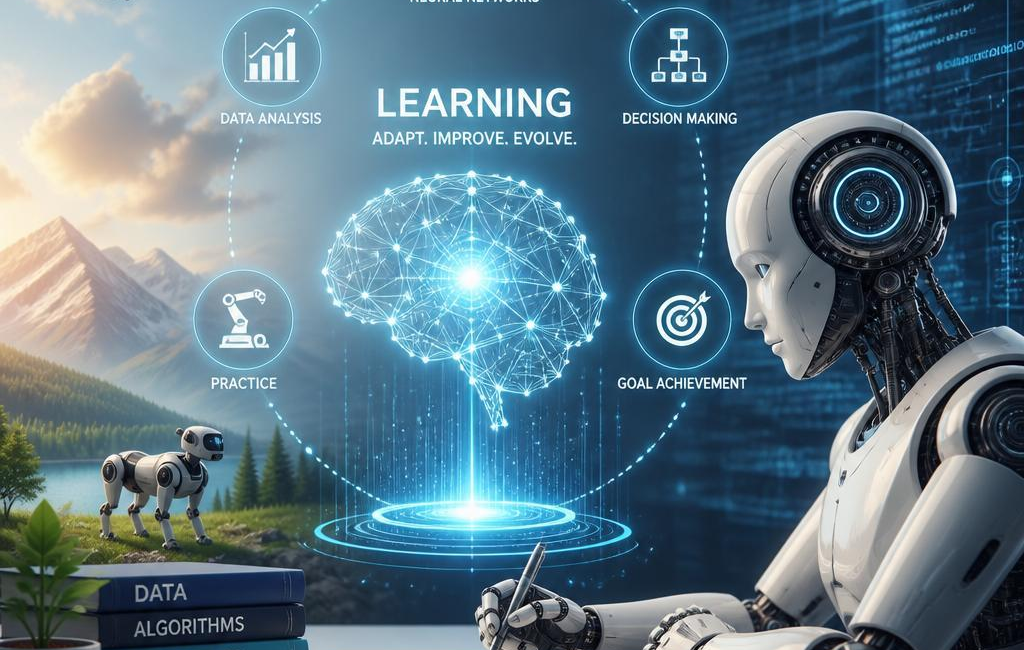
Robot learning is the use of machine learning to improve a robot’s perception, controlor planning.In simple terms,it helps a robot learn from data and experience instead of relying entirely on a fixed set of instructions. That matters whenever the real world is messy: boxes move, lighting changes, objects varyand people do not always follow a predictable path.
How Robot Learning works
For a robot to learn, it first needs a useful picture of what is happening around it. Cameras, microphones, force sensorsand range finders produce streams of raw information. Machine learning can definately help turn those signals into something meaningful, such as identifying an obstacle, recognizing a tool, estimating an object’s positionor noticing that someone has stepped into a work area.
That understanding guides the robot’s next move. A warehouse robot may need to reroute around a blocked aisle. A robotic arm may need to change its grip when an item sits at an unusual angle. If the action does not work as expected, the system can use that result as feedback for future attempts. the basic cycle is straightforward: observe the situation, choose an action, see what happensand adjust when appropriate.
Learning From Practice
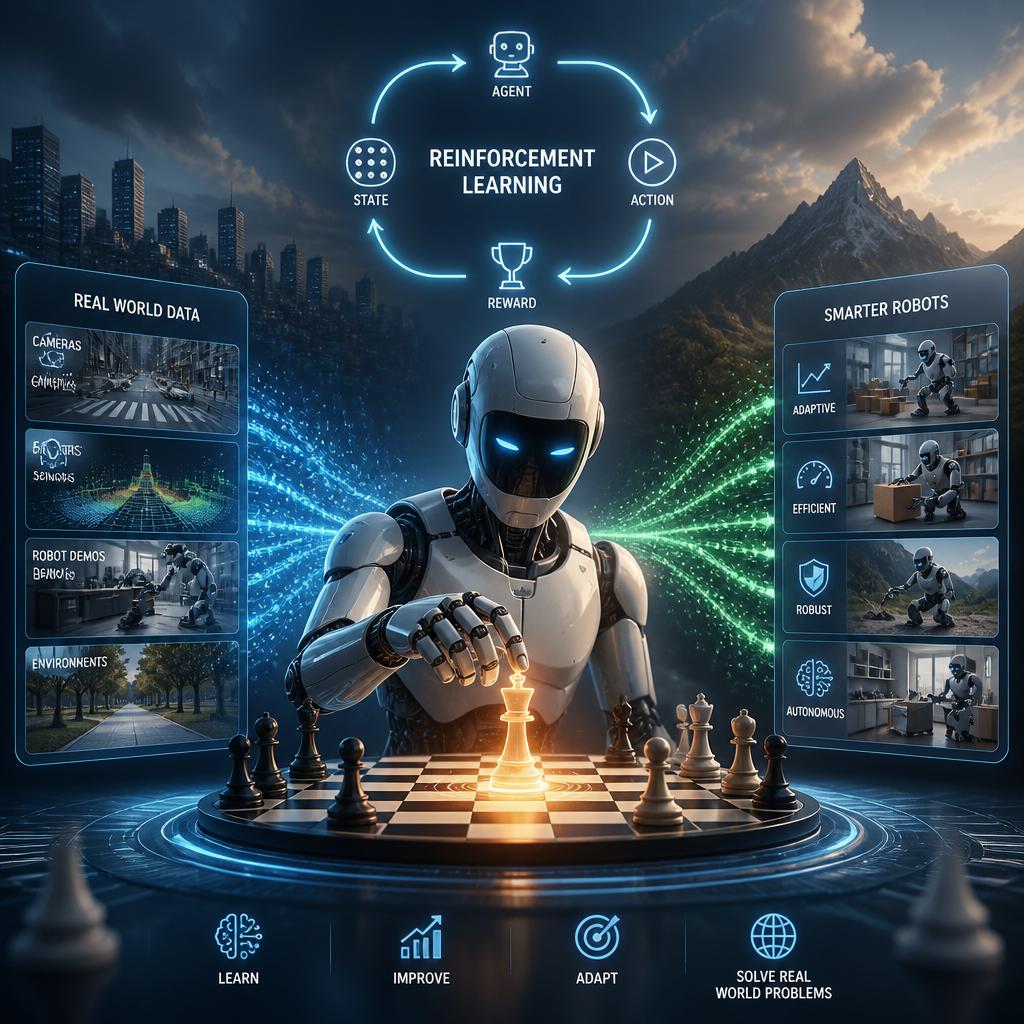
Reinforcement learning is one way robots can improve through trial and feedback. The robot takes an action and receives a signal tied to its goal. A successful grasp, stable step, accurate placement, or safe stop can count as a positive outcome. Over time, the system can learn which choices are more likely to work well in similar situations.
But robots cannot learn everything from a clean virtual surroundings.Simulation is valuable becuase it allows teams to explore tasks without putting equipment or people at risk, yet real workplaces introduce complications that are hard to model perfectly. Lighting shifts during the day. Sensors produce noise.Surfaces wear down. People and objects move in unexpected ways.
That is why practical robot learning usually combines simulation with carefully gathered real-world experience. Teams can learn from successful and failed attempts, sensor readings during movement and contactand human corrections when a robot takes an inefficient or unsafe path. The point is not to let a robot experiment without limits, but to improve it under conditions that reflect the job it is indeed meant to do.
Safety Comes First
Machine learning can definitely help robots respond more sensibly when a situation changes, especially in spaces shared with people.A robot may detect that its view is uncertain, recognize an unexpected objector notice that a task is not going as planned. In those moments, a cautious response is often the right one: slow down, stop, move awayor ask for human help.
Learning alone does not make a robot safe. Safety depends on practical safeguards such as speed limits, protected areas, emergency stopsand checks that do not assume a model will always be correct. Those measures provide a fallback when sensors fail, conditions changeor the robot encounters something outside its training.
Learning can also support reliability. It may help identify recurring signs of poor grasping, blocked routes, sensor drift, or equipment wear before they disrupt a task. When robots work alongside people, they can adapt to common handoffs and work rhythms, but people should always have the ability to pause, corrector take over the task.
Taking Robot Learning Beyond the Lab
A robot that performs well in one setting may not behave the same way somewhere else. A factory cell, warehouse aisleor kitchen counter can look very different once the lighting changes, a camera is moved, or objects arrive in unfamiliar positions. Scaling a learning system means testing it across those ordinary variations rather than assuming one successful trial is enough.
That usually starts with a measured rollout. Teams can collect useful demonstrations, record failures, test changes in simulation and controlled physical settingsand review the results before expanding the robot’s responsibilities. Reusable task data, safety rulesand evaluation methods can make that work more consistent across different machines and locations, while each robot may still need adjustments for its own tools, sensorsand workspace.
In industry, these methods can support tasks such as inspection, sorting, assembly assistanceand material movement. At home or in public-facing environments,similar ideas apply to assistive devices,cleaning machines,and service robots that must work around clutter and changing routines.
The goal is not to give robots unlimited independence. It is indeed to help them do defined jobs more reliably while staying aware of uncertainty and yielding to human judgment when needed.With careful training, testing, monitoring, and feedback, robot learning can make machines more capable without losing sight of the people who work with them.
AI tools built by Emerald Force
Built and supported by Emerald Force.
You might also like
AI Literacy: Understanding, Limits, and Responsibility
- Why AI Pilots Stall: Governance, Workflows, Trust
- How AI Can Help You Cook Smarter Every Day
- AI Disclosure at Work: Policy, Clients, and Risk
- AI Can Build Websites: From HTML to Backend Scaffolds
- AI Voice Scams Are Rising: Why Verification Matters
- Letting AI Run Terminal Commands: Essential Safeguards
- AI Lowers Routine Costs, but Expertise Still Decides
- AI Agents Today: Useful but Still Need Oversight
- How AI Enables Robots to Perceive, Plan, and Interact