
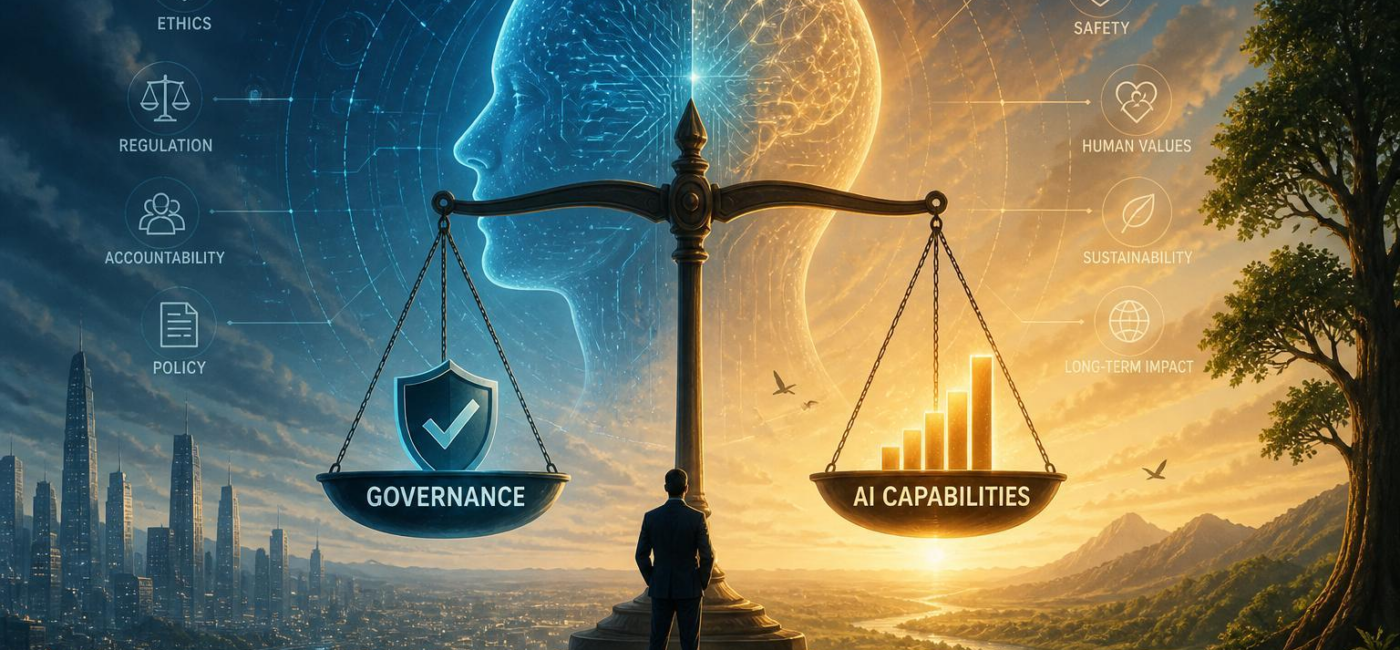
Can AI end humanity? That remains speculative, but it is not a question that serious researchers adn policymakers can simply wave away. The more immediate concern is whether increasingly capable systems could be deployed faster than people can understand, superviseor stop them. Good governance is not about predicting every future disaster. It is about setting rules early, especially when systems gain the power to act on their own, influence significant decisionsor operate across large numbers of people.
Clear lines for stronger oversight
Oversight should not begin only after an AI system has caused visible harm. Organizations need clear capability thresholds that trigger more rigorous review before a system is released. A tool that helps draft internal notes creates a different level of risk than one that can send messages, change records, steer people toward consequential choicesor use other tools without immediate human approval.
Those thresholds should be writen in plain language. The relevant questions are straightforward: Can the system take action rather than just make a recommendation? How many people, accounts, or transactions could it affect? Does it handle sensitive information? Could its output influence someone’s rights, safety, reputation, access to servicesor financial position?
Once a system crosses a meaningful threshold, stronger safeguards should follow. That might include autonomous testing before release, human approval for high-impact actions, detailed logs, limits on access, incident reportingand a reliable way to pause or remove the system. What matters is the combination of capabilities. Even a model with fairly ordinary reasoning may require strict controls if it has broad permissions and access to consequential systems. Clear thresholds make oversight a condition of deployment, not a promise made after the fact.

test systems before they spread
Evaluation should not be a last-minute quality check once a model is already connected to important workflows. Before broad deploymentorganizations need independent reviewers who can test how the system behaves in normal use, under predictable misuseand in situations the developers may not have anticipated.
The people responsible for hitting launch dates should not be the only people deciding whether a system is ready. Reviewers need meaningful access to test environments, useful reporting channelsand the authority to delay a release when serious concerns remain unresolved. They should examine what the system can reliably do, were it fails, how it responds to harmful or deceptive promptsand whether staff can spot problems and intervene quickly.
Testing also needs to be repeatable. Evaluations should be documented, test suites should be updated as new risks emergeand known limitations should follow the model into deployment decisions. Passing a controlled test does not make a system harmless. It may still need a limited rollout,close monitoring,and regular reassessment as real users find unexpected ways to use it. The goal is not a false guarantee of safety. It is indeed credible evidence that someone with the freedom to challenge the builders has examined the risks and recorded what remains uncertain.
Put responsibility in writing
Accountability cannot be assigned only after something goes wrong. It has to be built into the full life of an AI system,from the decision to develop it through deployment,monitoring,and eventual retirement.
That means naming the people responsible for key decisions. Product leaders should own the choice to release a system. Technical teams should document testing, model behavior, and known limitations. data owners should be able to explain where training and operational data came from and how it may be used. Legal, security, and risk teams need real authority to stop a launch that does not meet agreed safeguards. When responsibility is left to “the association,” it frequently enough disappears when a failure crosses team boundaries.
Each stage should have a clear record of decisions and risks. Before development begins, teams should define the intended use, prohibited uses, acceptable level of riskand approval process. During development, they should retain records of design choices, data sources, evaluationsand unresolved weaknesses. At launch, there should be a named owner for incident response, user reportingand rollback decisions.After release, the organization should review outcomes, adjust controlsand retire systems that cannot be managed safely.
Liability should generally follow control.A vendor cannot reasonably disclaim every consequence if it determines the system’s core behavior. At the same time, a customer cannot avoid responsibility for placing that system into a sensitive decision process without meaningful oversight. Contracts and internal policies should distinguish between problems in the underlying system, unsafe implementation, user misuse, and foreseeable harms that neither party addressed. Challenging judgment calls will remain, but responsibility should not be a public-relations exercise. every material risk needs an owner with the authority to act.
Set a global floor for safety
National rules matter, but advanced AI development does not stop at national borders. Companies can operate internationally, research can move quicklyand there is a real risk that high-risk work will drift toward places with the weakest safeguards. That is why governing AI before capabilities outrun controls will require international coordination and also domestic regulation.
Countries do not need identical laws to agree on a basic floor. shared reporting triggers for unusually large or high-risk development efforts, compatible safety-testing practicesand clear expectations for reporting serious incidents would make it harder for perilous work to disappear into regulatory gaps.There should also be careful controls around transferring sensitive model weights, computing accessor technical know-how to actors that cannot meet reasonable safety obligations.
Any international system will need verification as well as voluntary promises. If no one can assess whether commitments were followed, they carry limited weight. At the same time, a framework that treats all technical work as secret would shut out legitimate scrutiny. A workable approach would protect sensitive reporting where necessary while allowing qualified reviewers to examine whether developers are meeting their obligations.
The point is not to freeze research or assume that advanced AI will inevitably become catastrophic. It is indeed to make rapid capability growth visible, reviewableand governable before it is embedded in systems people depend on. The closer AI comes to acting at scale in the real world, the less acceptable it is to rely on trust alone.
AI tools built by Emerald Force
Built and supported by Emerald Force.
You might also like
AI Literacy: Understanding, Limits, and Responsibility
- Why AI Pilots Stall: Governance, Workflows, Trust
- How AI Can Help You Cook Smarter Every Day
- AI Disclosure at Work: Policy, Clients, and Risk
- AI Can Build Websites: From HTML to Backend Scaffolds
- AI Voice Scams Are Rising: Why Verification Matters
- Letting AI Run Terminal Commands: Essential Safeguards
- AI Lowers Routine Costs, but Expertise Still Decides
- AI Agents Today: Useful but Still Need Oversight
- How AI Enables Robots to Perceive, Plan, and Interact