
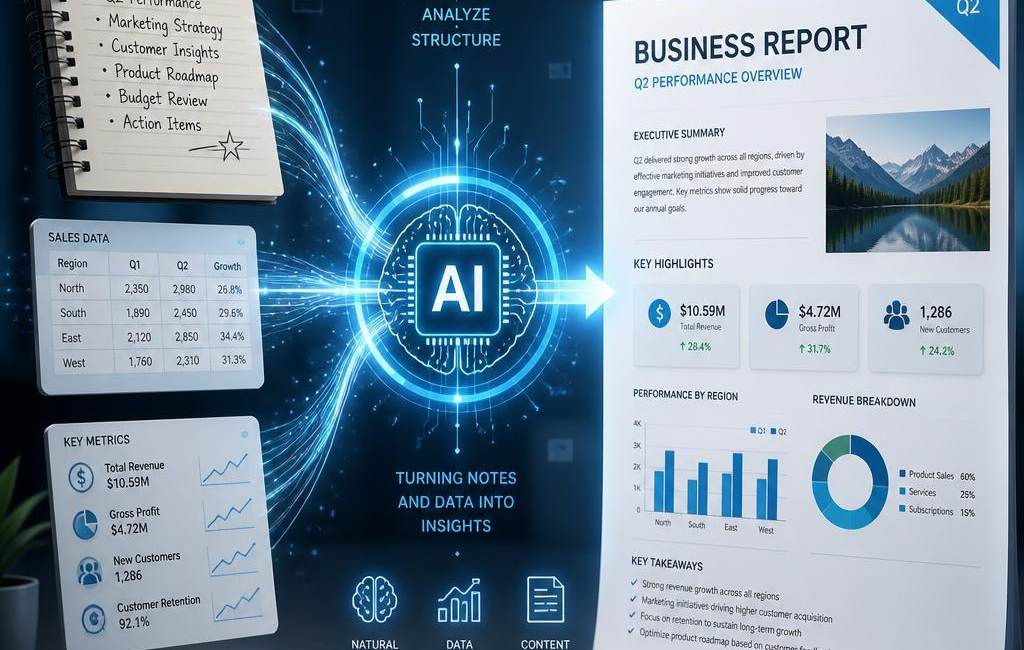
Can AI write business reports from notes and data? Yes-AI can turn meeting notes,spreadsheets,data summaries,and templates into a useful first draft. It can organise scattered material, identify the main pointsand present them in a clearer structure. But it cannot reliably replace the person who understands the business context behind the information.
The value is in reducing the time spent wrestling with rough notes and repetitive formatting. The obligation for accuracy, judgmentand approval still belongs to the people preparing the report.
What AI can do with notes and data
The real question is not whether an AI tool can turn bullet points into sentences. Most can. The better test is whether it can separate confirmed decisions from casual suggestions, retain the meaning of the source material, and point out were information is missing.
Used well, AI can group notes into familiar report sections such as objectives, findings, risks, financial implications, and next steps. It can also adjust the draft for the reader. An executive summary may need the conclusion, trade-offsand decisions required, while an operational update may need dates, owners, exceptions, and supporting figures.
Still, the draft should remain easy to trace back to the original notes, spreadsheet, or dataset. If a figure is unclear, a date is missingor a conclusion goes beyond the evidence, the tool should not quietly invent an answer. A polished sentence is not much help if it gives readers more certainty than the source material supports.
AI works best as a reporting assistant. Give it clean inputs, a clear audience, the required sectionsand a description of the report’s purpose. Then review the result against the original records before treating it as finished.
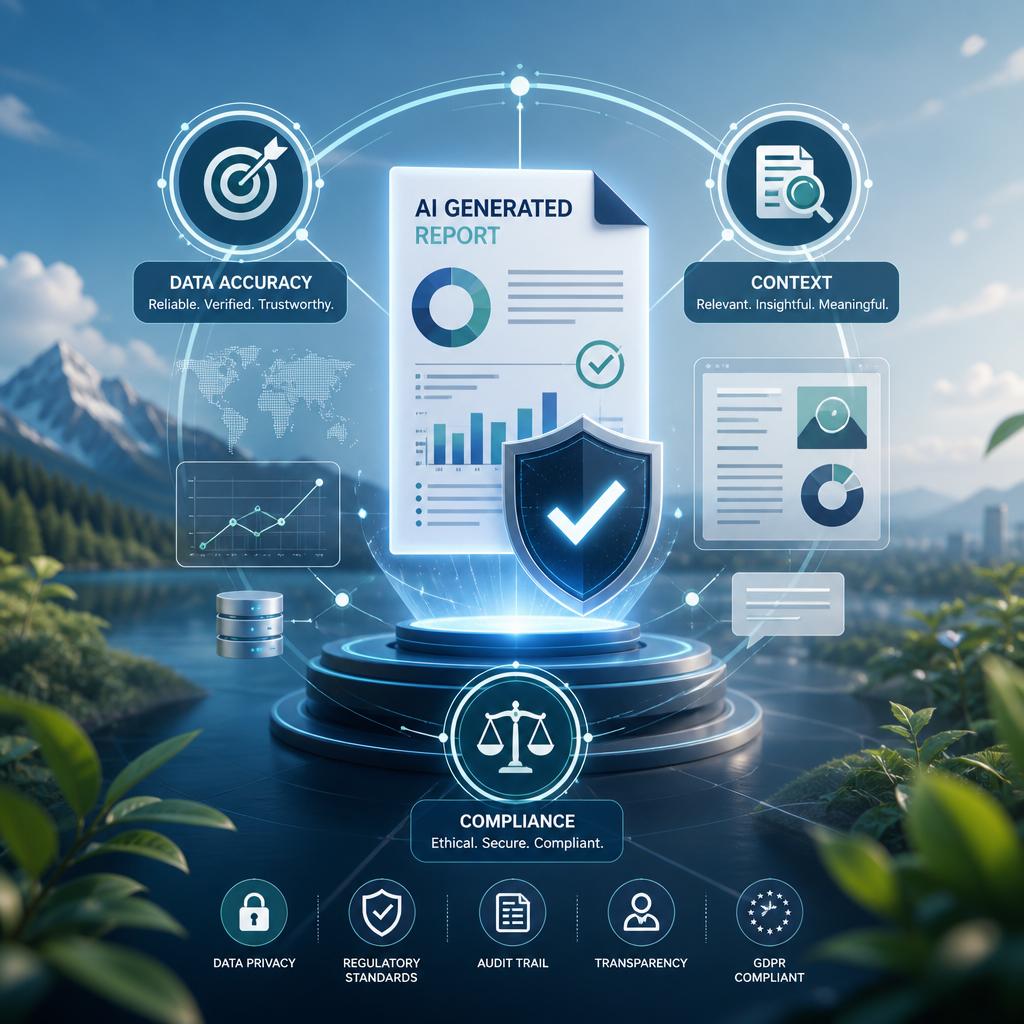
Accuracy, context, and confidentiality
AI can make a report easier to read, but it should not be the final authority on what the source material means. A draft can reflect incomplete meeting notes, outdated numbers, duplicate recordsor a vague request.before reviewing the writing itself,confirm the reporting period and make sure the source data is current and approved.
Pay close attention to qualifiers. Words such as “estimated,” “pending,” and “subject to approval” often matter as much as the number or statement beside them. Context matters, too. A sales decline may be caused by seasonality, a delayed contract, a reporting error, or a genuine performance issue. The report should not present one explanation as fact unless the evidence supports it.
For sensitive work, decide in advance what information might potentially be shared with an AI system. Remove personal information,confidential client details,and restricted commercial data where appropriate. Teams should also know where drafts are stored, who can access them, and whether the report requires source references, retention records, or review by legal, finance, privacy, or compliance staff.
The safest approach is simple: use AI to organize and draft, then have a responsible person verify the facts, interpretationand wording before anything is distributed.
Build review into the process
Human review should happen throughout the reporting process, not just at the end as a spelling check. Someone who understands the subject should confirm that the report covers the right scope, reflects the available evidenceand does not leave important gaps hidden beneath smooth prose.
A practical review usually covers three things: whether the draft is structured for the intended audience, whether names, dates, calculations, and claims match the approved sourcesand whether the recommendations are realistic and properly qualified. The reviewer is still accountable for the report’s judgment, accuracy, and context.
clear ownership makes this easier. one person may validate the underlying data, another may review the business interpretation, and a final approver may authorize distribution. For reports going to clients, executives, regulatorsor investors, keep a record of major changes and unresolved assumptions.That gives the team a useful trail to follow if questions arise later.
Can AI write business reports without human involvement? It can produce text, but reliable reporting still needs someone to test the conclusions and stand behind the final version.
Choosing the right tool
The best AI report-writing tool is usually the one that fits how your team already works. Start with the material it needs to handle: meeting notes,spreadsheets,CRM exports,project updates,financial data,or internal documents. Then consider the people using it and the level of control the report requires.
A sales manager may need quick account summaries. A finance, legal, or compliance team may need approved templates, permissions, source traceabilityand formal approval steps. In either case, accuracy, privacy, and review controls matter more than remarkable-sounding prose.
It is indeed also worth separating tools that simply draft narrative from those that support a broader reporting workflow. Some are useful for turning approved notes into a first draft. Others may help create recurring reports, work from connected data sources, or keep standard sections consistent across teams. Test any option with a real but non-sensitive reporting task, then compare the output with your current standard.
Look for drafts that handle missing information sensibly, preserve the source materialand avoid claiming more than the data can prove. The right tool should save time on repetitive drafting while keeping the final decision with the people responsible for the report.
Final thought
AI can make business reporting faster and less tedious, especially when the raw material is scattered across notes, data summariesand templates. its role is to help shape the first draft-not to replace careful analysis or accountable review. When the inputs are clear and the review process is sound, AI can help teams produce reports that are easier to read, question, and act on.
AI tools built by Emerald Force
Built and supported by Emerald Force.
You might also like
AI Literacy: Understanding, Limits, and Responsibility
- Why AI Pilots Stall: Governance, Workflows, Trust
- How AI Can Help You Cook Smarter Every Day
- AI Disclosure at Work: Policy, Clients, and Risk
- AI Can Build Websites: From HTML to Backend Scaffolds
- AI Voice Scams Are Rising: Why Verification Matters
- Letting AI Run Terminal Commands: Essential Safeguards
- AI Lowers Routine Costs, but Expertise Still Decides
- AI Agents Today: Useful but Still Need Oversight
- How AI Enables Robots to Perceive, Plan, and Interact