

What is an agent in AI? Put simply, an agent is an AI system that can plan, take actions, use toolsand iterate toward a goal. Unlike a chatbot that only responds to a prompt, an agent can work through a task over several steps: gather facts, decide what to do next, carry out an approved action, check the resultand adjust if needed.
That does not mean an AI agent should be left to operate without limits. Useful agents are designed with clear goals, defined permissions, reliable ways to check their workand human involvement when the stakes are high. Here is what that looks like in practise.
How AI Agents Plan and act
A dependable agent is usually a system of connected parts, not one oversized prompt expected to reason, actand remember everything at once. It needs a way to turn a goal into manageable tasks, access to the right toolsand a method for checking whether each step actually worked.
For example, an agent asked to update a customer record might first confirm the customer identity, retrieve the existing record, make the permitted changeand verify that the update was saved. If something does not match-perhaps the record is missing or the requested change is unclear-it should pause, ask a questionor hand the task to a person rather than guessing.
Good agent design also makes room for revision.A plan is only useful until new information proves part of it wrong. When that happens, the agent should be able to change course without repeating work that has already been completed successfully. Keeping track of the current goal, completed steps, open dependenciesand the reason for any change makes that process easier to follow and troubleshoot.
The basic pattern is straightforward: plan the next step, act within defined limits, inspect the outcomeand decide whether to continue.That feedback loop is what separates an agent from a one-off response.
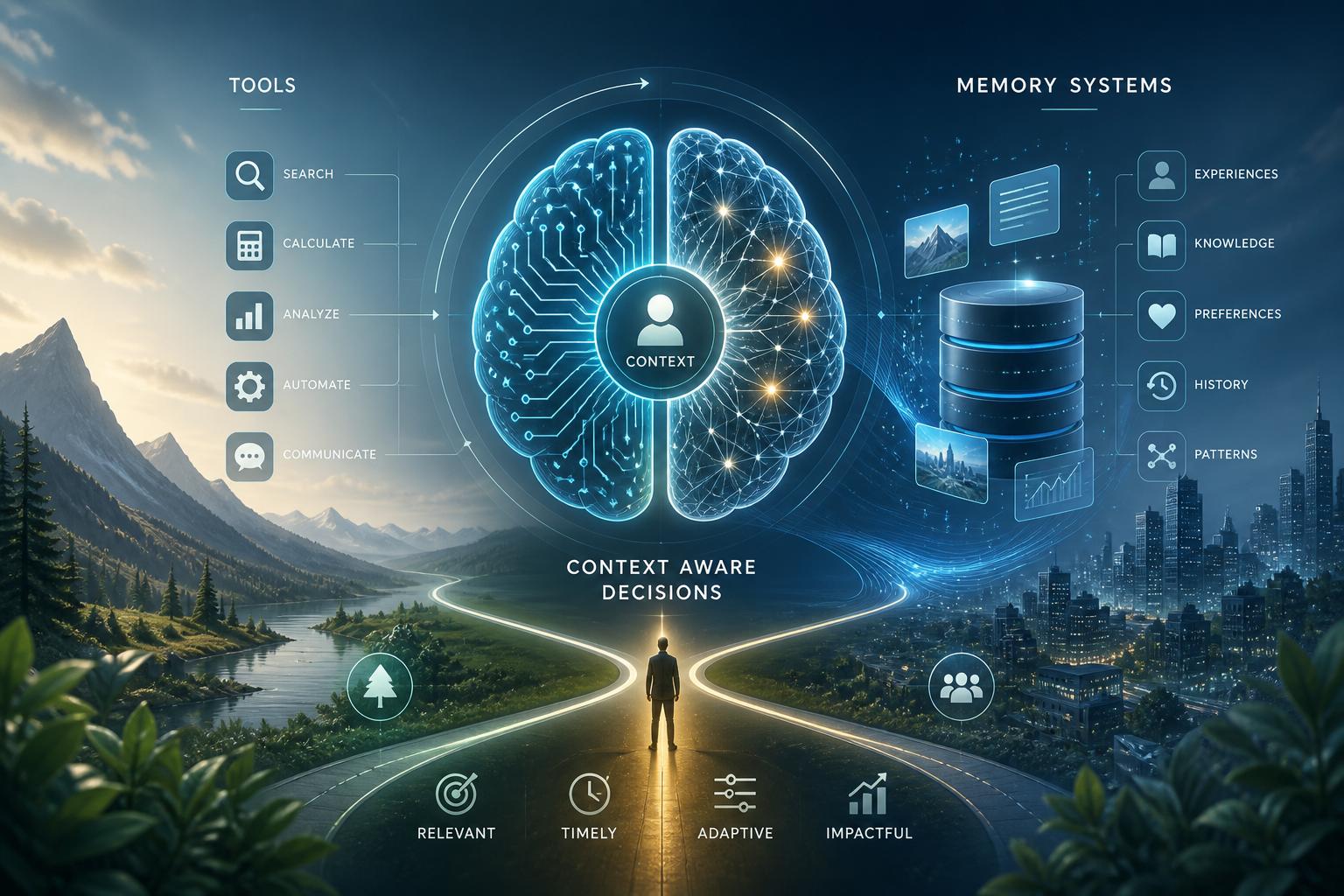
Using Tools and Memory Well
An agent becomes more useful when it knows when to use a tool-and when it does not yet have enough information to act. tools might include a search system, a calendar, a database, an internal requestor a workflow service. Giving an agent access to a tool is not enough; it also needs clear rules about what that tool is for, what information it requiresand wich actions need review before they happen.
Memory matters for the same reason. An agent needs enough context to avoid treating every request as if it were brand new.It may need to remember the current task, recent tool results, and a user’s relevant preferences. In some cases, it may also retain approved information that will be useful later.
But more memory is not automatically better. Saving every detail can create clutter, preserve outdated assumptionsand raise privacy concerns. A practical approach is to keep information with its source, dateand scope, then retrieve only what is relevant to the task at hand. An agent arranging a meeting may need current availability and scheduling preferences, for instance, but not unrelated notes from an earlier research request.
When tools and memory are handled carefully, the agent has a better basis for making its next decision. It can use evidence from the work it has just done rather than relying on a loose guess about what happened.
Learning From Each Attempt
Iteration only helps if the agent can tell what happened after it acted. A useful feedback loop ties a goal to an observable result, then uses that result to shape the next step. The feedback might come from a failed tool call, a user correction, a review process, or a clear change in the system the agent was working with.
The crucial distinction is between completing a task and completing it well.An agent may successfully send a message, for example, while still sending it to the wrong person or missing important context. Checking the outcome against the original goal gives the agent a chance to catch that difference before moving on.
Not every mistake should produce the same response.A formatting error in a draft may justify an automatic retry. A failed action involving payments, account access, contracts, or external commitments should usually stop for human review.Over time, recurring problems can point to missing context, unclear instructions, unreliable tool outputsor success criteria that need to be rewritten.
The goal is not to make an agent repeat a process faster. It is to make the next attempt better informed than the last one.
Keeping People in Control
AI agents need clear boundaries before they are put to work. Teams should decide what an agent can do independently, what requires approvaland what it should never attempt. Those rules should appear in the system itself through permissions, data-access controls, spending limits, escalation pathsand activity records-not just in a policy document nobody checks.
Before deployment, it is indeed worth testing the agent on realistic requests, awkward edge casesand situations where a tool fails or the instruction is incomplete. Once it is indeed in use, teams should review more than the final answer. They should be able to see what the agent was trying to do, what information it relied on, which actions it tookand where it encountered uncertainty.
Human oversight is most helpful when it is part of the normal workflow, not an emergency measure. A reviewer should have enough context to approve, reject, or revise a proposed action with confidence. As the agent takes on new responsibilities, its permissions and tests should be revisited. If its behavior becomes hard to explain,pausing and investigating is usually wiser than expanding its autonomy.
At their best, AI agents can handle multi-step work without losing sight of the goal. They plan, take actions, use tools, and iterate as new information arrives. The systems people can trust, however, are the ones built with clear limits, meaningful checksand people who remain accountable for the decisions that matter.
AI tools built by Emerald Force
Built and supported by Emerald Force.
You might also like
AI Literacy: Understanding, Limits, and Responsibility
- Why AI Pilots Stall: Governance, Workflows, Trust
- How AI Can Help You Cook Smarter Every Day
- AI Disclosure at Work: Policy, Clients, and Risk
- AI Can Build Websites: From HTML to Backend Scaffolds
- AI Voice Scams Are Rising: Why Verification Matters
- Letting AI Run Terminal Commands: Essential Safeguards
- AI Lowers Routine Costs, but Expertise Still Decides
- AI Agents Today: Useful but Still Need Oversight
- How AI Enables Robots to Perceive, Plan, and Interact