
A humanoid robot is a machine with a roughly human-shaped body designed for physical tasks. it typically has a torso, arms, legs, handsor some combination of those features, allowing it to operate in spaces that were built for people.That matters in workplaces with standard doorways,shelves,carts,tools,stairs,and workstations.
These machines are not a worldwide replacement for workers. Their practical value is usually in taking on repetitive, tiringor physically awkward jobs while people handle decisions, exceptions, quality checksand situations that require judgment. In the right setting, a humanoid robot can move supplies, replenish materials, carry out simple inspections, sort itemsor support basic preparation and cleanup work.
Humanoid Robots at Work
The human-like shape is functional, not just visual. A robot that can reach a shelf, use a handle, move through an aisleor work at a standard-height bench may fit into an existing facility without major changes to the building. That does not mean every workplace needs one.In many cases, a wheeled robot, conveyor, liftor fixed automation system might potentially be simpler and better suited to the job.
Where humanoid robots may make sense is in environments where tasks are varied but still fairly structured. For example, a machine might carry boxes or linens between work areas, bring parts to a production station, check whether supplies need replenishingor complete a routine inspection route. The goal is not to hand over an entire job title to a robot. It is to identify the parts of the work that are consistent enough for a machine to handle safely.
People still need to be in charge. Workers are better equipped to deal with unusual requests, changing priorities, customer interactions, safety concernsand problems the robot cannot recognize or resolve on its own.
Safety Comes First
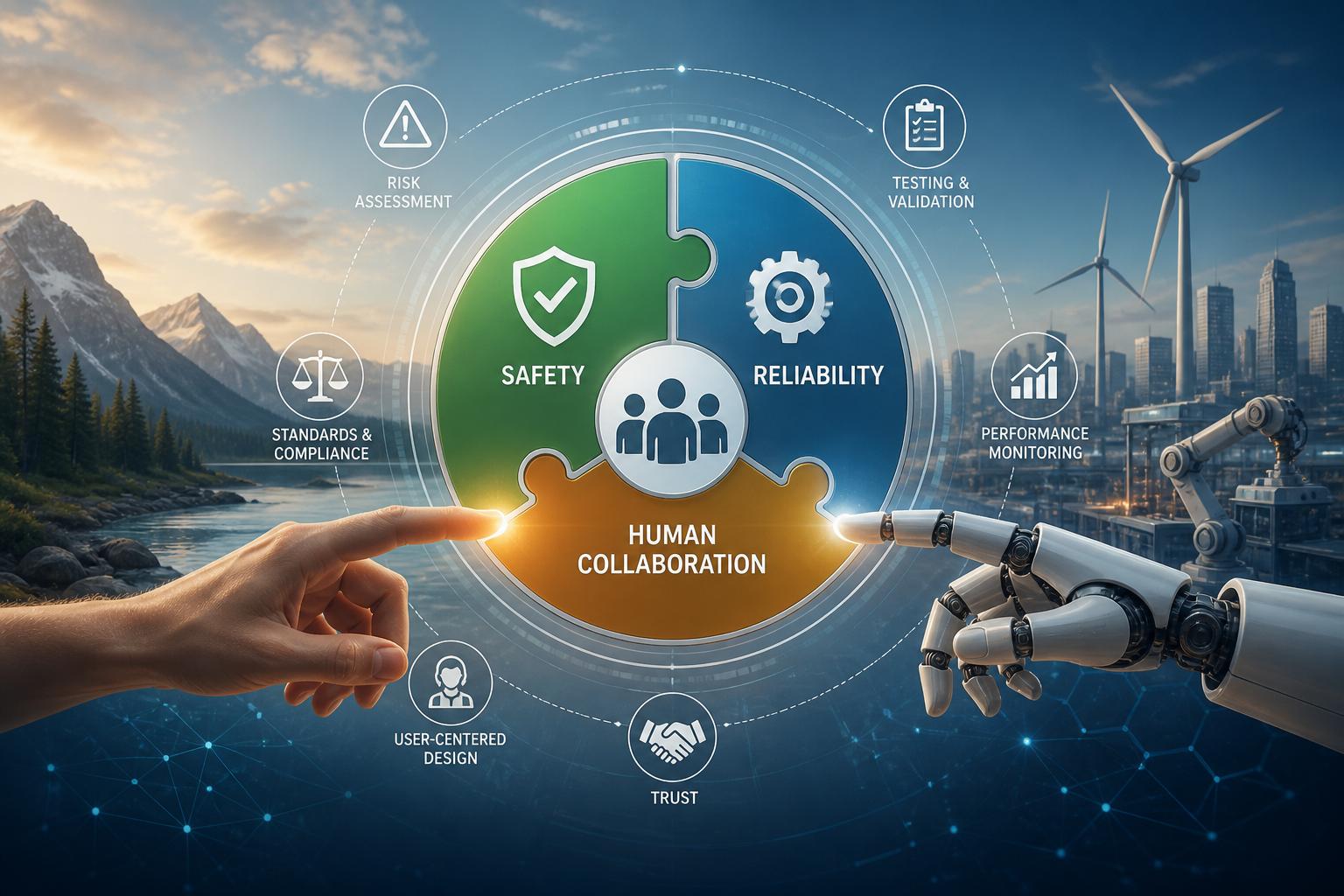
Safety cannot be treated as an afterthought once a robot reaches the work floor. A humanoid robot may share aisles, doorways, equipmentand work areas with people, so staff need to know how it moves, when it will stopand what to do if something goes wrong.
Before deployment, employers should look closely at how the robot detects nearby people and obstacles, how it reacts to unexpected contactand how it behaves if a sensor is blocked or a task cannot be completed. Workers should be able to stop or isolate the machine quicklyand its operating status should be easy to understand. Clear lights, soundsor screen messages can help, but they are onyl useful if employees are trained to recognize them.
Reliability matters just as much as safety. A robot may perform well in a clean, controlled demonstration and still struggle with clutter, uneven floors, damaged packaging, inconsistent materialsor busy shift changes. That is why teams need clear procedures for supervision,maintenance,reporting problems,and recovering from errors. Employees should not be left to quietly work around a machine that is causing delays or creating new risks.
Choosing the Right Tasks
The best first tasks are rarely the flashiest ones. A useful deployment usually starts with work that is repetitive, physically demandingor arduous to staff consistently. Moving cartons between stations,replenishing supplies,handling simple sorting,tending routine equipment,or carrying out scheduled checks can be reasonable starting points when the process is predictable.
It helps to examine the whole workflow, not just the most obvious movement. Picking up an item may be straightforward, but the job can become much harder if the robot has to identify the correct item, open a container, recover from a dropped object, navigate around peopleand deliver the item to the right place. Those surrounding steps often determine whether the task is a practical fit.
Early pilots should have clear boundaries. The robot needs to know when to continue, when to pauseand when to ask for help.Jobs that depend on frequent judgment calls, delicate handling, emergency decisionsor constant coordination with other people are usually poor candidates for early use. The point is not to automate every motion a person makes; it is to find a dependable part of the workflow where the machine adds real value.
Start Small and Learn
A sensible implementation begins with one limited, observable job rather than a broad promise of automation. Map the work from start to finish: what the robot will carry or handle, where it will travel, who will supervise it, where it can pause safelyand what happens when it cannot finish a task. A defined area, a predictable routeand a clear fallback process give the team room to learn without disrupting the entire operation.
it is also important to assign obligation early. Someone should own day-to-day operation, maintenance coordination, safety reviewand decisions about when the robot should be removed from service. After a pilot,review what actually happened: task completion,downtime,near misses,worker feedback,and changes to the surrounding workflow all matter more than a polished demonstration.
Employees should be involved throughout the process.The people doing the work often know where the real friction lies: a congested doorway at shift change, a cart with a faulty wheel, a package that arrives in different forms each dayor a task that looks simple on paper but changes constantly in practice. Their input can definitely help shape safer routes, better task boundariesand more useful training.
Conclusion
Humanoid robots can be useful in workplaces designed around human movement and human tools, but their shape alone does not make them the right answer.Their strongest role is supporting people with repetitive physical work in well-defined settings. Organizations that start with a narrow task, plan for exceptionsand keep workers involved are more likely to find a practical balance between automation and human judgment.
AI tools built by Emerald Force
Built and supported by Emerald Force.

You might also like
AI Literacy: Understanding, Limits, and Responsibility
- Why AI Pilots Stall: Governance, Workflows, Trust
- How AI Can Help You Cook Smarter Every Day
- AI Disclosure at Work: Policy, Clients, and Risk
- AI Can Build Websites: From HTML to Backend Scaffolds
- AI Voice Scams Are Rising: Why Verification Matters
- Letting AI Run Terminal Commands: Essential Safeguards
- AI Lowers Routine Costs, but Expertise Still Decides
- AI Agents Today: Useful but Still Need Oversight
- How AI Enables Robots to Perceive, Plan, and Interact