

Can AI take meeting notes? Yes-manny workplace tools can now capture the conversation adn produce a usable summary of decisions, next steps, and follow-up items.The value is not in creating a perfect transcript. It is in giving the team a clear record of what changed, what needs to happen next, and who is responsible.
Capturing Decisions and Next Steps
AI meeting-note tools can do more than transcribe speech. They may recognise when the group reaches an outcome-whether something was approved, postponed, rejectedor left open-and place that outcome alongside the discussion that led to it.That context is important.A note saying that a launch date changed is more useful when it also explains the scope of the change and any conditions the team attached to it.
The same applies to action items. A useful summary connects each task to the person responsible, the expected deadlineand the project or topic it belongs to. when the conversation is vague, the tool should leave room for review rather than confidently assigning work to the wrong person. The result is a practical handoff after the meeting: people can quickly see what was decided, what they own, and what still needs clarification.
- Decision: what the group agreed to, approved, delayedor declined.
- Action item: the next step that needs to happen.
- Owner: the person accountable for moving that work forward.
What Good Meeting Notes Should Include
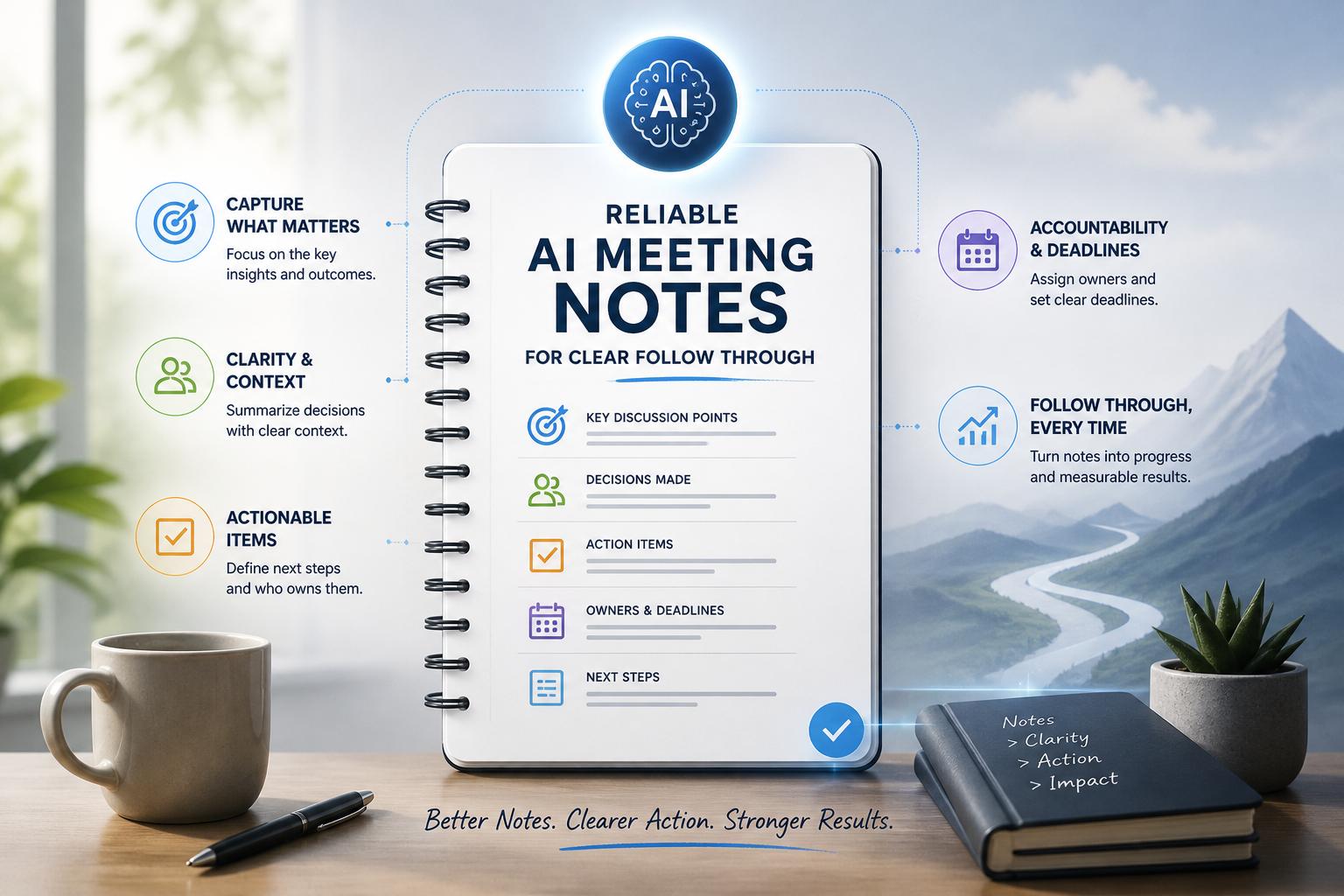
Reliable AI-generated notes focus on the parts of a meeting that affect what happens afterward: approved decisions,assigned work,deadlines,dependencies,and unresolved questions. They should keep those details close to the conversation that produced them, so someone reading later can understand the reasoning instead of seeing a detached instruction wiht no description.
Clear accountability makes the notes more useful. Names, actions, datesand dependencies should be written plainlyand uncertainty should be visible. If no one clearly accepted a task or committed to a deadline, the summary should say so rather than filling in the blanks.
It also helps to separate confirmed outcomes from ideas, questionsand side discussions.Or else, an offhand suggestion can look like a commitment once the meeting is over. In recurring meetings, a consistent format makes it easier to spot unfinished work and see what has changed since the last conversation.
Review Before You Rely on It
AI-generated meeting records are best treated as a strong first draft. The people in the room are still in the best position to confirm what was meant, especially when a brief comment included a condition, an objection, or a change in ownership.
The meeting lead or facilitator should review the notes soon after the call, while attendees check the items connected to their work. Start with the decisions, action items, owners, due dates, and open questions. If something is unclear, revise the wording, add the missing context, or flag it for follow-up. A visible edit process helps prevent a polished summary from becoming an inaccurate record.
Approval should mean that the team accepts a specific version as the reference for follow-up work-not simply that someone clicked a button. Store the final notes where the team manages its workand keep an edit history when changes are needed later. If a decision is still disputed, record the disagreement rather than presenting it as consensus.
Use AI Notes Without Losing Context
AI notes work best when someone owns their accuracy.Keep the transcript or recording as supporting material, but review the summary before it becomes the team’s record. This is especially important for approvals, budgets, deadlines, personnel mattersor any discussion where a missed qualification could cause problems later.
Keep the original meeting materials connected to the notes whenever possible.Link the recording, agenda, shared documents, and relevant chat thread so people can trace how a conclusion was reached. For each action item, make the owner, deadline, and expected outcome easy to find.
AI can make meeting follow-up much easier, but it cannot replace judgment. The best notes combine automated capture with a rapid human check. That gives the team a record they can actually use: what was decided,who is handling the next step,and what still needs a real conversation.
AI tools built by Emerald Force
Built and supported by Emerald Force.
You might also like
- Renewable Energy Helps, but Can’t Erase AI’s Footprint
- How AI Models Meaning Without Human Understanding
- AI Can Fake Documents-Why Verification Matters
AI Can Feel Like a Friend, but It Is Not One
- Can AI Take Meeting Notes? It Captures Decisions
- How Platforms Detect AI-Generated Abuse Online
- Renewables Help, but Cannot Erase AI’s Footprint
- How AI Can Produce Racist and Sexist Outputs
- AI in Healthcare: Empowering Clinicians, Not Replacing Them
Artificial Intelligence: Systems That Mimic Human Thought