
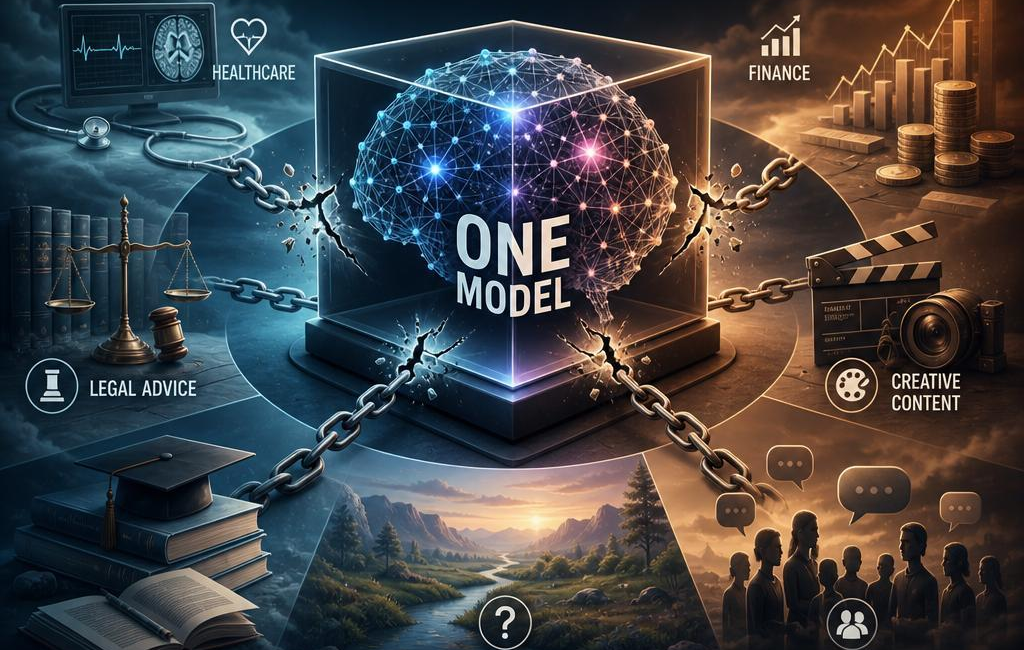
One model is not enough for every job
Can one model do everything? In practice, no.Different tasks carry different risksand those risks frequently enough call for different models or hybrid systems. A broad model may be useful across many everyday workflows, but that does not make it a safe choice for every decision.
The gap becomes clear when the consequences of a mistake are serious. A clinical support tool should show uncertainty and direct difficult cases to qualified professionals. A fraud-review system needs decisions that can be examined and explained. A hiring tool needs safeguards against repeating unfair patterns found in old data. These are not small settings that can be adjusted with a better prompt. They involve different data rules, testing standards, acceptable error rates, and levels of human responsibility.
A general-purpose model can still have a place in these environments. It may help summarize facts, draft routine communications, or surface questions for a reviewer. But sounding convincing is not the same as being dependable.A model might produce a plausible medical explanation without being able to support a diagnosis, summarize a contract while missing an important legal issueor rank applicants while relying on unfair proxy signals. The right question is not whether a model appears capable in a demo. It is whether it has earned trust for a particular task, in a particular setting, with clear limits around what happens next.
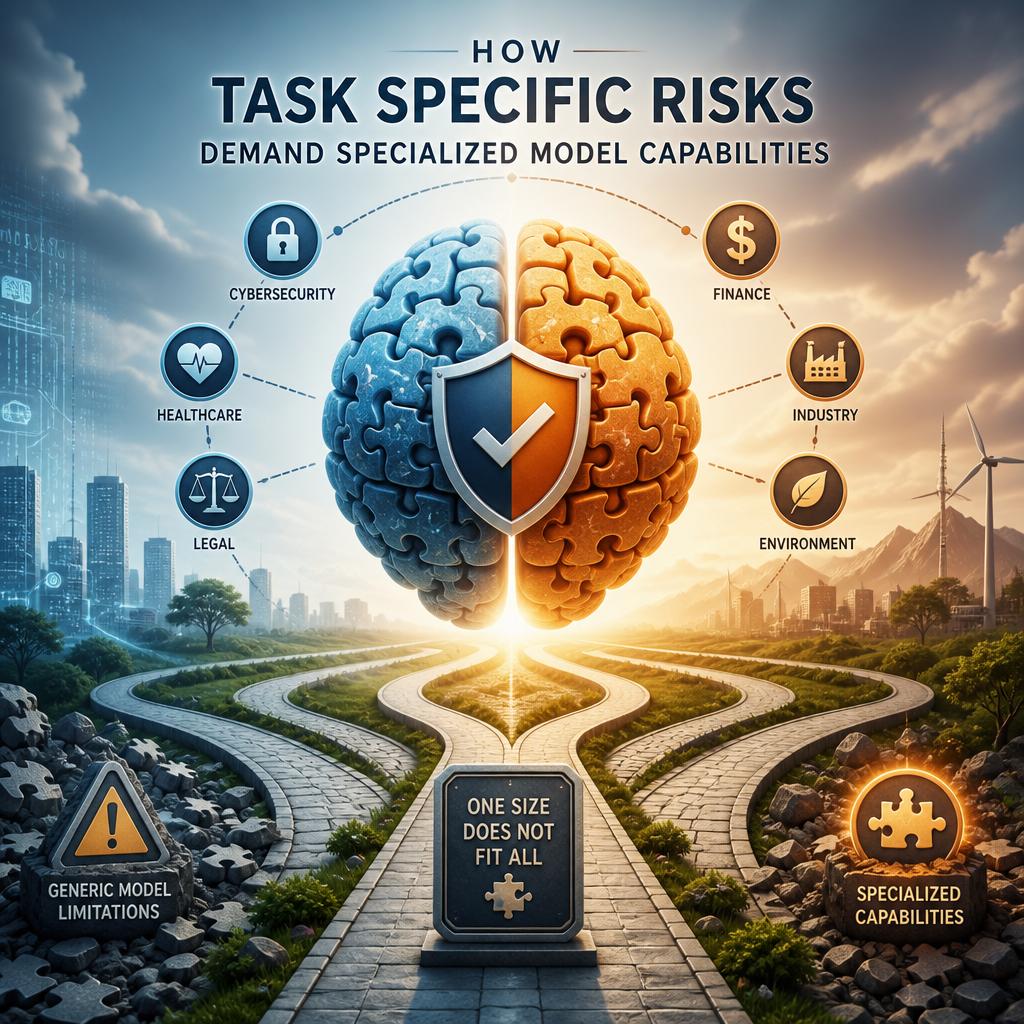
Match the system to the risk
Not every use case needs a specialized model, but not every use case should be handed to a general one either. A customer-support assistant can frequently enough recover from an imperfect answer by asking a follow-up question or passing the case to a person. That is very different from summarizing clinical records, reviewing legal documents, flagging suspected fraud, or assisting with industrial operations. In those settings, a missed detail, unsupported claim, or delayed escalation can have real consequences.
What matters is more than raw model capability. the surrounding workflow has to fit the job. Medical work may call for source-linked outputs and clinician review. Financial work may require policy checks, documented reasoning, and records that can be audited later. A creative writing tool can allow much more freedom becuase its output is usually a starting point,not a decision that affects someone’s rights,safety,or finances.
in many cases, the safest answer is a hybrid system: one model may handle language or summarization, while rules, retrieval tools, validation stepsand human reviewers handle the parts that require authority or domain judgment. The goal is not to make every system restrictive. It is indeed to make sure the level of freedom matches the cost of being wrong.
Keep authority outside the model
Even a capable model should not decide which data it can access or which actions it may take.Those choices belong to the institution using it. Governance sets the boundaries: approved use cases, access permissions, review requirements, and situations where a person must make the final call.
That matters when a system can do more than generate text. Sending external messages, approving payments, changing production settings, determining eligibilityor exposing sensitive records should not happen simply as a model produced a confident suggestion. Controls should limit each AI service to the data and tools it genuinely needs,require approval for consequential or irreversible actions,and keep records that allow the organization to investigate problems.
These safeguards are stronger when they are enforced outside the prompt. Prompts can tell a model what it should avoid, but they cannot reliably function as permission controls.A separate policy layer can restrict data access, block prohibited actions, remove sensitive informationand route uncertain cases to trained reviewers. That separation is useful: the model can assist with a defined task, while people remain responsible for decisions that carry real accountability.
Choose AI for the work it will actually do
A sensible selection process starts with a simple question: what, exactly, will this system support? drafting internal meeting notes is not the same as screening job applicants, summarizing clinical files, or suggesting financial actions. Before choosing a model, define the task boundary, who may be affected by an error, how serious that error could be, and whether a human must approve the output before it has an effect.
For low-result work, the focus may be usefulness, consistency, and tone. As the stakes rise, so should the controls. Work that affects people, money, safety, or sensitive information should have clear review paths, activity logs, and tested limits on what the system can do. In the highest-risk settings,AI may be best used as decision support rather than an autonomous decision-maker.
Deployment is not a one-time launch. Begin with a narrow workflow, test realistic edge casesand be explicit about what the system is not allowed to do. Review how it performs after release, watch for new failure patternsand give users a straightforward way to question or correct an output. A well-chosen model can still cause trouble if it is given too much access or trusted beyond its role.
There may never be a single model that is the right answer for every task. That is not a failure of AI; it is a reminder that good judgment still matters. The safest systems are built around the work at hand, with the right model, the right constraints, and the right people accountable for the outcome.
AI tools built by Emerald Force
Built and supported by Emerald Force.

You might also like
- How AI Writes Scripts: Scenes, Dialogue, and Structure
- Why One Model Cannot Serve Every AI Task Safely
- Keeping AI on Topic: Define Scope and Core Task
- Suspicious AI Content: Pause, Verify, Then Act
AI Worker Monitoring: Legal Limits Employers Face
- How AI Reads PDFs, Charts, Screenshots, and Photos
- Access Control in AI: Rules for Use and Access
- AI Rationales Aren’t Always Faithful Explanations
- AI for Homework: Tutoring Allowed, Final Answers Limited
- AI in Healthcare: The Risks of Overtrust