
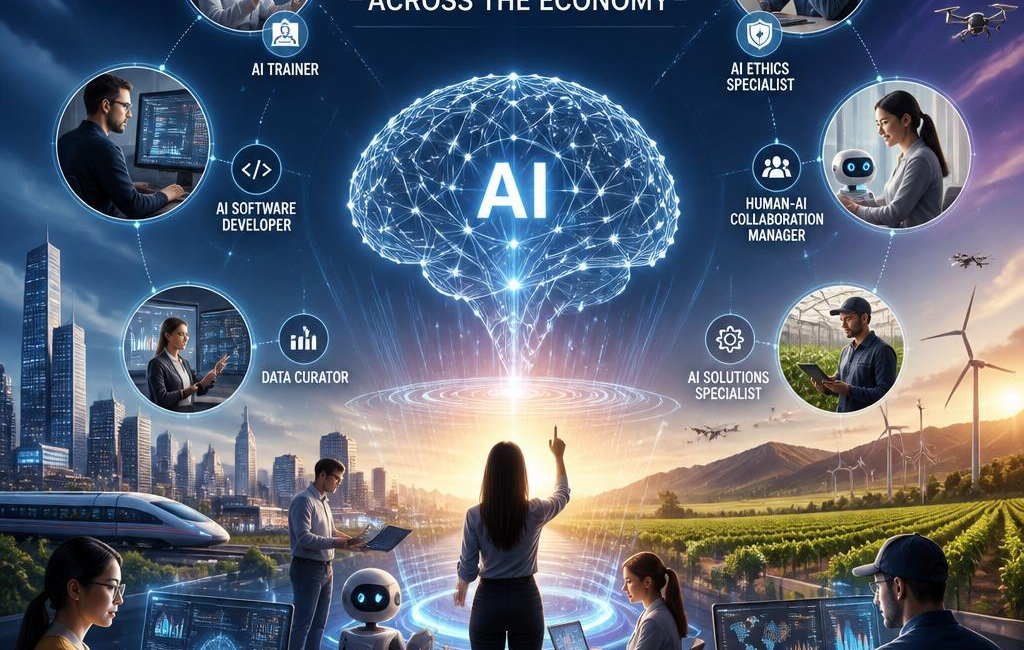
When people ask what new jobs AI is creating, the answer goes well beyond software developers and research scientists. As AI becomes part of everyday work, companies need people who can prepare the data, shape useful workflows, evaluate results, manage risk, and help employees use these tools responsibly. Many of those jobs will grow out of familiar fields rather than appear under a single, universal “AI” title.
AI Operations Is Becoming Everyday Work
AI adds a new layer of operational work between technical teams, business leaders, frontline employeesand customers. A hospital may need someone to introduce a clinical tool without disrupting patient care. A manufacturer may need a team member to monitor automated quality checks, investigate unusual resultsand ensure human reviewers stay involved where judgment matters.
The same pattern is emerging in retail,banking,insurance,logistics,media,and government.Someone has to define the workflow, document decisions, handle exceptions, and make sure an AI tool is used only for the purpose it was approved to support.
Job titles vary. One employer may call the role an AI operations manager, another a workflow specialist, automation coordinatoror responsible AI lead. The work is similar: reviewing AI-assisted tasks for errors, privacy issues, biasor policy conflicts; training employees on when to use a tool and when to escalate a problem; and turning day-to-day operational needs into clear requests for technical teams.
Human Judgment Still Has a Job to Do
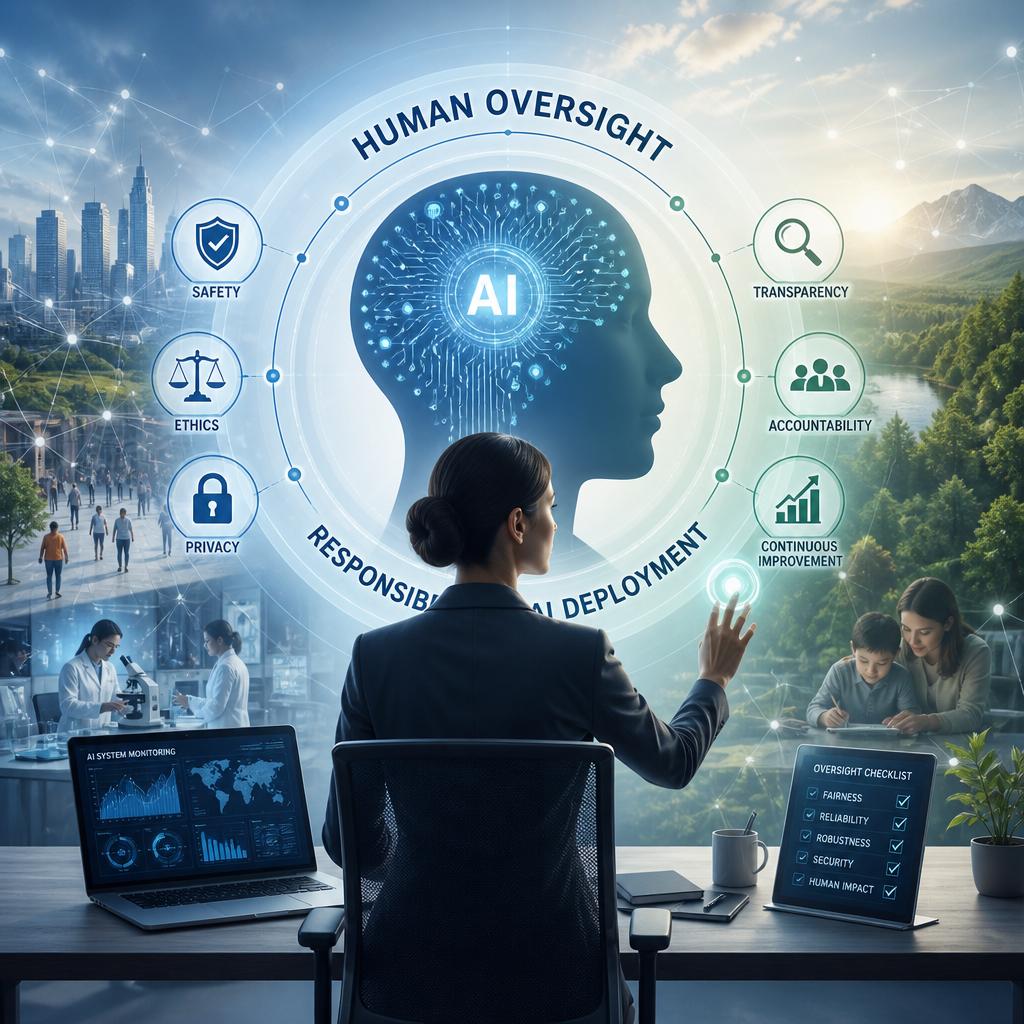
As AI moves from experimentation into real decisions, organizations need people who can recognize when an answer is wrong, incomplete, unfairor unsafe. That need reaches well beyond engineering teams.It includes AI quality reviewers, model-risk analysts, data governance specialists, compliance staff, content moderatorsand experienced professionals in health care, education, insuranceand finance.
These jobs are grounded in practical judgment. A reviewer may check weather an output is accurate enough for a particular task. A compliance lead may determine whether sensitive facts is being handled appropriately. A domain expert may spot missing context that a system could not reasonably understand on its own.
Oversight also gives organizations a clearer line of responsibility. AI can process information quickly, but it cannot decide what level of risk an institution should accept. People still need to set review rules, test unusual cases, document significant decisionsand speak up when a tool is being used outside its intended role. The strongest candidates for these roles will pair subject-matter expertise with a realistic understanding of where automated systems can go wrong.
The Less Visible Technical Jobs Behind AI
Much of the demand created by AI sits well away from the chatbot screen. Before a model can be usefulorganizations need dependable data, secure systemsand reliable ways to move information between tools. That is creating opportunities for data engineers,platform engineers,cloud and database specialists,machine-learning operations professionals,and security teams.
The work is frequently enough straightforward in concept, even if it is indeed technically demanding: cleaning and organizing data, setting access controls, maintaining data pipelines, monitoring systemsand helping teams deploy and maintain models.Poor data quality or weak infrastructure can undermine an AI project long before anyone sees an output.
this also opens doors for people with adjacent experience. A database administrator who learns modern data-pipeline tools, or a systems engineer who gains experience supporting model deployment, may move into AI-related work without becoming a machine-learning researcher. In practice, AI is creating demand for roles in data engineering, model evaluation, governance, product design, safetyand AI-enabled operations-not only for people building the models themselves.
Training Should Be Tied to Real Work
Not every new AI-related job requires coding. Employers also need people who can tell whether an AI response makes sense, protect confidential information, recognize missing contextand know when a human decision is required. That calls for practical AI literacy: a working understanding of what these tools do well, where they tend to failand how to check their output.
Adaptability matters, too. Job duties will continue to change as AI shifts routine tasks and introduces new review steps. But domain knowledge may be the most durable advantage. A nurse, claims adjuster, teacher, mechanic, accountantor customer-service professional brings context that a general-purpose system does not have. Their expertise helps determine whether an AI-generated suggestion is useful, misleadingor inappropriate for the situation.
The best training is built around real tasks, not generic demonstrations. Customer-service teams can practice reviewing AI-drafted replies for accuracy and tone. Procurement staff can learn how to verify AI-assisted supplier research.Technicians can learn to interpret machine-generated maintainance suggestions without bypassing safety procedures.
AI will change some jobs and create others, but the most useful new roles are unlikely to be defined by the technology alone.They will be shaped by the people who can connect AI tools to real work, question their limitsand remain accountable for the decisions that follow.
AI tools built by Emerald Force
Built and supported by Emerald Force.

You might also like
AI Worker Monitoring: Legal Limits Employers Face
- How AI Reads PDFs, Charts, Screenshots, and Photos
- Access Control in AI: Rules for Use and Access
- AI Rationales Aren’t Always Faithful Explanations
- AI for Homework: Tutoring Allowed, Final Answers Limited
- AI in Healthcare: The Risks of Overtrust
- Large Language Models: How They Learn Language
- The New Jobs AI Is Creating Across the Economy
- AI Can Support Peer Review, Not Replace Reviewers
- Can AI Create Logos? Speed, Originality, and Legal Risk