
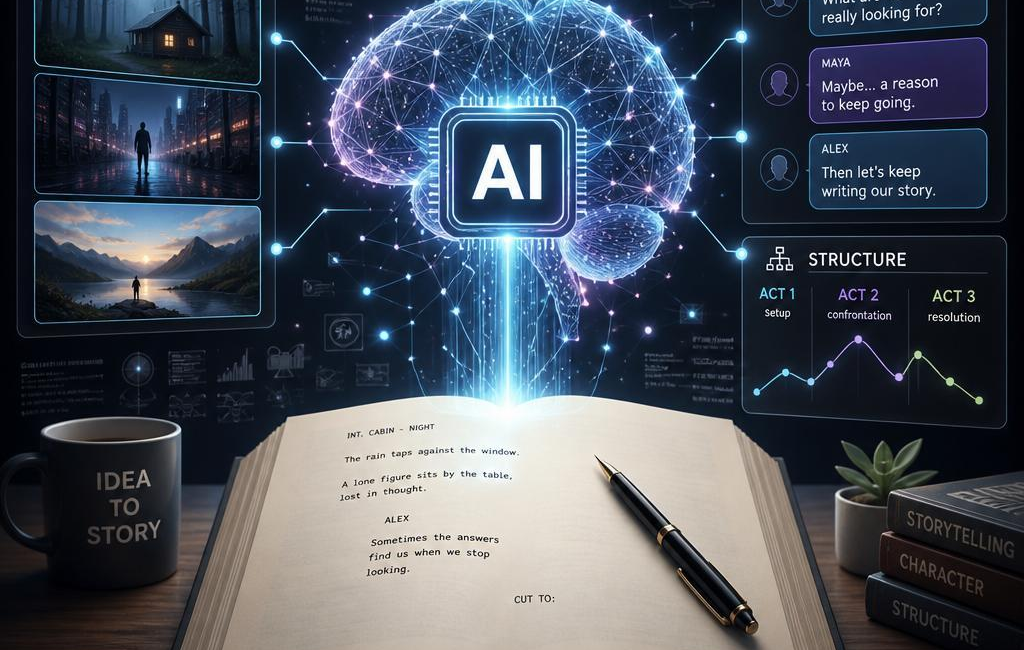
Can AI write scripts? Yes-it can help outline scenes, generate dialog, and polish structure. But the useful question is not whether it can produce pages. It can. The better question is whether those pages feel like a story someone would want to watch.
AI is most helpful when it gives a writer something to react to: a possible scene order, a rough exchange between characters, or a new way into a stalled moment. The writer still decides what matters, what sounds true, and what belongs to the story.
Building scenes that have a purpose
A scene needs more than a setting and a conversation. Something has to be at stake. One person wants an answer,an escape,forgiveness,proof,or control. Someone else-or the situation itself-gets in the way.
That is where AI can be useful. Give it the dramatic purpose of a scene, not just the surface details. “A tense meeting in a resturant” leaves too much open. “A detective realizes the witness is covering for her brother” gives the moment a direction. From there, AI can suggest actions, complications, setting detailsand possible turns in the exchange.
Scripts are visual,so the strongest scenes do not explain every emotion out loud. A cracked phone on the table,a character who refuses to sit,or a door left open after an argument can carry more weight than a long speech. AI can offer ideas like these, but they are starting points.The writer has to choose the detail that reveals character and know when to let the moment sit in silence.
Writing dialogue with character and subtext
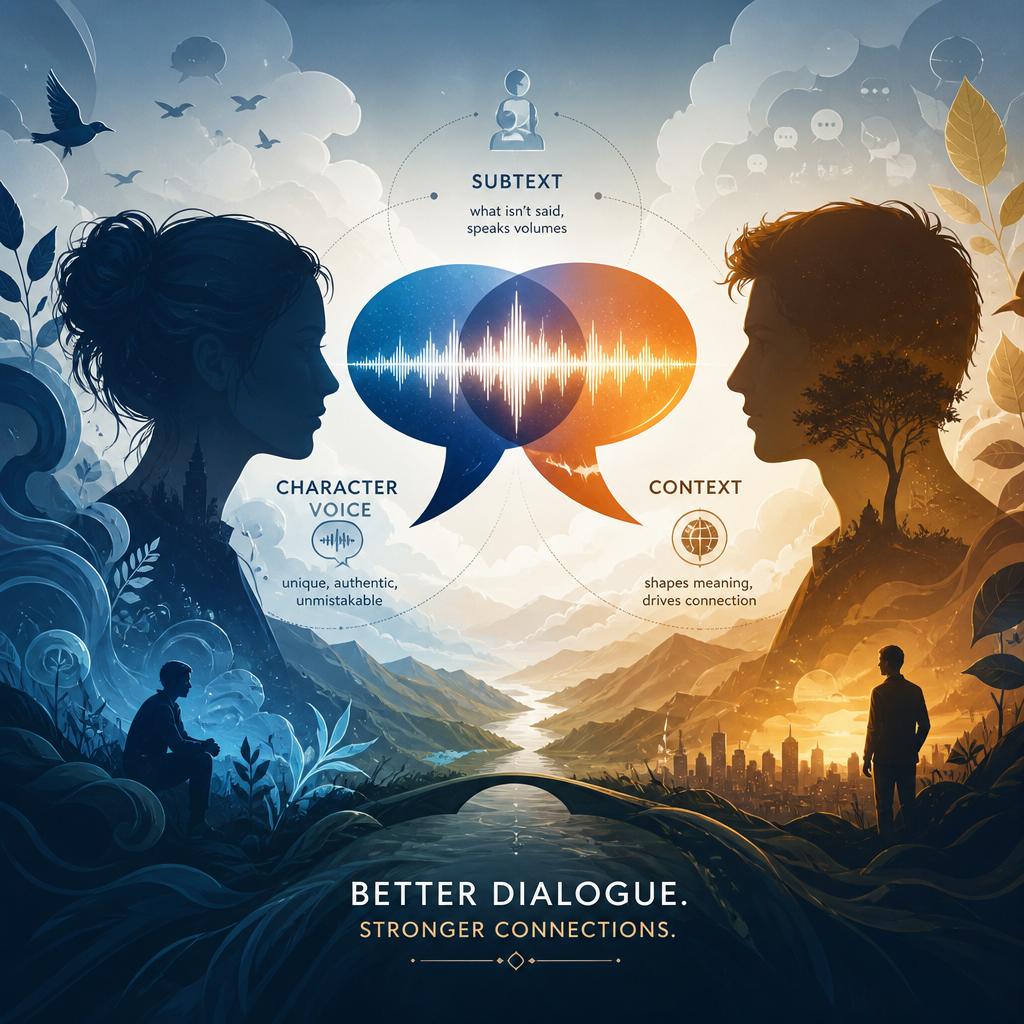
Dialogue feels flat when every character speaks with the same polished, plot-serving voice. AI can definitely help generate variations,but it needs a clear sense of who is talking. A cautious detective may ask short, pointed questions. An anxious sibling may talk too much. A proud executive may dodge a direct admission rather than risk appearing weak.
That does not mean every character needs a gimmick. voice comes through in smaller choices: what someone notices, how directly they answer, which words they avoid, and whether they speak in clipped fragments or long explanations. personality should shape the line before the plot does.
Subtext matters just as much. People rarely say exactly what they mean when they are frightened, defensive, attracted, ashamed, or trying to keep control of a situation. A line such as “You came back early” can sound like relief, suspicion, disappointmentor a warning. The meaning comes from what happened before, what each person knows, and what they cannot afford to say.
Before asking AI to draft or revise a conversation, it helps to establish three things: what each character wants in that moment, what they are hidingand what they stand to lose if the exchange goes badly. Those details give the dialogue pressure and keep it from becoming a simple delivery system for facts.
Connecting scenes into a story
A script gains momentum when each scene changes the situation. A character tries to get something, meets resistance, makes a choice, and leaves with a new problem or consequence. Without that shift, scenes can start to feel like loosely connected conversations.
AI can definitely help track story questions, character goals, emotional tensionand unresolved conflicts across a draft. It can also suggest what might logically happen next. Still, the writer needs to test whether the next scene follows because of what just happened-not simply because the outline says it is time for another beat.
Structure also gives dialogue a reason to exist. Early scenes may reveal a want or a fault line between characters. Middle scenes should complicate that tension through setbacks, reversalsand competing motives. Later scenes force choices that cannot be postponed. A promise,object,fear,or unfinished argument introduced early can return later with a different meaning.That is how scenes begin to feel connected: consequences travel forward.
Making an AI draft feel less generic
An AI-generated script is best treated as a first pass. It may provide a workable sequence quickly, but workable is not the same as memorable. Watch for convenient turns, familiar emotional beatsand dialogue that explains things characters would already understand.
Originality often comes from specific behavior, not a bigger twist. A character might avoid an obvious question, change the subject at the wrong momentor do something that contradicts what they just claimed to want. Those choices can create tension as they feel personal. Reading the draft aloud is a good test. If a line could belong to almost anyone in almost any story, it probably needs another pass.
Pacing needs attention too. AI may keep events moving while giving every moment the same weight. Let some reactions land. Cut others short. Put pressure on characters before they have time to prepare. Emotion does not come from labeling a feeling; it comes from consequence, conflictand what a character cannot bring themselves to say.
Use AI as a writing partner, not the final voice
AI can help writers find the bones of a script: scenes with a clear purpose, dialogue shaped by characterand a structure that carries consequences from one moment to the next. Its output is most valuable when it gives you options, not when it replaces judgment.
The final script still needs a human hand. It needs someone to spot the predictable line, keep the revealing silenceand choose the detail that makes a scene feel like it could belong to no other story.
AI tools built by Emerald Force
Built and supported by Emerald Force.

You might also like
- How AI Writes Scripts: Scenes, Dialogue, and Structure
- Why One Model Cannot Serve Every AI Task Safely
- Keeping AI on Topic: Define Scope and Core Task
- Suspicious AI Content: Pause, Verify, Then Act
AI Worker Monitoring: Legal Limits Employers Face
- How AI Reads PDFs, Charts, Screenshots, and Photos
- Access Control in AI: Rules for Use and Access
- AI Rationales Aren’t Always Faithful Explanations
- AI for Homework: Tutoring Allowed, Final Answers Limited
- AI in Healthcare: The Risks of Overtrust