
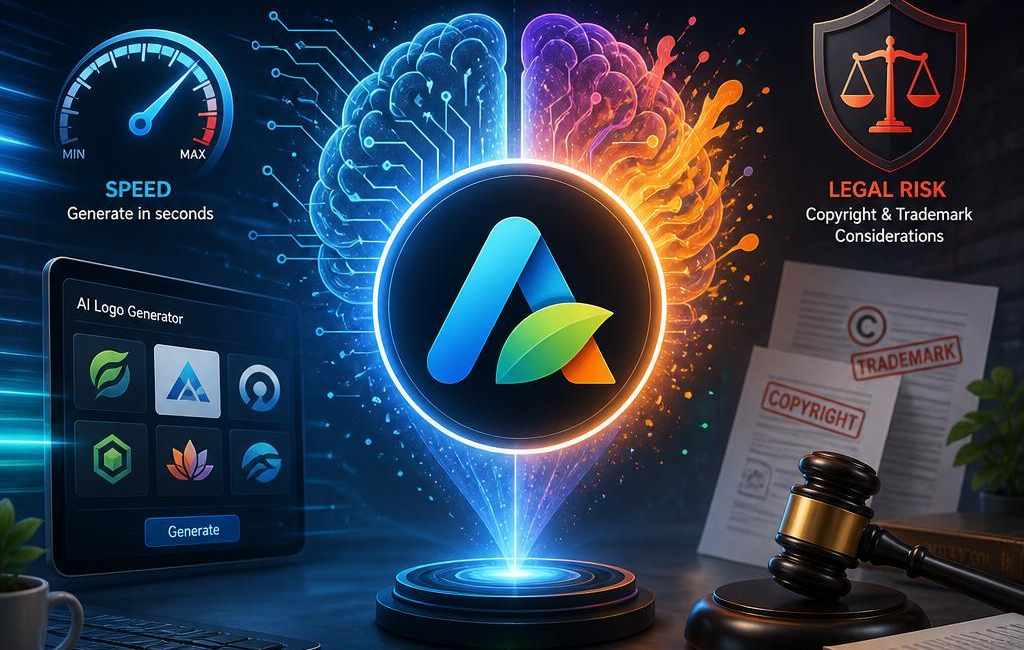
can AI make logos? Yes-it can generate visual concepts quickly and cheaply. That can be useful when you are still testing a business idea or trying to pin down a visual direction. But a usable brand identity needs more than an attractive image.It needs judgmentoriginalityand a careful review of legal risk before it goes on a website, product, or sign.
Fast ideas, not finished branding
AI logo generators can produce a surprising range of directions in minutes: wordmarks, abstract icons, badge-style marks, color palettesand type treatments. For a founder at the very beginning,that speed can be helpful. You can compare a clean geometric look with something more hand-drawn or conventional before spending heavily on design work.
The benefit is not that AI delivers an instant,finished brand. It is that it makes early exploration easier. A generated image can help you react to a direction: “too corporate,” “too playful,” “this feels closer.” That is useful facts, even if the image itself never makes it past the first round.
It can also be a reasonable low-cost option for mood boards, internal presentations, landing-page testsor early prototypes. The trouble starts when a quick draft is treated as a permanent identity. A logo may look fine in a large preview yet fail on packaging,signage,invoices,or a phone screen. It may also be harder to reproduce cleanly than it first appears. Use the output as a conversation starter or a brief for a designer-not as proof that the brand is ready to launch.
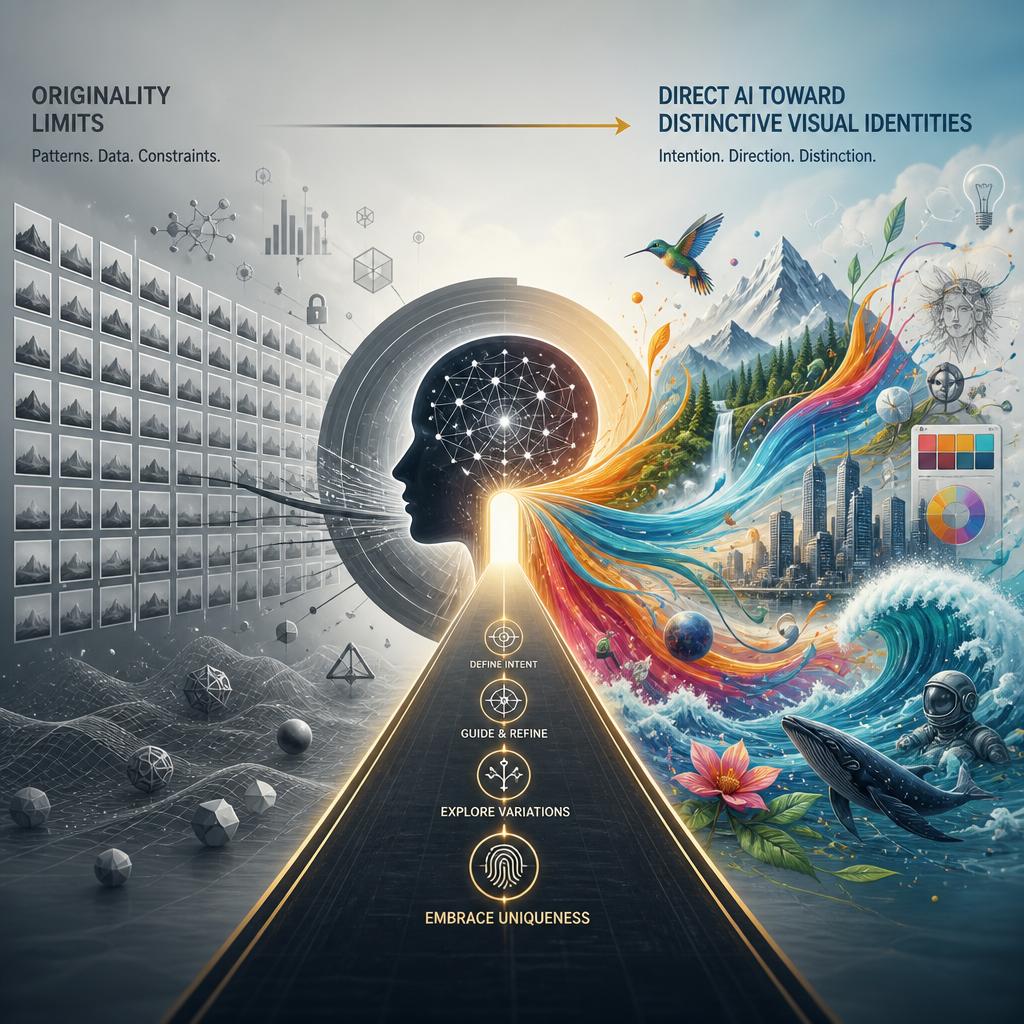
Were originality still matters
AI can make a logo look polished, but polish is not the same thing as originality. Many generated concepts lean toward familiar visual shorthand: abstract initials, geometric animals, gradient spheres, generic “tech” symbolsand other designs that feel convincing for a moment but coudl belong to almost anyone.
A distinctive identity comes from choices that require context. What should the brand avoid? Which references suit the businessand which would feel borrowed or off-key? Should it feel quiet, practical, playful, severe, handmadeor formal? Those decisions give a logo a point of view. A generator can respond to them, but it cannot reliably make them for you.
Better prompts describe that point of view instead of simply naming an object. Rather than asking for “a modern logo for a coffee shop,” try defining the mood and the boundaries: perhaps one color first, no literal cup imagery, no gradients, readable at a small sizeand influenced by local printmaking or old transit signage without copying any particular brand. The more specific the creative brief, the more useful the results tend to be.
The strongest process is usually simple: generate a range of rough directions, identify what is worth keeping, then redraw and refine it. Test the idea against competitors and remove the familiar details that make it feel generic. The final logo should reflect intentional human decisions, not just the most appealing variation from a prompt.
The legal questions behind an AI logo
A logo made in seconds can create problems that take much longer to resolve. The most practical concern is whether the finished mark is too close to someone else’s protected work or brand identity. Asking for a design “in the style of” a well-known company is an obvious risk, but accidental similarity can happen without directly naming a competitor.
Trademark issues are especially important because the question is not limited to exact copies. A similar symbol, name, color treatmentor overall commercial impression may still confuse customers in the same or related market. Copyright raises a different set of questions: a generated image might resemble protected artwork, while a design with little meaningful human authorship may be harder to protect as yoru own. Ownership and usage rights can also depend on the AI provider’s terms, which may place obligation for clearance on the user and may not promise exclusivity.
For that reason, do not assume that an AI tool’s claim that an image is “original” means it is indeed legally clear. Save your prompts, drafts, edits, and source files so you can document the human work that went into the final design. Then search trademark databases and look closely at businesses in the markets where you plan to operate. If the logo will appear on products, packaging, advertisingor the company name itself, a qualified trademark attorney is the right person to assess the actual risk.
How to turn a draft into a usable mark
Before approving an AI-created concept, put it through ordinary real-world tests. View it at thumbnail size, in black and whiteand on the backgrounds where it will actually be used. A mark that looks extraordinary in a generator preview may disappear as a favicon or become awkward on a storefront sign. Refine the type, spacing, proportionsand balance by handand replace generic icons or overly literal imagery where possible.
- Check that the logo stays clear at small sizes and in one color.
- Confirm commercial licensing for any fonts or graphic elements used.
- Keep a record of prompts, drafts, editsand the final approved artwork.
Then do a sensible clearance review. Look for similar names and visual marks in your industry,not just identical copies.reverse-image searching can be a helpful early screen, but it is not a substitute for a proper trademark search. If the brand matters enough to put on products, ads, packagingor a public website, it matters enough to have the final mark reviewed professionally.
So,can AI create a logo?
Yes. AI is useful for generating options, testing visual directionsand getting past a blank page. It is less reliable as the final decision-maker. The best results come from treating AI as an early-stage design tool, then bringing in human judgment for refinement, distinctivenessand legal clearance. A logo should not merely look good-it should clearly belong to your business.
AI tools built by Emerald Force
Built and supported by Emerald Force.
You might also like
AI Worker Monitoring: Legal Limits Employers Face
- How AI Reads PDFs, Charts, Screenshots, and Photos
- Access Control in AI: Rules for Use and Access
- AI Rationales Aren’t Always Faithful Explanations
- AI for Homework: Tutoring Allowed, Final Answers Limited
- AI in Healthcare: The Risks of Overtrust
- Large Language Models: How They Learn Language
- The New Jobs AI Is Creating Across the Economy
- AI Can Support Peer Review, Not Replace Reviewers
- Can AI Create Logos? Speed, Originality, and Legal Risk