
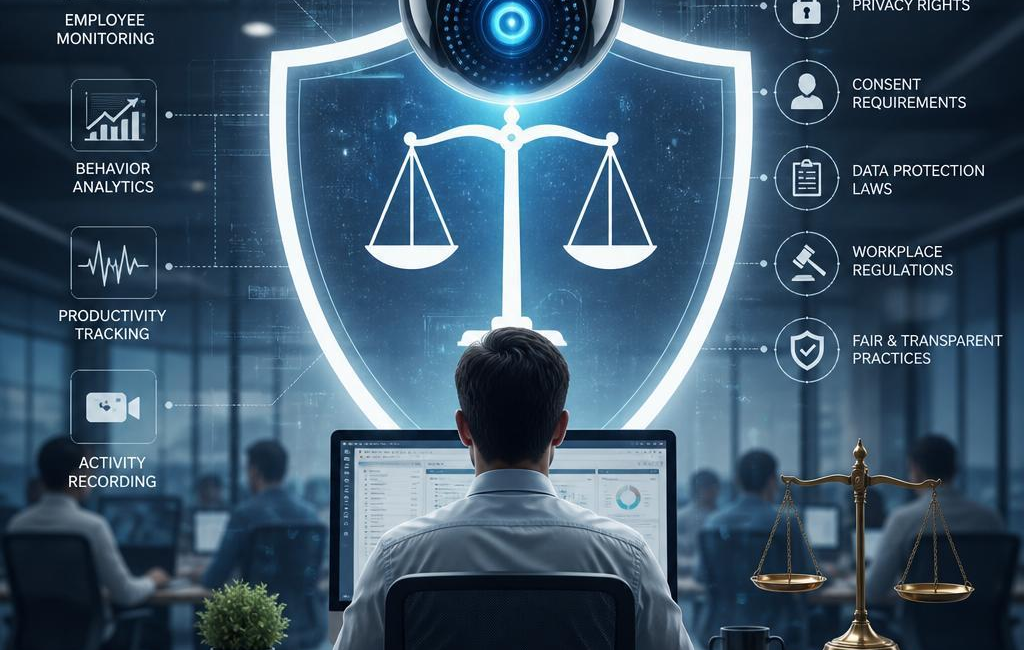
Employers can often monitor workers with AI, but that does not mean every form of surveillance is lawful or wise. The rules depend on where employees work, what the system collects, how the information is usedand whether it affects decisions such as discipline, scheduling, pay, promotionor termination.Privacy, labor, discrimination, biometric-data, and data-security laws may all come into play.
The safest approach is to start with a specific business need and collect only what is necessary to meet it. A tool designed to protect company systems or verify time worked raises different questions from one that tracks keystrokes all day, records conversationsor tries to measure attention. Employers should be able to explain the purpose in plain language-and show that the practice is not broader than the job requires.
Where the Legal Lines Are Drawn
AI-based monitoring is not a free pass to watch everything, everywhere. Employers generally need a legitimate, work-related reason for the monitoring and should consider whether the same goal can be met with less intrusive methods. Collecting private messages, off-duty activity, health informationor other personal details that have little connection to the job can create serious legal and employee-relations problems.
Notice matters, but notice alone is not always enough.A policy may tell employees that company systems are monitored, yet the employer can still face questions if the actual practice is overly invasive, poorly secured, or used in ways workers were not told about. The same is true when automated scores are treated as conclusive evidence of poor performance. A productivity flag may reflect a disability-related work pattern, language differences, caregiving interruptions, unreliable internet accessor the practical realities of field and remote work.
Employers also need to account for union agreements, state privacy requirements, biometric-information lawsand industry-specific rules. Audio recording, video surveillance, location trackingand detailed keystroke monitoring can carry different legal limits depending on the workplace and jurisdiction.
give Employees a Clear Notice
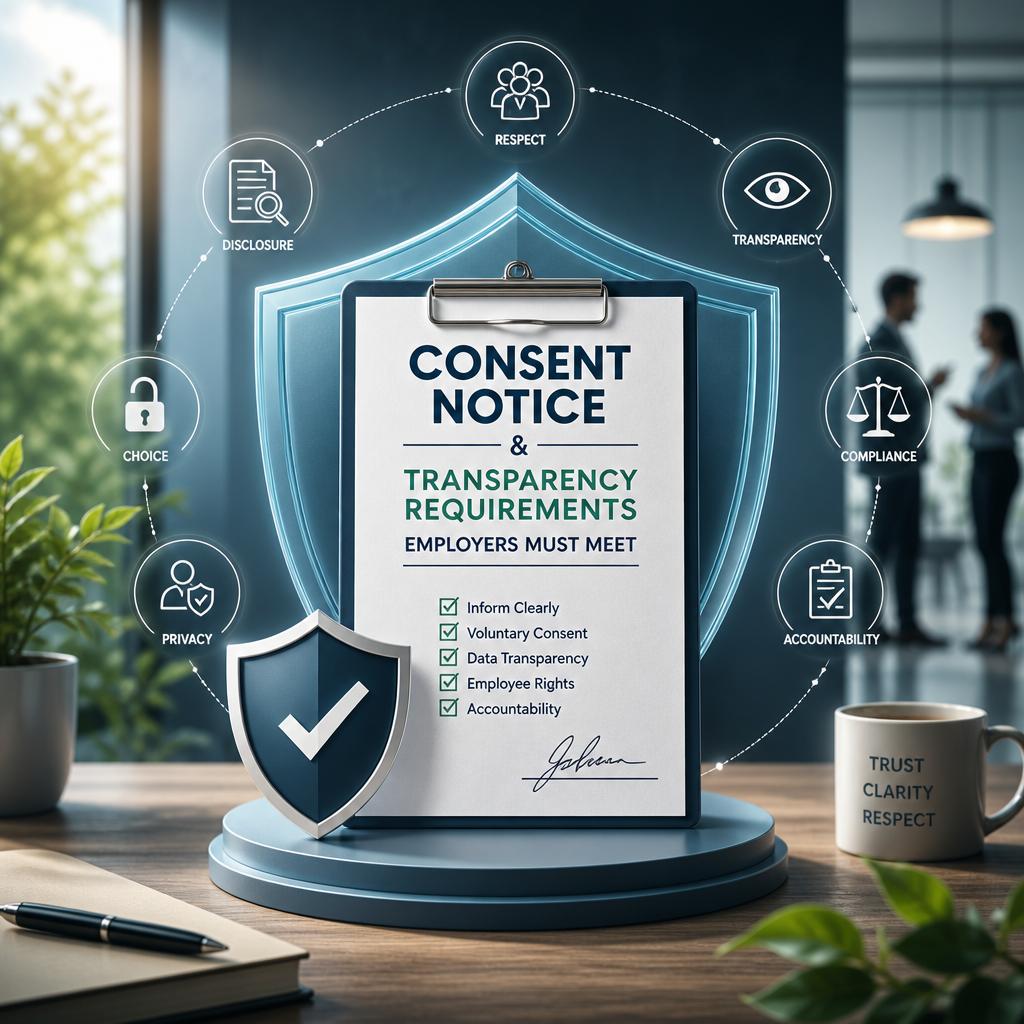
If an employer uses AI to monitor workers,employees should not have to guess what the software is doing. A vague sentence buried in a handbook is rarely a good substitute for a clear, timely explanation. Before monitoring begins,workers should be told what data is collected,which devices,accounts,or workspaces are covered,and why the information is needed.
The notice should also explain whether the system reviews emails, screen activity, location, calls, video, keystrokesor biometric information. If the tool produces scores, alerts, rankings, or other automated assessments, employees should understand how those outputs might potentially be used and whether they could influence employment decisions.
A useful notice covers the practical details: who can see the records,how long they will be kept,whether a vendor receives the data,and how an employee can raise concerns about an inaccurate result. It should also draw a clear line between company systems and personal devices. That distinction is especially crucial in remote-work and bring-your-own-device arrangements, where monitoring can easily spill into personal time or private information.
Consent may be required in some settings, particularly for certain forms of biometric collection or recording. Even where an employee signs an acknowledgment,however,that does not eliminate other legal obligations. Employers still need to consider whether the monitoring is justified, proportionate, secureand consistent with applicable labor and privacy rules.
Higher Risks With Biometric and Behavioral data
Biometric and behavioral monitoring deserve extra caution. Facial templates, voiceprints, typing patterns, eye-movement dataand inferred attention or fatigue scores can reveal far more than ordinary timekeeping records. The fact that a vendor converts the information into a template, scoreor “anonymous” dataset does not necessarily remove the risk. If the data can be connected to an individual worker or used in an employment decision,it may still be subject to privacy and biometric-data requirements.
The risk increases when a system moves beyond recording activity and starts making judgments about a person.Software that flags unusual typing,predicts disengagement,or ranks employees by behavioral signals can be wrong. it may also produce uneven results for people with disabilities, workers using assistive technology, employees with different communication stylesor people whose jobs do not fit a standard desk-based pattern.
Before adopting this kind of tool, employers should examine three questions: Is the information truly necessary for the stated purpose? Could the output affect a worker’s job, pay, scheduleor future opportunities? And are the data protected and deleted on a defined schedule? Short retention periods, limited access, clear vendor restrictionsand documented deletion practices are not just good housekeeping-they can reduce the harm if the data is misused or exposed.
Build Safeguards Before the Tool Goes Live
Good workplace surveillance practices begin with a written purpose, not a software purchase. Employers should identify the problem they are trying to solve, decide what information is actually neededand prohibit using the data for unrelated purposes later. The policy should state what is monitored, who can access the records, how long data is retained, and when monitoring results may be considered in employment decisions.
Most importantly, an automated score should not be the final word in a disciplinary or other high-impact decision. Someone with appropriate authority should review the underlying information, consider the employee’s explanationand look for signs that the tool may have misunderstood the work. Workers need a realistic way to question inaccurate records and request correction.
Employers should keep records of employee notices,vendor terms,access permissions,policy updates,and reviews of how the tool performs in practice.Access to raw monitoring data should be limited to people with a legitimate need to see it. If the company wants to expand a tool to a new team, locationor purpose, it should revisit the legal and practical risks rather than treating the original approval as permanent.
AI monitoring can be useful in a workplace, but it effectively works best when it is indeed narrow, transparentand subject to human judgment. When a company cannot clearly explain why it needs the data, how long it will keep it, and how it will prevent unfair results, that is usually a sign to slow down and reconsider the plan.
AI tools built by Emerald Force
Built and supported by Emerald Force.
You might also like
AI Worker Monitoring: Legal Limits Employers Face
- How AI Reads PDFs, Charts, Screenshots, and Photos
- Access Control in AI: Rules for Use and Access
- AI Rationales Aren’t Always Faithful Explanations
- AI for Homework: Tutoring Allowed, Final Answers Limited
- AI in Healthcare: The Risks of Overtrust
- Large Language Models: How They Learn Language
- The New Jobs AI Is Creating Across the Economy
- AI Can Support Peer Review, Not Replace Reviewers
- Can AI Create Logos? Speed, Originality, and Legal Risk