
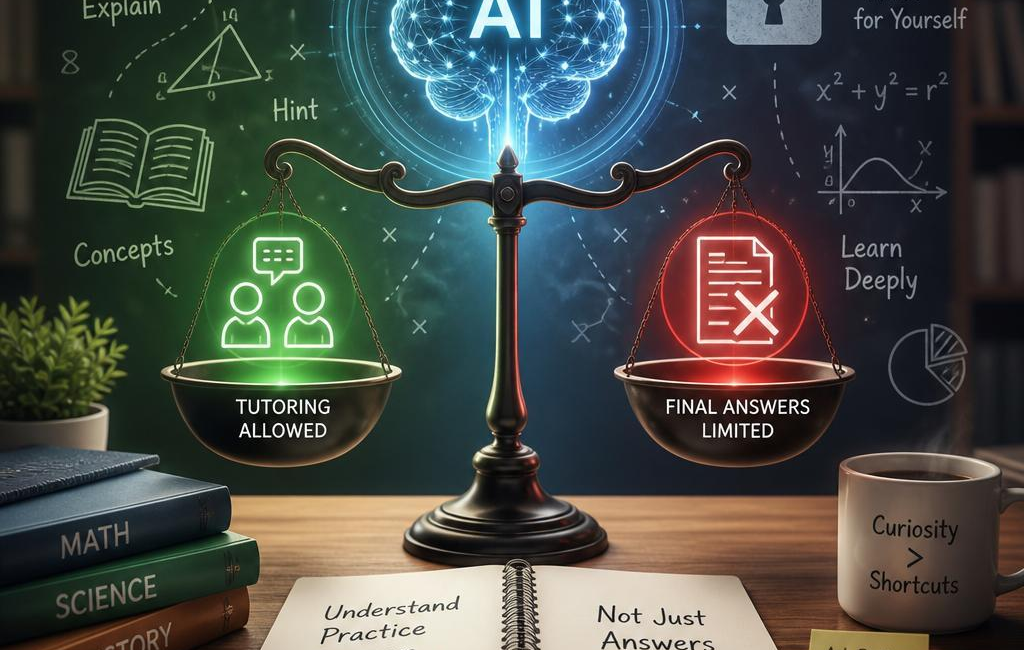
Can students use AI for homework? In many cases, yes-but the way they use it matters. AI can be useful for tutoring, brainstormingand feedback, while school rules may limit its use for producing final answers. The goal is to let students get help without handing over the learning.
Where AI help makes sense
Good homework support helps a student think more clearly. An AI tool can explain a hard concept in simpler language, ask a useful question, provide a similar exampleor help identify where an approach went wrong. That is closer to tutoring than doing the assignment for someone.
A simple test is whether the student could explain the answer, defend the reasoningand handle a similar problem on their own. If the answer is yes, the tool probably supported learning. If the student could copy and submit the response without really understanding it, the line has likely been crossed.
- Helpful: “Show me how to set up this equation, then give me a similar one to try.”
- Helpful: “Point out where the evidence in my paragraph does not support my claim.”
- Not helpful: “Write my final essay” or “Complete this worksheet for me.”
Students get more out of AI when they make an attempt first. They can then ask for a hint, compare their work with an explanationand revise in their own words. The final duty still belongs to the student: checking facts, calculations, sources, citationsand the wording they turn in.
Use AI as a study partner
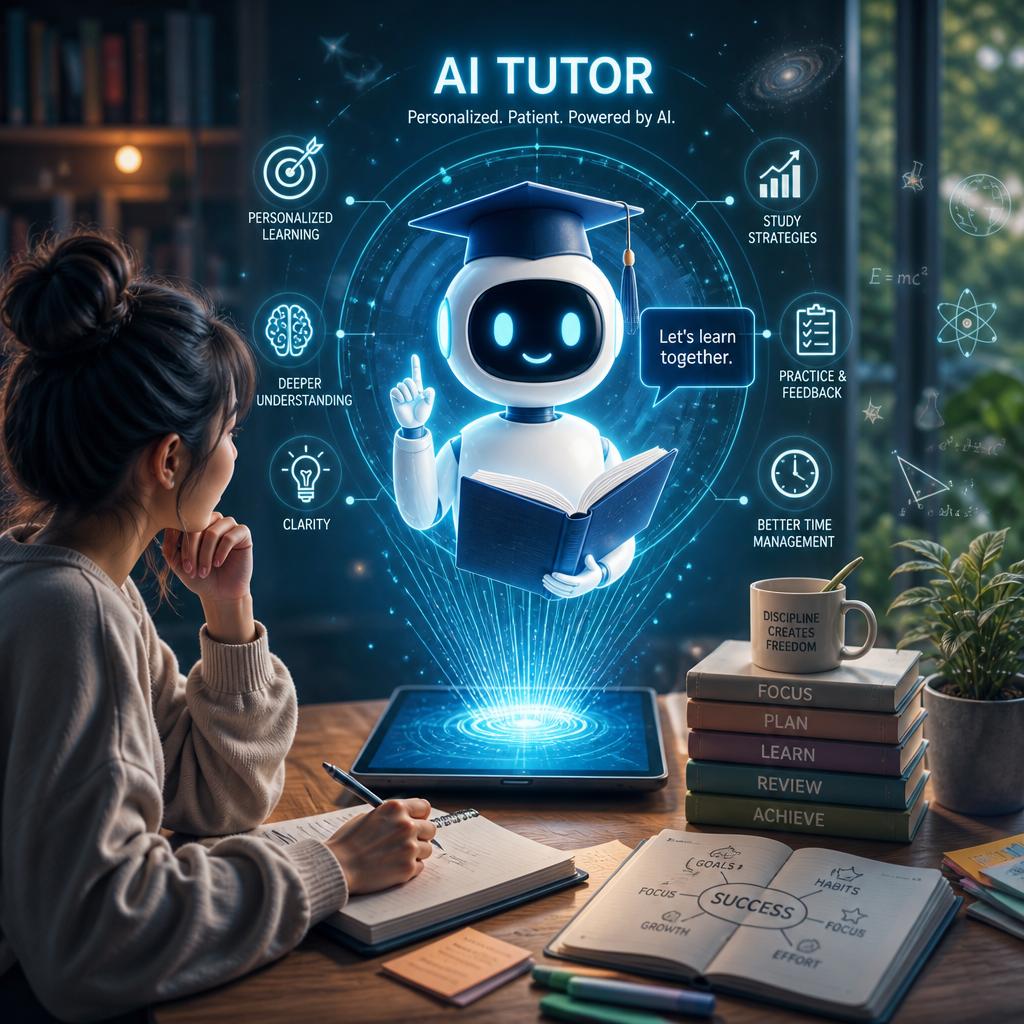
AI is most useful when it behaves like a patient tutor, not a shortcut to a finished assignment. A student might ask for a concept to be explained at their grade level, request a worked example on a comparable problemor ask for questions that test their understanding. For writing, it can help generate possible angles, flag an unclear sentenceor give feedback on an early draft without replacing the student’s ideas and voice.
A clear prompt can set the right boundary: “Help me understand the next step, but do not solve the problem for me.” Students can also ask for three practice problems, hints onlyor a short study plan for material they missed.
The best follow-up is not to accept the response at face value.Students shoudl compare it with their notes, the assigned readingand what their teacher covered in class.Then they should try explaining the idea back in their own words. That small step makes it much easier to tell whether they learned something or simply received an answer.
Why final answers need limits
Homework is supposed to show what a student can do and help them practice what they do not yet no. When AI produces a polished final response for a graded assignment, it can hide gaps in understanding. It also makes it tough for teachers to see where a student needs help.
That does not mean students should be left stuck.AI can explain a missing step in an algebra problem, ask a student to justify a conclusionor point out that a thesis is too broad. It can review an outline or respond to a partial draft. But it should not take over by writing the final essay, completing every question on a worksheetor answering a quiz meant to be completed independently.
When a request goes too far,the most useful response is a redirect: break the task into smaller steps,ask what the student has already tried,or offer a similar problem for practice. That keeps the focus on learning rather than simply getting to the finish line.
set clear rules at home and school
Clear expectations keep AI from becoming either a forbidden mystery or an answer machine.Students should know which uses are allowed for a particular assignment. Asking for an explanation, practice questionsor feedback on a draft may be fine. Submitting AI-written work as personal work,pasting in an answer they cannot explain,or using a chatbot during an assessment without permission usually is not.
Teachers can make this easier by including a short AI-use note with assignments and assessments. Families can help by asking what the student learned, not just whether the homework is finished. If a student used AI in a meaningful way to brainstorm, studyor revise, they should follow the school’s expectations for acknowledging that help.
The most practical rule is also the simplest: AI can support the learning process, but it should not replace the student’s own thinking. Used that way, it can be a useful tutor-one that helps students become more independent, not less.
AI tools built by Emerald Force
Built and supported by Emerald Force.
You might also like
AI Worker Monitoring: Legal Limits Employers Face
- How AI Reads PDFs, Charts, Screenshots, and Photos
- Access Control in AI: Rules for Use and Access
- AI Rationales Aren’t Always Faithful Explanations
- AI for Homework: Tutoring Allowed, Final Answers Limited
- AI in Healthcare: The Risks of Overtrust
- Large Language Models: How They Learn Language
- The New Jobs AI Is Creating Across the Economy
- AI Can Support Peer Review, Not Replace Reviewers
- Can AI Create Logos? Speed, Originality, and Legal Risk