

The Evolution of Workforce Dynamics in the age of Artificial Intelligence
As artificial intelligence continues to mature, its impact on the workforce is more nuanced than the traditional fear of wholesale job replacement. In reality, AI acts as a powerful tool that reshapes existing roles rather than simply eliminating them. Employees find themselves collaborating with smart algorithms to increase productivity, improve decision-makingand focus on higher-value tasks. This fusion of human creativity and machine efficiency fosters a workplace where skills in emotional intelligence, critical thinkingand complex problem-solving become essential, while routine or repetitive jobs are increasingly automated.
Organizations are also recognizing the need to retrain and upskill their workforce in response to AI-driven changes. The evolving landscape includes:
- Creation of hybrid roles combining technical and domain expertise
- Greater emphasis on continuous learning programs
- Enhanced collaboration between humans and AI systems
- Advancement of ethical frameworks guiding AI integration in workflows
| Traditional Job Role | AI-Enhanced Role | Key Skill Shift |
|---|---|---|
| Data Entry Clerk | Data Quality Analyst | Analytical Insight |
| Customer Support Agent | AI-Assisted Customer Experience Specialist | Emotional Intelligence |
| Manufacturing worker | Automation Supervisor | Technical Oversight |
By embracing this evolution, the workforce adapts to a future where AI is not an adversary but a catalyst for innovation and human potential.
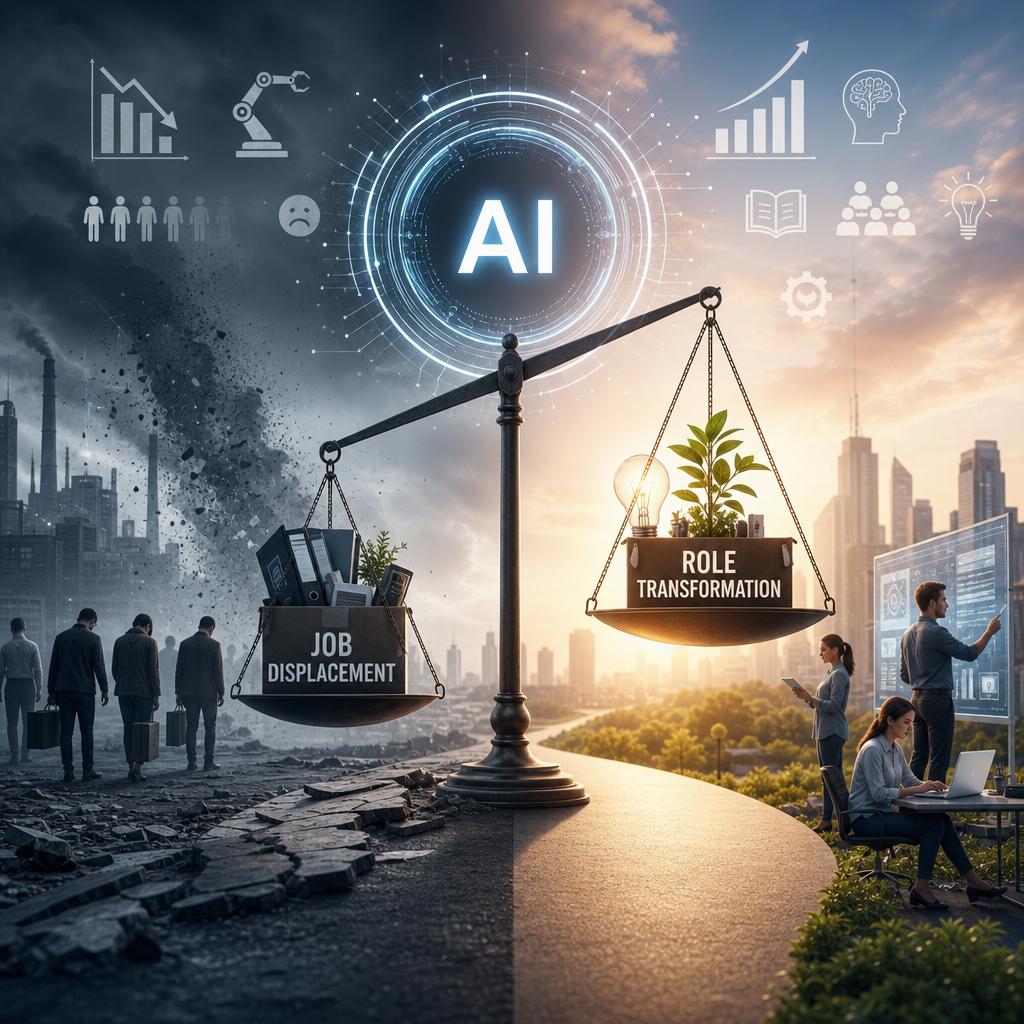
Assessing the Impact of AI on Job Displacement versus Role Transformation
As artificial intelligence proliferates across industries,it becomes crucial to delineate between jobs that face outright replacement and those undergoing substantial evolution. While some repetitive and manual tasks are increasingly automated-leading to displacement in sectors like manufacturing and data entry-many roles are being redefined rather than eradicated. AI amplifies human capabilities by handling routine operations, freeing workforce attention to concentrate on strategic, creativeand interpersonal functions that machines cannot replicate. This shift emphasizes collaboration between human insight and machine precision,creating hybrid roles that blend technology management with domain expertise.
Consider the following dimensions where AI catalyzes role transformation versus outright job displacement:
- Automation of routine tasks: Leads to job losses in narrowly defined repetitive roles.
- Augmentation of skilled professionals: Enhances productivity and decision-making in fields such as healthcare, legaland finance.
- Creation of new roles: Emergence of AI specialists, data analystsand ethicists required to manage, interpretand govern AI systems.
| Sector | Primary Impact | Example Role Transformation |
|---|---|---|
| Manufacturing | Displacement | Transition from assembly line worker to robot operator |
| Healthcare | Role transformation | From diagnostic technician to AI-assisted diagnostician |
| Marketing | Augmentation | Digital marketing strategist enhanced by AI-driven insights |
Strategies for Workforce Adaptation and Skill Development Amidst AI Integration
Adapting to the rapid infusion of AI in the workplace demands a proactive and strategic approach to skill enhancement. Organizations and employees alike must embrace a culture of continuous learning, focusing on reskilling and upskilling initiatives tailored to evolving job requirements. Critical skills such as complex problem-solving, emotional intelligenceand digital literacy will become indispensable as AI systems take over repetitive or routine tasks. To facilitate this transformation, companies can implement customized training programs that blend technical know-how with soft skills development, enabling their workforce to thrive alongside clever technologies.
- Collaborative learning environments: Encourage cross-functional teams to share AI-related insights and practices.
- Mentorship and coaching: Pair AI-savvy employees with those adapting to new roles to accelerate knowledge transfer.
- Flexible learning platforms: utilize e-learning, micro-credentials, and blended training to fit diverse learning paces.
| Strategy | Focus Area | Outcome |
|---|---|---|
| personalized Learning Paths | Role-specific AI Competencies | Increased Engagement & Mastery |
| Cross-Disciplinary Workshops | Interpersonal + Technical Skills | Enhanced Team Synergy |
| Continuous Feedback Loops | Performance & Skill Adaptation | agile Workforce Adaptability |
Equipping the workforce for an AI-driven future also involves redefining roles to leverage human creativity and strategic thinking. As automation assumes transactional duties, employees should focus on tasks that machines cannot easily replicate-such as critical decision-making, innovationand relationship management. This paradigm shift calls for leadership to champion a mindset that views AI as an augmentative force rather than a replacement threat. Businesses that invest in clear dialog, inclusive change managementand interdisciplinary collaboration will cultivate resilient teams capable of navigating the complexities introduced by AI integration.
policy Recommendations to Foster Inclusive Employment in an AI-Driven Economy
To pivot successfully in an AI-driven economy, policy must emphasize adaptive workforce strategies that cushion the disruptive effects of automation while maximizing new job opportunities. Governments and organizations should implement extensive retraining programs focusing on digital literacy, critical thinkingand emotional intelligence-skills AI finds challenging to emulate. Moreover, incentivizing industries to adopt human-centric AI collaborations can foster innovation without sidelining employees. Policies encouraging flexible work arrangements and continuous learning will also enable a smooth transition, ensuring workers remain relevant as roles evolve.
Moreover, equitable access to technology and education must be prioritized to prevent widening socio-economic disparities. The establishment of public-private partnerships can support investment in infrastructure and skill development tailored to emerging sectors.Consider the following framework highlighting key policy actions and their intended impacts:
| Policy Action | Purpose | Expected Impact |
|---|---|---|
| subsidized Upskilling Programs | Enhance workforce adaptability | Reduced job displacement |
| AI-Human Team incentives | Promote collaborative innovation | Creation of hybrid roles |
| Global Digital Access | bridge technology gaps | Inclusive economic participation |
| Flexible Labor Regulations | Support non-traditional work models | Improved employment resilience |