

The Strategic Imperative of Implementing an Internal AI Gateway
Unlocking seamless integration across multiple AI tools and platforms is no longer a luxury but a necessity for modern enterprises. An internal AI gateway acts as the centralized hub through which data pipelines, machine learning models, and AI-powered applications communicate fluidly. This consolidation not only optimizes resource management but also drastically reduces latency, ensuring that decision-makers access insights with unparalleled speed. By establishing a unified control plane,businesses can elevate security protocols and monitor AI usage,thus mitigating risks linked with data privacy breaches and unauthorized access.
Moreover, the adaptability of an internal AI gateway empowers organizations to scale AI initiatives with ease. Teams gain the flexibility to plug in new AI services without disrupting existing workflows, fostering innovation and agility. Consider the following strategic advantages that highlight the indispensability of such a system:
- Enhanced Governance: Central oversight for compliance and ethical AI deployment.
- Cost Efficiency: Reduction in redundant infrastructure and streamlined AI resource allocation.
- Improved Collaboration: Cross-departmental AI projects become more manageable and transparent.
- Accelerated Deployment: Faster rollout of AI models with standardized integration points.
| Feature | Benefit |
|---|---|
| Centralized API Management | Consistent access controls and simplified updates |
| Real-time Monitoring | Instant detection of anomalies and performance bottlenecks |
| scalable Architecture | Supports growing AI workloads without downtime |
| Data Federation | Seamless data access across silos for holistic analysis |
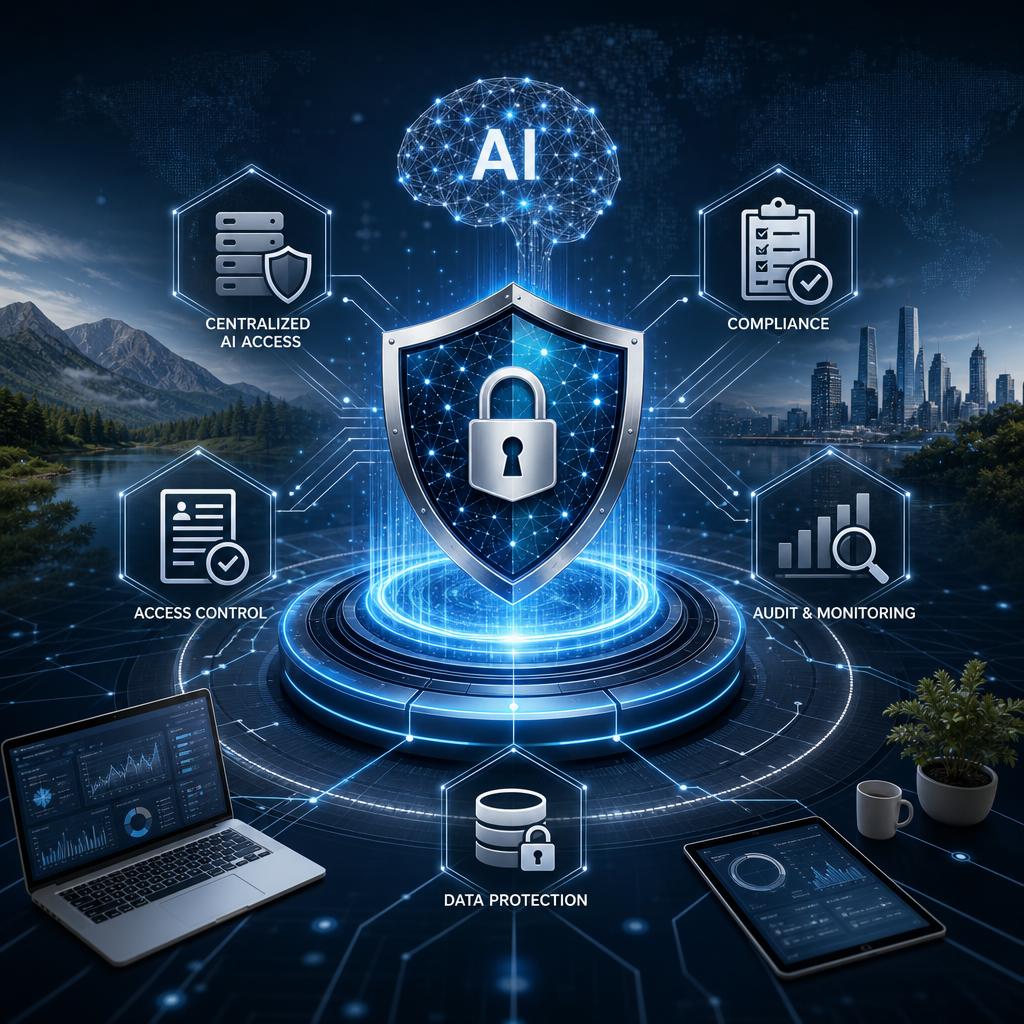
Enhancing Data Security and Compliance through Centralized AI Access
Centralizing AI access through an internal gateway is a strategic approach that significantly strengthens an institution’s data security framework. By funneling all AI interactions through a single, controlled point, companies can enforce uniform security protocols, monitor data flows in real-time, and swiftly block unauthorized or suspicious activities. This centralized oversight reduces the risk of data breaches caused by fragmented or inconsistent security practices, ensuring sensitive facts remains protected under a cohesive defense strategy.
Key advantages of centralized AI access include:
- Consistent Compliance: Simplifies adherence to regulations such as GDPR and HIPAA by applying standardized data governance policies across all AI applications.
- Audit Readiness: Provides comprehensive logs and reports that facilitate easy audits and help demonstrate regulatory compliance without cumbersome manual tracking.
- Access Control: Enables fine-grained permission settings, limiting AI model usage strictly to authorized personnel or departments.
- Risk Mitigation: Proactively identifies vulnerabilities and potential misuse before they escalate.
| Feature | Impact on Security | Compliance Benefit |
|---|---|---|
| Unified Authentication | Prevents unauthorized data access | Meets identity verification standards |
| Central Logging | Tracks AI requests and data usage | Supports audit trails and reports |
| Policy Enforcement | Blocks non-compliant AI behavior | Ensures regulatory adherence |
Optimizing Workflow Efficiency with Integrated AI Solutions
Deploying an internal AI gateway revolutionizes the way modern businesses handle data flows and decision-making processes.By creating a centralized system that integrates diverse AI tools and models, companies can drastically reduce latency and enhance security protocols. This setup empowers teams with real-time analytics and predictive insights without relying on external APIs or third-party platforms,resulting in smoother operations and fortified data governance. Furthermore, this consolidation fosters a collaborative AI environment that aligns with organizational goals, ensuring that every automated process contributes to overall productivity gains.
Key benefits include:
- Seamless integration: Unifies various AI services into a single, scalable pipeline.
- Enhanced data privacy: Maintains sensitive information within proprietary infrastructure.
- Cost efficiency: Reduces dependency on costly external AI calls and subscriptions.
- Adaptive learning: Facilitates continuous advancement through tailored training on company-specific datasets.
| Feature | Internal AI gateway | Third-Party AI APIs |
|---|---|---|
| Data Control | Full control & privacy | Limited, risk of exposure |
| Response Time | Milliseconds, local network | Variable, internet-dependent |
| Cost | Fixed infrastructure-based | Variable usage fees |
| Customization | Highly adaptable & trainable | predefined capabilities |
Best Practices for Designing and Maintaining a Robust Internal AI Gateway
Ensuring a seamless and secure operation of an internal AI gateway requires adherence to several foundational principles. Regular updates and patch management are critical for protecting the gateway from emerging vulnerabilities and performance bottlenecks. Additionally, maintaining clear API documentation and versioning enables internal teams to integrate effortlessly and reduces the risk of disruptions caused by incompatible changes. Emphasizing scalable architecture with modular components allows the system to evolve along with company demands without costly overhauls.
- Implement continuous monitoring: To proactively identify anomalies and optimize throughput.
- Enforce role-based access controls: Safeguard sensitive AI models and data pipelines.
- Document workflows and dependencies: Ensure team alignment and rapid troubleshooting.
- Leverage automated testing: Validate API responses and integration points consistently.
| Best Practice | Benefit | Example |
|---|---|---|
| Modular Design | Easy Updates | Plugin-based AI models |
| API Versioning | Backward Compatibility | v1, v2 endpoints |
| Access Control | Data security | Role-based permissions |
| Continuous Monitoring | Performance Optimization | Real-time dashboards |